Task Switching Cost: The Quiet Productivity Drain Behind Burnout
Task switching cost quietly erodes focus, drains energy, and harms work-life balance. Learn how to reduce it for sustainable productivity without burnout.

By Haply Team
Haply Editorial Team
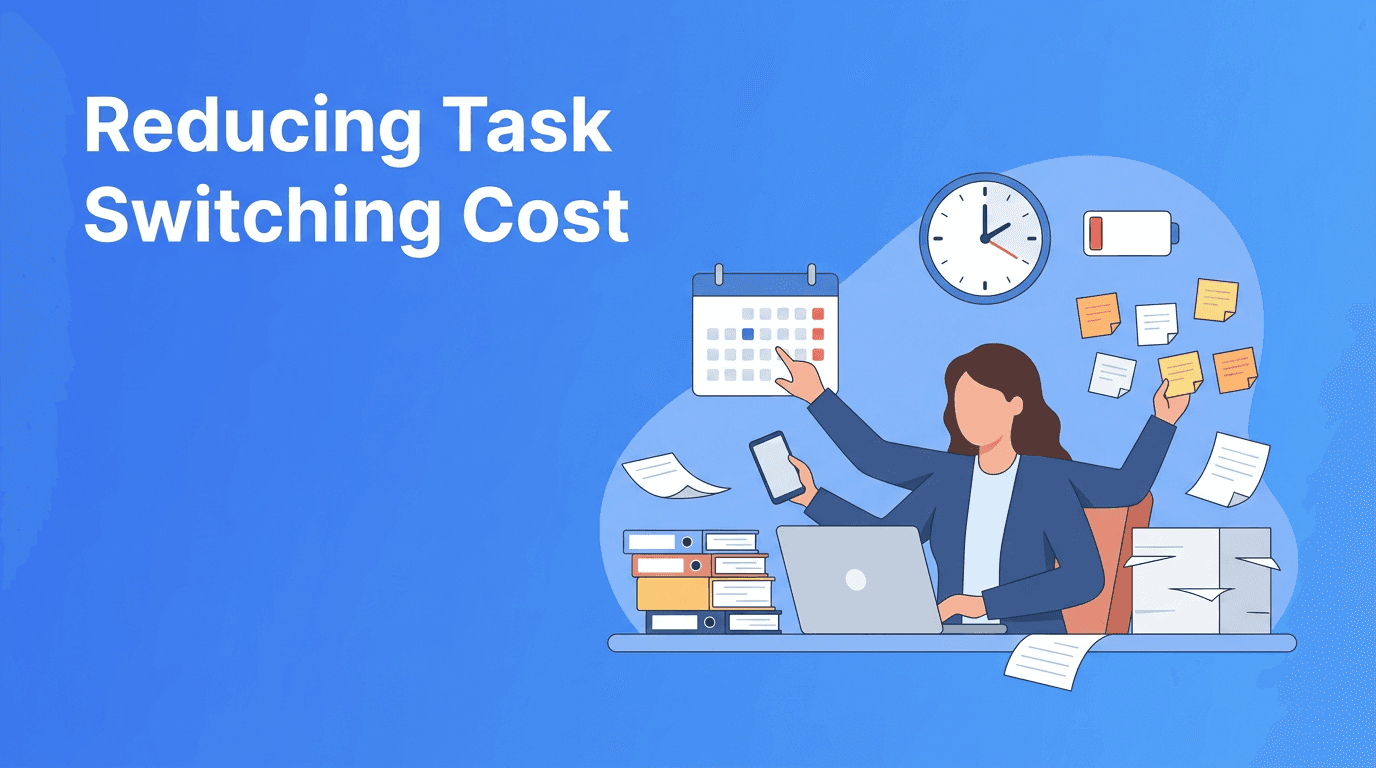
Most professionals do not lose their day to laziness. They lose it to task switching cost. Every time you jump from email to a report, from Slack to a meeting, or from planning to problem-solving, your brain pays a hidden tax. That tax shows up as lower focus, rising stress, weaker work-life balance, and eventually a greater risk of burnout. If you want sustainable productivity, reducing switches is often more powerful than simply working harder.
Why task switching cost feels so exhausting
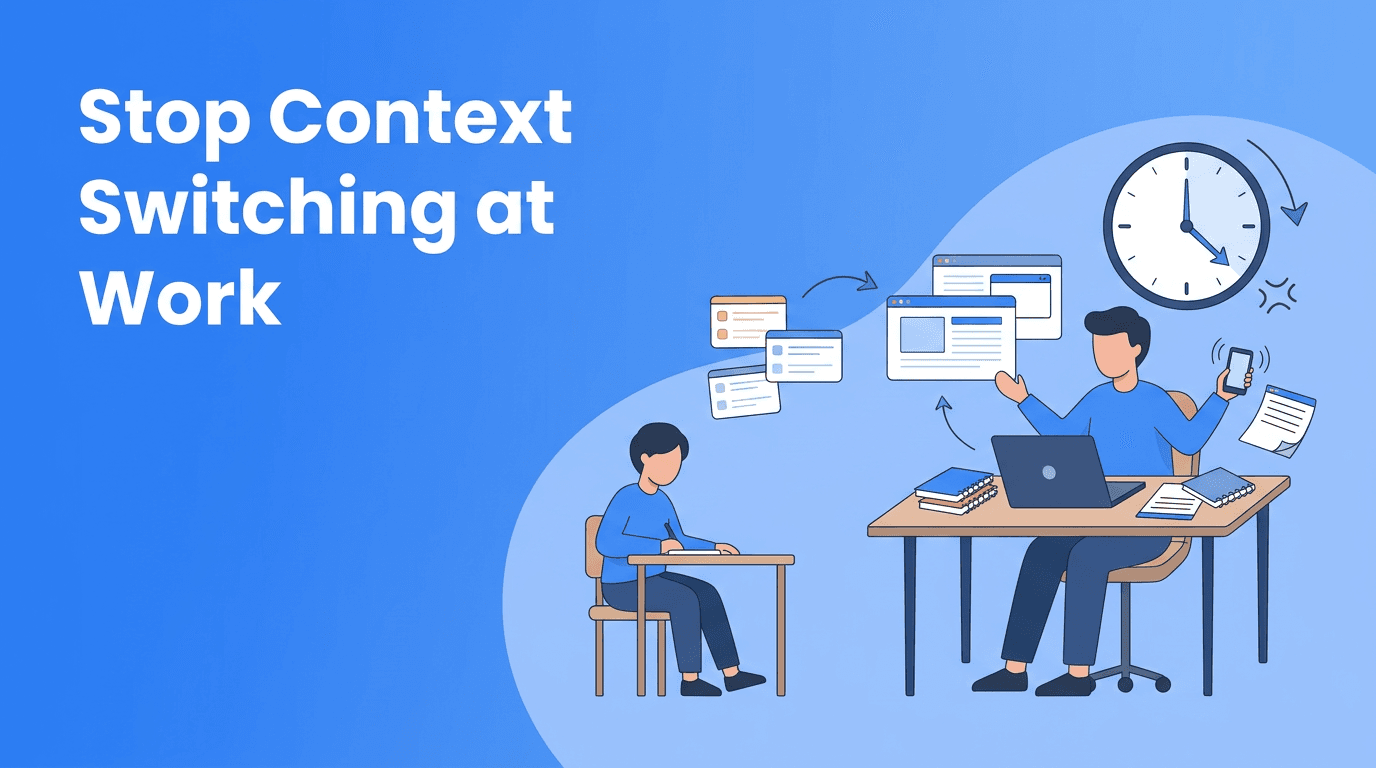
Task switching cost is the mental effort required to stop one activity and fully engage in another. Even when each switch seems small, the total load adds up fast. Your attention must let go of one context, remember where you were, load a new goal, and resist the urge to keep thinking about the previous task.
This is why a day full of small interruptions can feel strangely draining. You may be busy for ten hours and still wonder why your best work did not move forward. The issue is not always effort. Often, it is fragmented attention and poor energy management.
"The most tiring kind of work is the kind that keeps your mind half-open in five places at once."
The link between task switching, work-life balance, and burnout
When your day is chopped into tiny pieces, work expands. Important tasks take longer, shallow tasks multiply, and your brain never fully settles. That often leads to late catch-up sessions, unfinished priorities, and the feeling that work is always leaking into personal time.
- More rework because details are missed during frequent context changes
- Higher stress because everything feels urgent when attention is scattered
- Lower-quality recovery after work because your mind is still processing open loops
- Increased burnout risk because constant switching keeps your nervous system activated
- Worse work-life balance because deep tasks spill into evenings or weekends
In other words, poor focus is not just a productivity issue. It is a health issue. Protecting attention is one of the most practical forms of burnout prevention.
Five practical ways to reduce task switching cost
1. Group similar work into focus clusters
Instead of answering messages all day, create small windows for communication. Batch admin work, decision-making, creative work, and meetings into separate clusters. This helps your brain stay in one mode longer, which supports sustainable productivity.
2. Create a one-tab start ritual
Before beginning an important task, close unrelated tabs, silence notifications, and write one sentence: What does done look like in the next 30 minutes? This reduces friction and lowers the temptation to switch.
3. Use transition notes
When you stop mid-task, leave a short note for your future self. Write the next step, the key idea, and any unresolved question. This makes re-entry easier and reduces the mental cost of returning later.
4. Audit your reactive triggers
Notice what pulls you away most often. Is it email badges, chat pings, calendar overload, or your own urge to check for updates? Once you identify the trigger, you can redesign the environment instead of blaming your willpower.
5. Match focus demands to your energy peaks
Good energy management means giving demanding work your strongest hours. Save lower-focus tasks for lower-energy periods. This not only improves output, it also protects work-life balance by reducing after-hours catch-up.
Build a calmer focus system with Haply
Haply helps you turn these ideas into daily habits with AI coaching, a Focus Timer, Task Planner, reminders, and a personalized dashboard that supports sustainable productivity on iOS and Android.
Try Haply FreeA simple daily workflow for sustainable productivity
If your schedule is constantly fragmented, try this lightweight structure:
- Start with 1 high-value task before opening communication tools
- Use a Focus Timer for 25 to 45 minutes of single-task work
- Check email and chat at planned times, not continuously
- Keep a short parking lot list for ideas that are not for right now
- End the day by writing tomorrow's top 3 priorities and one starting step
This kind of structure is flexible enough for real life, but firm enough to reduce task switching cost. It supports output without pushing you toward overwork.
What to do when your job requires constant responsiveness
Some roles genuinely involve interruptions. If that is your reality, the goal is not perfection. The goal is intentional responsiveness. Define response windows, protect one or two deeper work blocks each week, and communicate your availability clearly. Even modest boundaries can reduce cognitive strain and help prevent burnout.
If you need extra support, Haply's chat-based AI coaches can help you build a personalized rhythm around your role, goals, and stress patterns. The app also includes habit tracking, daily reminders, and mini-tools that make healthy routines easier to maintain.
The real goal is not doing more
The real goal is doing what matters with less internal friction. When you reduce task switching cost, you are not just protecting focus. You are protecting your energy, your evenings, and your ability to work well over time. That is the heart of sustainable productivity.
Frequently Asked Questions
What is task switching cost at work?
Task switching cost is the mental effort and lost time that happen when you move from one task to another. Frequent switching reduces focus and makes work feel more draining.
Can task switching lead to burnout?
Yes. Constant context switching increases stress, extends work hours, and makes recovery harder, which can contribute to burnout over time.
How can I reduce task switching during the day?
Batch similar tasks, limit notifications, use focus sessions, and leave transition notes when stopping mid-task. Small changes can significantly improve concentration.
Is multitasking the same as task switching?
Not exactly. Multitasking usually means trying to do multiple things at once, while task switching is moving quickly between tasks. Both can reduce productivity and increase mental fatigue.