Digital Sunset Routine: A Practical Self-Care Reset for Burnout Recovery
A digital sunset routine is a simple self-care practice that helps reduce burnout, improve digital wellbeing, and make rest and recovery part of your wellness routine.

By Haply Team
Haply Editorial Team
A digital sunset routine is one of the simplest ways to protect your energy when work, messages, and notifications never seem to end. For busy professionals, this small self-care habit can support digital wellbeing, create more space for rest, and make recovery feel realistic instead of idealistic.
Why burnout often starts after work ends
Many people think burnout is only about long hours, but the real drain often continues into the evening. You finish meetings, then keep checking email, scrolling, or mentally replaying the day. Your body is home, but your attention is still at work. Over time, that weakens your wellness routine and makes true downtime harder to reach.
- Self-care is not only what you add, it is also what you stop doing at the right time.
- Constant screen switching can keep your brain in a low-level alert state.
- Without a clear transition, rest and recovery get replaced by passive, unsatisfying scrolling.
- Small evening boundaries can help prevent burnout from building quietly.
What a digital sunset routine actually means
A digital sunset routine is a set time when you reduce or stop optional screen use for the night. It does not require perfection, and it does not mean ignoring urgent responsibilities. It simply creates a predictable off-ramp from stimulation so your mind can shift into a calmer mode.
Think of it as a workday landing, not a strict detox
This approach works best when it feels practical. Instead of trying to quit devices completely, choose a specific window, such as 30 to 60 minutes before bed, when you lower digital input. That time can support self-care, improve digital wellbeing, and make your evenings feel more intentional.
"Rest is not a reward for finishing everything. Rest is a resource that helps you keep going."
The 5-part evening reset for rest and recovery
1. Pick a realistic cutoff time
Set a nightly time when your digital sunset routine begins. If your schedule is unpredictable, anchor it to bedtime instead. For example, decide that 45 minutes before sleep, work apps close and social media stops. Consistency matters more than an early cutoff.
2. Create a shutdown cue
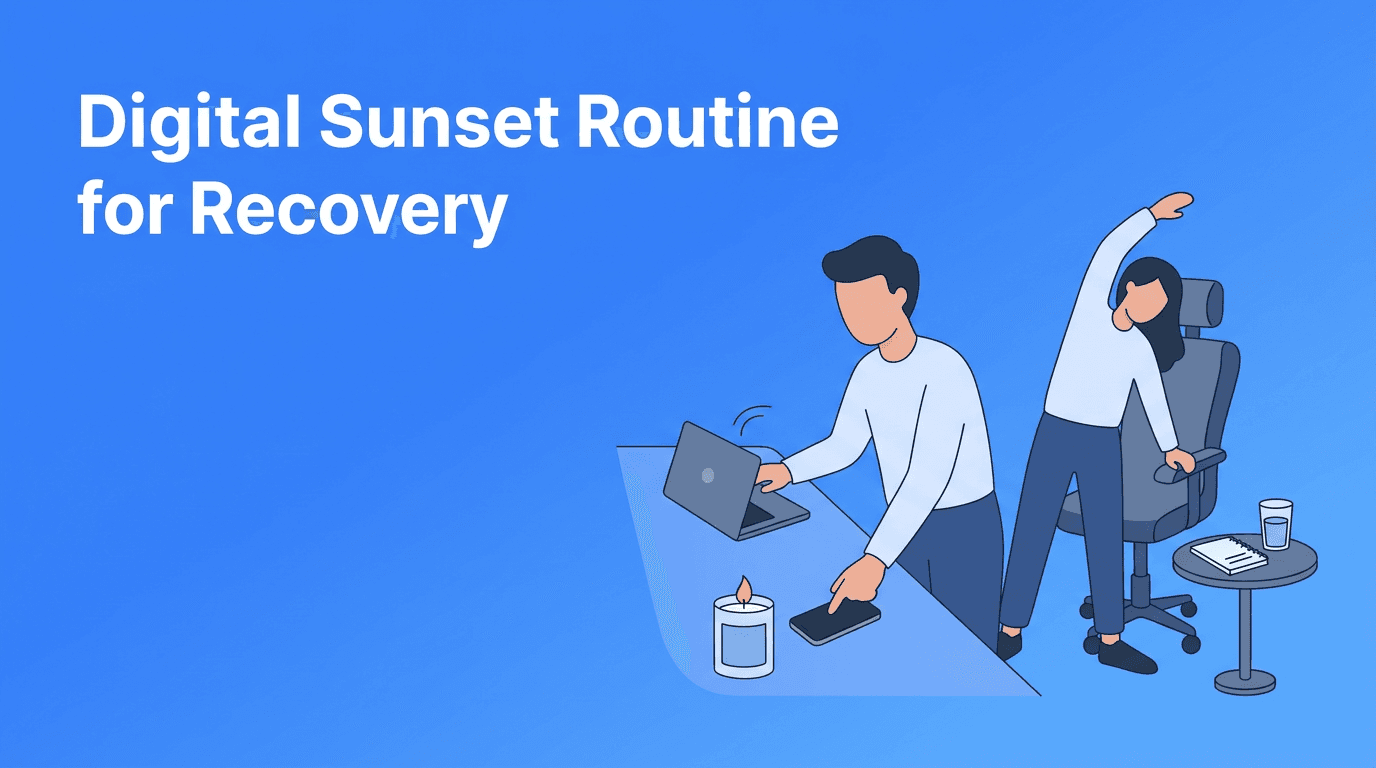
Your brain responds well to rituals. Close your laptop, put your phone on charge outside arm's reach, dim a light, or change clothes. A visible cue tells your nervous system that the demanding part of the day is over and recovery can begin.
3. Replace scrolling with one low-effort activity
- Read 5 to 10 pages of a book
- Do a 3-minute stretch sequence
- Prepare tomorrow's water bottle or breakfast
- Take a warm shower
- Write down three loose thoughts in a notebook to clear mental clutter
4. Protect your attention, not just your time
Even a short check of news, email, or group chats can pull you back into urgency. During your digital sunset routine, reduce friction by turning on Do Not Disturb, logging out of work tools, or moving tempting apps off your home screen. This is a practical digital wellbeing strategy, not a willpower test.
5. End with a recovery signal
Choose one final action that tells your body it is safe to slow down. That might be slow breathing, herbal tea, light mobility work, or simply sitting quietly for two minutes. The goal is not optimization. The goal is helping rest feel easier to access.
A sample wellness routine for overloaded weeks
When life gets busy, your evening plan should become simpler, not more ambitious. Try this 20-minute wellness routine on high-stress days.
- Minute 1-2: Put devices on charge and silence nonessential notifications
- Minute 3-5: Tidy one small surface to reduce visual stress
- Minute 6-10: Stretch your neck, shoulders, back, and hips
- Minute 11-15: Write tomorrow's top 3 priorities
- Minute 16-20: Sit quietly, breathe slowly, or listen to a short sleep story
Want help building a self-care rhythm?
Haply is an AI life coaching app for iOS and Android that can help you create a personalized wellness routine with chat-based coaching, habit tracking, reminders, and mini-apps like Meditation/Breathe and Sleep Stories. It can support burnout prevention and digital wellbeing habits, alongside professional care when needed.
Try Haply FreeHow to make the habit stick without overthinking it
The best self-care habits are easy to repeat on tired days. Start with one rule, not five. For example, choose one cutoff time and one replacement activity. If you miss a night, restart the next evening without turning it into a personal failure.
- Keep your charger away from the bed
- Use a paper notebook for late thoughts
- Set an automatic reminder labeled "start winding down"
- Track your streak for motivation, but do not chase perfection
- Notice how your mood feels the next morning, not just whether you followed the plan exactly
If you like structure, Haply can help here too. Its Today Dashboard, reminders, and habit tracker make it easier to build a digital sunset routine that fits your actual schedule, not an idealized one.
When this routine helps most
- You feel tired but keep scrolling at night
- Your workday has no clear ending
- You want better rest and recovery without adding a complicated routine
- You are trying to improve digital wellbeing in a realistic way
- You notice early signs of burnout, such as irritability, mental fog, or feeling "on" all the time
A digital sunset routine will not solve every stressor, but it can create a daily boundary that supports steadier energy and better evenings. If burnout symptoms feel severe or persistent, professional support is important. Think of this practice as a helpful foundation, not a replacement for care.
Frequently Asked Questions
What is a digital sunset routine?
A digital sunset routine is a planned time in the evening when you reduce optional screen use to support rest, recovery, and better digital wellbeing.
Can a digital sunset routine help with burnout?
It can help reduce one common burnout pattern, staying mentally activated after work. By creating a clearer evening boundary, it supports recovery and calmer downtime.
How long should a digital sunset routine be?
Start with 30 to 60 minutes before bed. Even 15 minutes can be useful if that is what fits your schedule right now.
What can I do instead of scrolling at night?
Choose low-effort activities like stretching, reading, journaling, showering, or listening to a sleep story. The best option is one you will actually repeat.
Is digital wellbeing part of self-care?
Yes. Managing screen input, notifications, and attention is a practical form of self-care because it protects your energy, focus, and recovery.