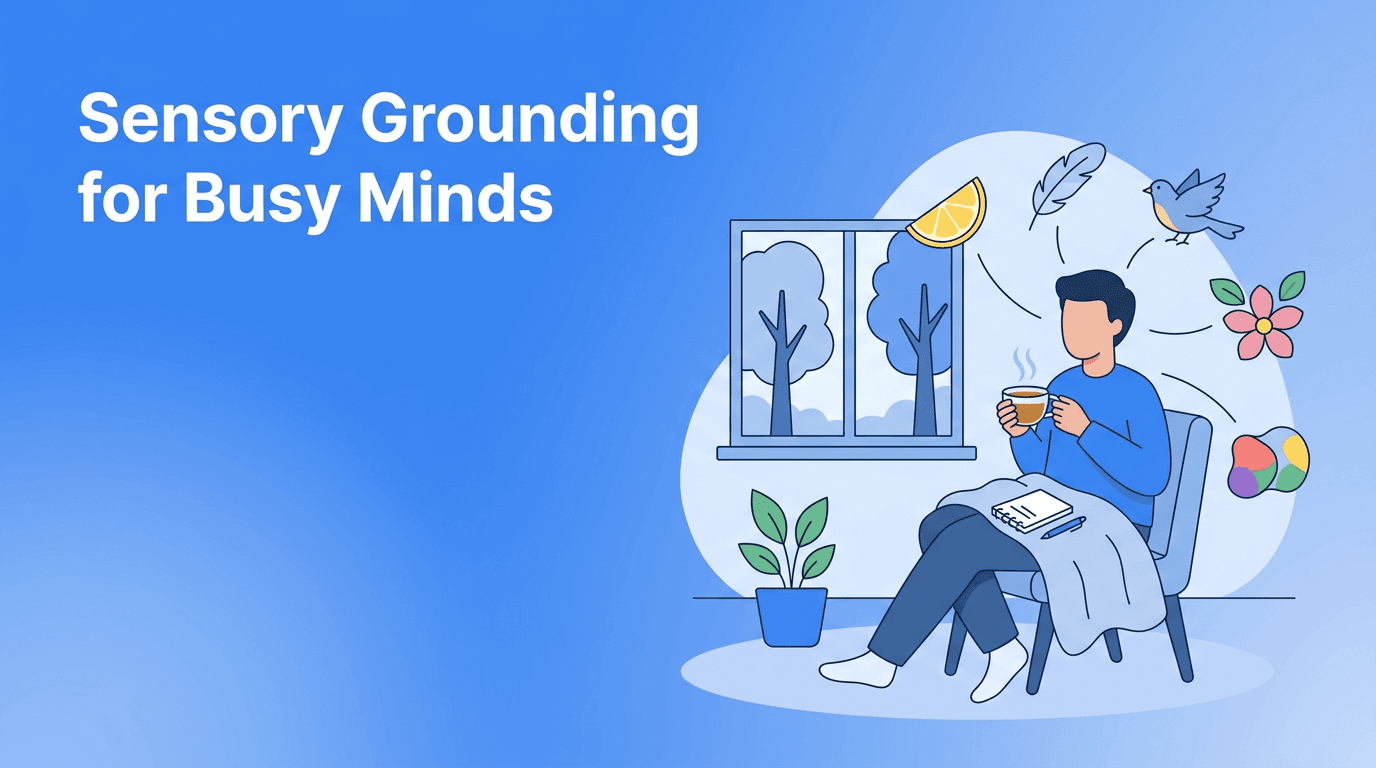
Sensory Grounding for Stress Management: A 10-Minute Reset for Busy Minds
Sensory grounding is a simple stress management practice that supports wellness and mental health in just 10 minutes. Learn a practical self-care routine for healthy living.

By Haply Team
Haply Editorial Team
When your thoughts feel loud and your body feels tense, sensory grounding can offer a steady way back to the present moment. This simple practice supports wellness, mental health, and stress management by helping you notice what is real, safe, and directly in front of you.
Unlike complicated routines, sensory grounding works with what you already have: your senses, your breath, and a few quiet moments. If you want a practical form of self-care that fits into healthy living, this approach is a gentle place to begin.
Why sensory grounding works for stress management
Stress often pulls attention into the future or back into past worries. Sensory grounding interrupts that loop by giving your brain specific details to focus on right now, such as what you can see, hear, touch, smell, or taste. That shift can make daily pressure feel more manageable.
It is simple, not dramatic
Many people assume stress relief must involve a long meditation, a perfect morning routine, or a full day off. In reality, small practices often help the most because they are easier to repeat. A short grounding ritual can become a reliable part of your self-care toolkit.
"You do not have to calm everything at once. You only have to return to one small moment."
A 10-minute sensory grounding routine
Use this routine at your desk, in your car before heading home, or during a difficult afternoon. The goal is not to force calm. The goal is to create a little more space in your mind and body.
- Minute 1-2: Put both feet on the floor and slowly exhale. Notice the support beneath you.
- Minute 3-4: Name 5 things you can see. Choose ordinary details, like light on the wall, a pen, or the shape of a leaf.
- Minute 5-6: Name 4 things you can feel. This could be your shirt on your shoulders, the chair under your legs, or cool air on your hands.
- Minute 7: Name 3 things you can hear. Let sounds come to you without judging them as good or bad.
- Minute 8: Name 2 things you can smell. If nothing stands out, notice the absence of strong scent.
- Minute 9: Name 1 thing you can taste. Sip water, tea, or simply notice the taste already in your mouth.
- Minute 10: Ask yourself, "What is one kind thing I need next?" Then choose one small action.
Make it easier to remember
Pair this practice with a regular moment in your day, such as after lunch, before meetings, or when you first get home. Habit stacking turns good intentions into realistic routines, which is a core part of healthy living.
Everyday signs you may need grounding
- You are rereading the same sentence without absorbing it
- Your shoulders, jaw, or hands feel tight
- You feel oddly rushed even when there is no immediate emergency
- You keep checking your phone without a clear reason
- You feel emotionally flooded and cannot decide what to do next
These signs do not mean anything is wrong with you. They are signals that your system may need a pause. For many adults, this is where practical stress management matters more than perfection.
How to build sensory grounding into a wellness routine
Think of grounding as a bridge habit. It can connect a stressful moment to a healthier next choice, like drinking water, stretching, stepping outside, or starting one manageable task. Over time, these small resets support broader wellness and steadier mental health.
- Keep a grounding object nearby, like a smooth stone, soft scarf, or textured keychain
- Create a calm cue on your phone that says, "Pause and notice 3 things"
- Use grounding before important conversations to feel more present
- Try it after screen-heavy work to support digital self-care
- Track which version helps most so your routine becomes more personal
Want guided support for daily wellness?
Haply is an AI life coaching app for iOS and Android with Wellness coaches, a habit tracker, breathing and meditation mini-apps, and daily reminders that can help you turn grounding into a repeatable routine. It can complement professional support, not replace it.
Try Haply FreeWhen to use extra support
If stress feels constant, overwhelming, or starts affecting sleep, work, relationships, or daily functioning, reaching out to a licensed mental health professional can be a strong next step. Sensory grounding is a helpful tool, but it is not a substitute for clinical care when deeper support is needed.
A calmer form of self-care
Real self-care does not have to be elaborate. Sometimes it looks like noticing the chair under you, the air around you, and the fact that this moment can be handled one breath at a time. Sensory grounding is small, practical, and surprisingly powerful for people who want calmer days and more sustainable healthy living.
Frequently Asked Questions
What is sensory grounding for stress management?
Sensory grounding is a technique that helps you focus on what you can see, hear, feel, smell, and taste in the present moment. It can reduce overwhelm and support calm during stressful moments.
How do you practice sensory grounding at work?
You can do a short 5 senses check-in at your desk by noticing visible objects, physical sensations, and nearby sounds. It usually takes only a few minutes and does not require special equipment.
Is sensory grounding good for mental health?
Sensory grounding can support mental health by helping you reconnect with the present and reduce mental overload. It works best as one tool within a broader self-care and support plan.
How often should I use sensory grounding?
You can use it daily or anytime stress rises. Many people find it helpful before meetings, after screen time, or during transitions between work and home.