Micro-Boundaries: A Gentle Way to Practice Saying No and Rebuild Self-Worth
Micro-boundaries can help you practice saying no, reduce people pleasing, and protect self-worth so you can build healthier relationships without guilt.

By Haply Team
Haply Editorial Team
If full-scale boundaries feel intimidating, micro-boundaries offer a softer starting point. These small, practical choices can make saying no easier, interrupt people pleasing, and strengthen self-worth in healthy relationships.
Why micro-boundaries work when big boundaries feel scary
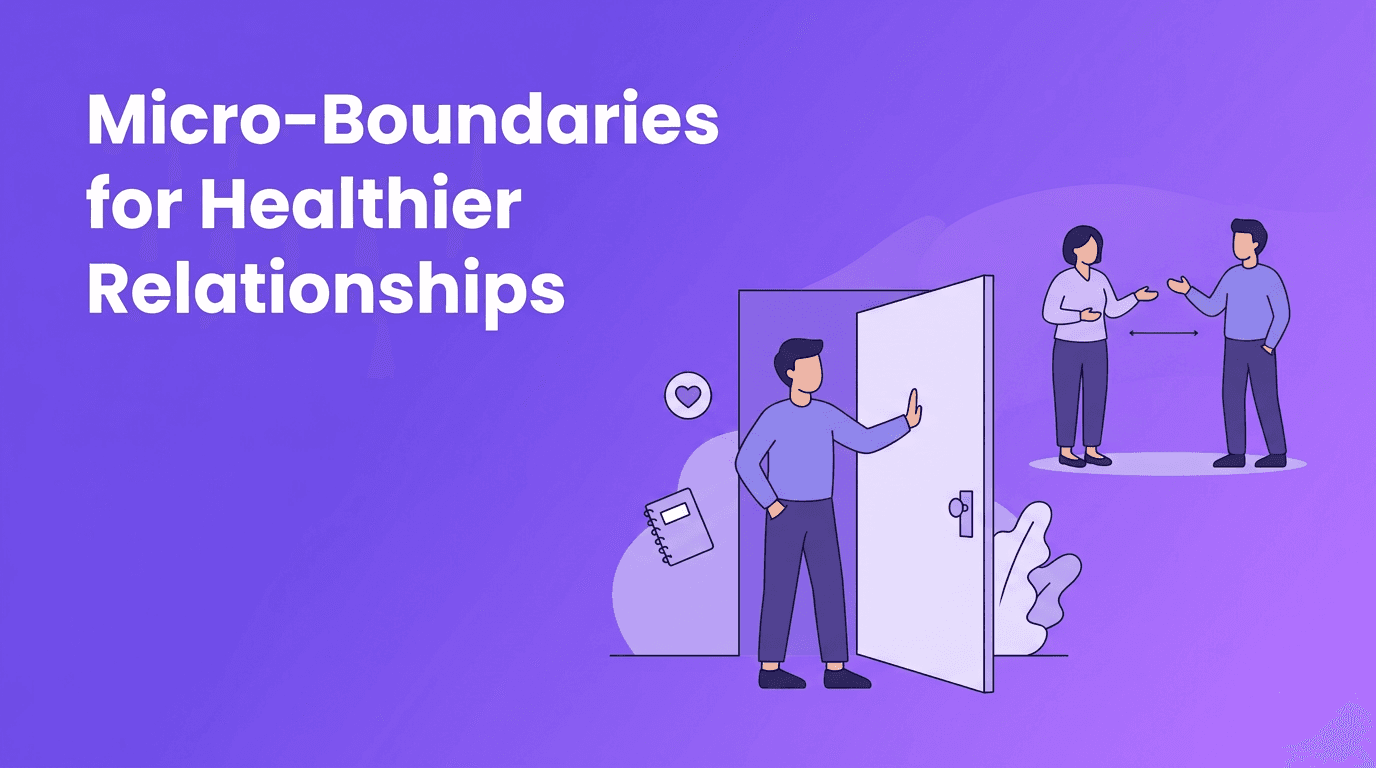
Many people think boundaries must be dramatic, firm, and perfectly worded. In real life, that belief can keep you stuck. Micro-boundaries are tiny acts of self-respect, like pausing before answering a request, declining a call when you are tired, or asking for more time to decide. They help your nervous system learn that protecting your energy does not automatically lead to rejection.
- Say, "Let me get back to you" instead of agreeing on the spot.
- Turn off notifications during rest time.
- Respond to non-urgent messages when you actually have capacity.
- Choose not to explain every decision in detail.
- Leave a conversation that has become disrespectful.
"Every time you honor a small limit, you teach yourself that your needs matter too."
The hidden link between people pleasing and self-worth
People pleasing often looks like kindness on the outside, but underneath it may be fueled by fear. Fear of conflict. Fear of disappointing someone. Fear that love will disappear if you stop being endlessly available. Over time, this pattern can weaken self-worth because your value starts to depend on how comfortable other people feel around you.
Signs your yes is not a real yes
- You agree quickly, then feel resentful later.
- You over-explain when saying no.
- You feel guilty for needing space, rest, or privacy.
- You worry that one boundary will ruin the relationship.
- You ignore your body signals, like tension, dread, or exhaustion.
In healthy relationships, care goes both ways. You are allowed to be generous without becoming overextended. You are allowed to be loving without abandoning yourself.
7 micro-boundaries you can use this week
1. Delay your answer
Try: "I want to check my schedule first." This creates space between a request and your response, which is often enough to reduce automatic compliance.
2. Shorten the explanation
You do not need a courtroom defense for a simple no. A calm "I can't make it" is often enough. Less explaining can support stronger self-worth because it reminds you that your limits are valid.
3. Name your availability clearly
Instead of staying vaguely open-ended, say "I'm free for 20 minutes" or "I can help tomorrow, not tonight." Specificity protects your time and makes healthy relationships easier to navigate.
4. Notice where guilt shows up
Guilt does not always mean you are doing something wrong. Sometimes it simply means you are doing something new. Micro-boundaries can feel uncomfortable at first because they challenge old people pleasing habits.
5. Use body cues as data
If your chest tightens when someone asks for a favor, pause. Your body may be signaling that you need more information, more time, or a different answer.
6. Protect recovery time
Rest is not a reward you earn after burnout. Block quiet time, solo time, or phone-free time on purpose. This is a boundary, not a luxury.
7. Practice one clean no
Pick one low-stakes situation this week and try saying no kindly and directly. You are building a skill, not trying to become perfect overnight.
Need help practicing boundaries in real time?
Haply is an AI life coaching app for iOS and Android with personalized Relationships coaching, habit tracking, and guided tools that can help you rehearse hard conversations and build healthier patterns.
Try Haply FreeSimple scripts for saying no without shutting people out
- "I can't commit to that right now."
- "I'm not available, but I hope it goes well."
- "That doesn't work for me."
- "I need some time to think before I answer."
- "I care about you, and I need to be honest about my limits."
Notice that none of these scripts are harsh. Clear communication is not cruelty. Often, healthy relationships become more stable when your words match your actual capacity.
How to make micro-boundaries stick
- Start with one repeat situation, such as late-night texts or last-minute favors.
- Write two go-to phrases and save them in your notes app.
- Celebrate follow-through, even if you still feel awkward.
- Reflect after each interaction: Did I honor my needs?
- Use support tools to stay consistent. With Haply, you can check in with an AI coach, track progress with streaks, and use daily reminders to reinforce new habits.
Consistency matters more than intensity. Micro-boundaries work because they are repeatable. Over time, these small choices can shift how you see yourself. You stop proving your worth through overgiving and start living from the belief that your needs count.
Frequently Asked Questions
What are micro-boundaries in relationships?
Micro-boundaries are small, everyday limits that protect your time, energy, and emotional space. They are a gentle way to build stronger boundaries without making drastic changes all at once.
How do I say no without feeling guilty?
Start with short, respectful responses and remind yourself that guilt is often part of changing old habits. Saying no can support healthier relationships by making your yes more honest.
Is people pleasing a sign of low self-worth?
It can be related. People pleasing often grows from fear of rejection or conflict, which may lead you to base your value on keeping others happy.
Can small boundaries really improve healthy relationships?
Yes. Small boundaries create clarity, reduce resentment, and help both people understand what is realistic and respectful.