Slow Dating: How to Build Emotional Safety Before Commitment
Slow dating helps you build trust, emotional safety, and real intimacy before commitment. Learn practical steps for a healthier romantic relationship and dating experience.

By Haply Team
Haply Editorial Team
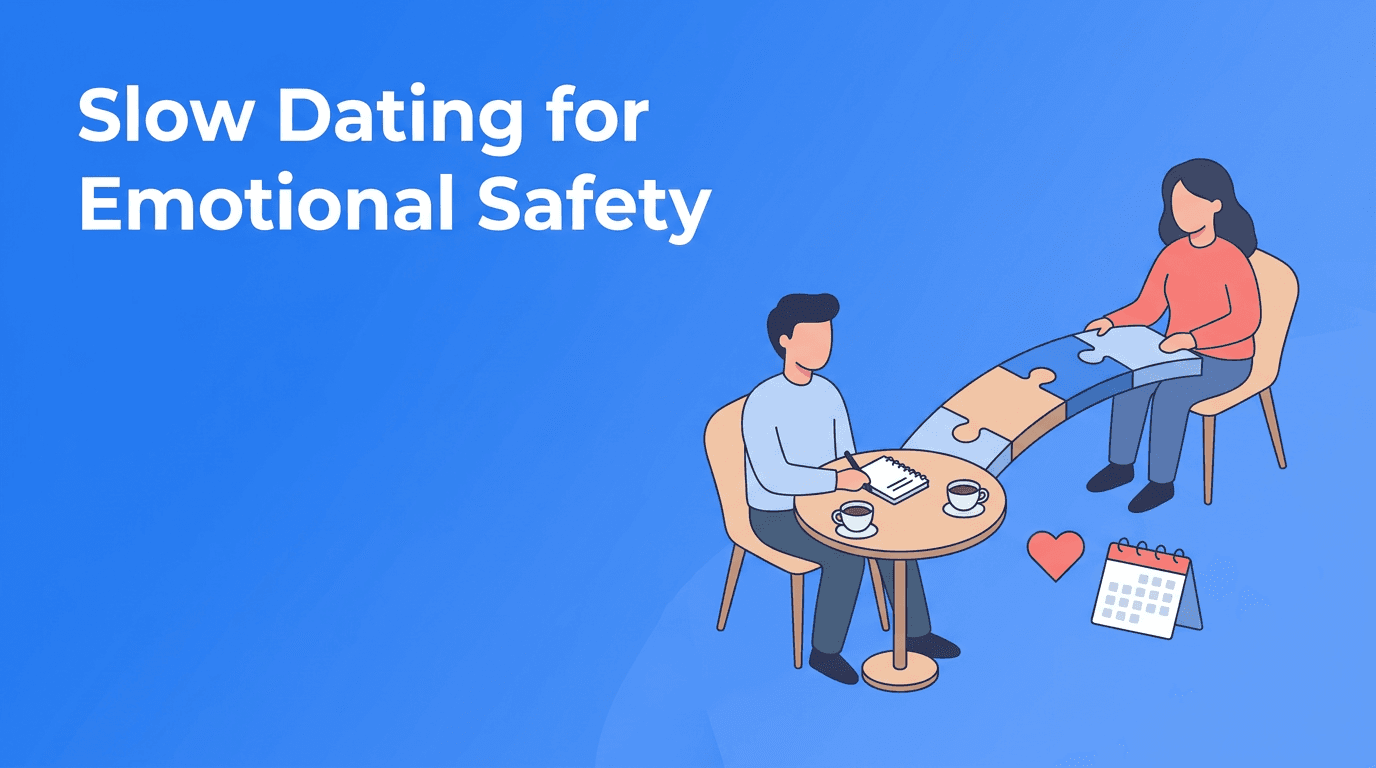
Slow dating is not about playing hard to get or dragging things out. It is about creating enough space to see whether a connection can support a healthy romantic relationship, real intimacy, and a lasting partnership. If dating has ever felt rushed, confusing, or emotionally draining, a slower pace can help you make clearer choices.
Why slow dating works for modern couples
Many people move fast because chemistry feels exciting, uncertainty feels uncomfortable, or dating apps create pressure to decide quickly. But slow dating gives you time to notice patterns, not just promises. That matters if you want more than sparks. It matters if you want trust, consistency, and emotional steadiness.
- You get to see whether words and actions match
- You have more room to notice your own needs and boundaries
- You can build intimacy step by step instead of forcing instant closeness
- You reduce the chance of confusing urgency with compatibility
- You learn whether a potential partnership feels calm, mutual, and respectful
"Healthy love usually grows with clarity, not chaos."
What slow dating actually looks like
A slower pace does not mean being cold or unavailable. It means being intentional. You can enjoy the excitement of dating while still protecting your emotional energy. In practice, slow dating often means pacing communication, observing consistency, and letting trust build through repeated experiences.
5 signs you are dating at a healthy pace
- You are not sharing every detail of your future in the first week
- You feel curious, not panicked, between dates
- You are learning about values, conflict style, and lifestyle compatibility
- Physical closeness is not replacing emotional honesty
- You feel free to ask questions without fear of losing the connection
This approach is especially helpful for people who tend to overinvest early. If you quickly imagine long-term potential, try asking, "What do I actually know from experience so far?" That question keeps your feet on the ground while your heart stays open.
How to build intimacy without rushing
Real intimacy is more than intense texting or late-night vulnerability. It grows when two people show each other who they are over time. In couples who build strong foundations, closeness often comes from reliability, repair, and emotional honesty, not just attraction.
Questions that create grounded connection
- What does a healthy romantic relationship look like to you?
- How do you usually handle conflict with someone you care about?
- What helps you feel respected in a partnership?
- Which love languages matter most to you, and how do you like to receive care?
- What pace feels comfortable to you when getting serious?
Questions like these help you move beyond surface-level charm. They reveal how someone thinks about effort, accountability, and closeness. They also help you understand whether your expectations around love languages, time, affection, and commitment actually fit together.
Want support while dating more intentionally?
Haply is an AI life coaching app with Relationships coaches that can help you reflect after dates, spot patterns, and build healthier communication habits. You can also use habit tracking, daily reminders, and the Today Dashboard to stay grounded in your goals.
Try Haply FreeA simple slow dating framework to try
Step 1: Match effort before deep investment
Notice whether interest feels mutual. If you are always initiating, planning, or emotionally carrying the connection, pause before giving more. Balanced effort is one of the clearest signs of potential in dating.
Step 2: Watch for consistency across time
Anyone can be attentive for a few days. What matters is whether they stay respectful, communicative, and dependable over several weeks. Slow dating gives you the timeline needed to see that clearly.
Step 3: Name your pace out loud
You can say, "I like getting to know someone steadily before rushing labels or big expectations." This is not a rejection. It is a healthy boundary that supports trust and better communication.
Step 4: Check emotional safety after each date
- Did I feel heard?
- Did I feel pressured in any way?
- Could I be myself?
- Did I leave feeling calm, confused, or activated?
- Did this person show curiosity about my inner world?
If you want structure, Haply can help here too. Its chat-based coaching and reflection tools make it easier to process your experiences, notice patterns, and avoid repeating old dating habits on autopilot.
When slow dating feels hard
Sometimes a slower pace brings up anxiety. You may fear losing momentum, missing your chance, or seeming uninterested. That is normal. But healthy couples are not built by urgency alone. If someone disappears because you want steadiness, they were likely not a strong fit for the kind of partnership you want.
- If you feel anxious, focus on facts instead of fantasy
- If you want to text constantly, ask what reassurance you are seeking
- If exclusivity comes up early, discuss expectations clearly instead of assuming
- If physical chemistry is strong, keep checking whether emotional compatibility is growing too
"The right connection does not need to be rushed to become real."
Slow dating is not less romantic, it is more sustainable
There is nothing unromantic about protecting your peace while opening your heart. Slow dating helps you build a romantic relationship with more clarity, stronger communication, and deeper trust. Instead of asking, "How fast is this moving?" try asking, "Is this connection becoming safer, kinder, and more mutual over time?" That is the kind of progress that supports lasting love.
Frequently Asked Questions
What is slow dating?
Slow dating is a more intentional approach to dating where you take time to build trust, observe consistency, and assess compatibility before deep commitment.
Is slow dating good for a romantic relationship?
Yes. Slow dating can support a healthier romantic relationship by helping you build emotional safety, communicate clearly, and avoid rushing into incompatible dynamics.
How do love languages fit into dating?
Love languages can help you understand how you and your partner prefer to give and receive care. Talking about them early can improve communication and intimacy.
How can couples build intimacy without moving too fast?
Couples can build intimacy by being consistent, asking thoughtful questions, sharing gradually, and respecting each other's pace and boundaries.