Social Skills for Introverts: A Low-Pressure Rapport Plan for Social Anxiety
Want stronger social skills without pretending to be extroverted? This low-pressure guide helps any introvert manage social anxiety, build rapport, and feel more confident in conversations.

By Haply Team
Haply Editorial Team
If social skills have ever felt like a performance you were supposed to master overnight, you are not alone. Many people with social anxiety or an introvert temperament do not lack care or intelligence, they simply need a calmer, more realistic way to connect. The good news is that confidence is not something you either have or do not have. It is a set of small behaviors you can practice.
This article takes a different angle: instead of pushing yourself to be louder, faster, or more charismatic, you will learn how to build connection through rapport, preparation, and repeatable habits. That approach works in one-on-one conversations, group settings, networking, and even public speaking.
Why social skills feel harder when your nervous system is on alert
For many introverts, the problem is not a lack of interest in people. It is the mental load. You may be tracking facial expressions, rehearsing your next sentence, worrying about awkward pauses, and judging yourself in real time. That pressure makes even basic social skills feel complicated.
- Social anxiety often creates threat detection, not truth. Your brain may label neutral moments as rejection.
- Being an introvert often means social energy is limited, not that you are bad at connecting.
- Strong rapport usually comes from feeling safe and present, not from saying something brilliant every minute.
"You do not need to become a different person to connect well. You need a gentler system that helps your real personality come through."
The 4-part rapport method for quieter people
1. Start with observation, not performance
When you enter a conversation, give yourself one easy job: notice something real. That could be the setting, the shared activity, or the other person's energy. Observation lowers pressure and naturally opens the door to rapport.
- "How do you know the host?"
- "What brought you to this event?"
- "You seem really focused on that project, how is it going?"
- "Have you been to something like this before?"
2. Use the 70-30 balance
A helpful rule for improving social skills is to aim for 70 percent curiosity and 30 percent sharing. You do not need to carry the whole interaction. Ask one sincere question, listen for a detail, then reflect something back before adding your own thought.
3. Mirror the energy, not the personality
You do not need to imitate someone to connect with them. Instead, match the pace and warmth of the conversation. This is one of the simplest ways to build rapport without feeling fake.
4. Exit conversations gracefully
One overlooked part of social skills is ending an interaction without panic. A calm exit helps you protect energy and leaves the other person with a positive impression.
- "I enjoyed talking with you, I'm going to grab a drink."
- "Thanks, this was great. I want to say hi to a few people before I head out."
- "I am glad we connected. Let's continue this another time."
How to handle networking when small talk drains you
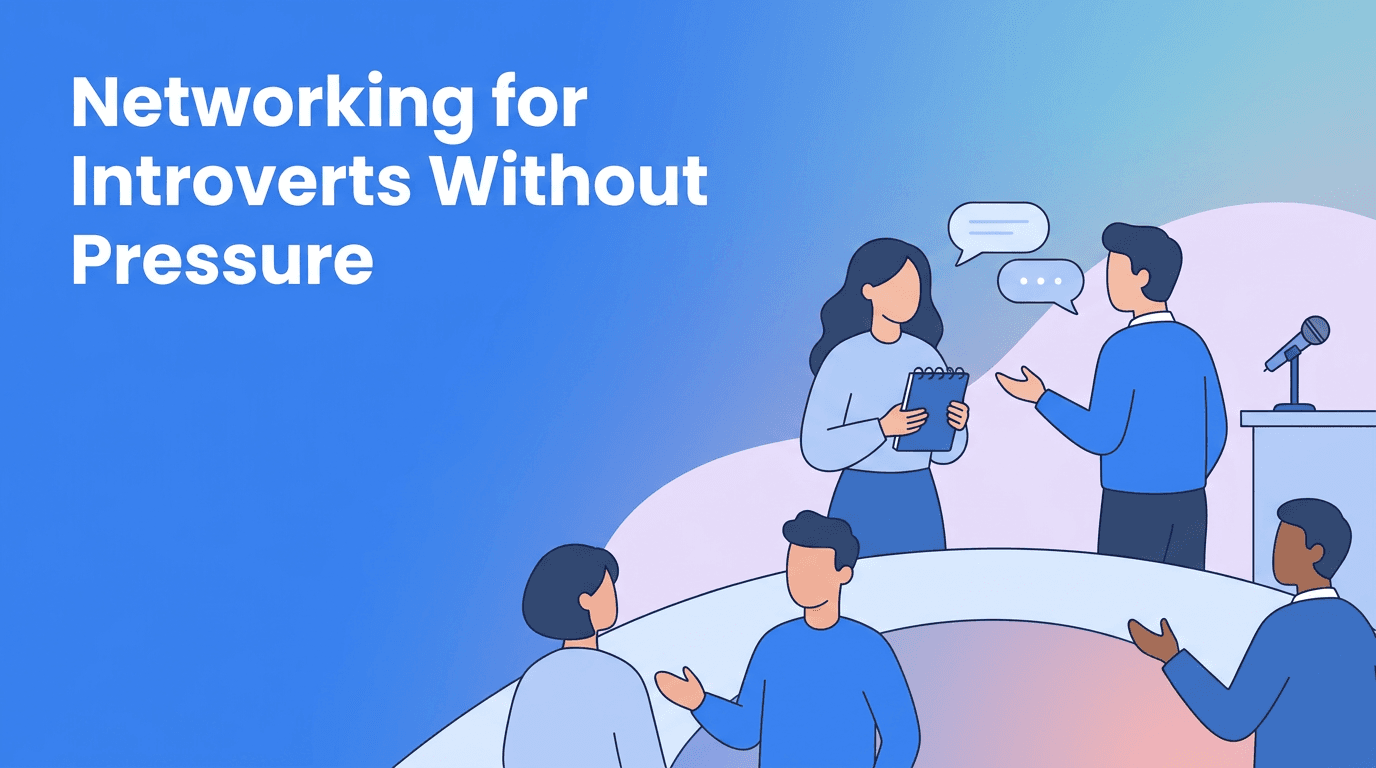
If networking makes you tense, reframe the goal. You are not trying to impress a room. You are trying to have two or three useful conversations. That shift makes networking more manageable for any introvert.
- Set a tiny goal before you arrive, like starting 2 conversations or asking 3 questions.
- Prepare 3 fallback topics: current work, what people are learning lately, or what brought them to the event.
- Use transition phrases so you do not freeze: "Tell me more about that," "What was that like for you?" or "How did you get into it?"
- After the event, send one simple follow-up message. Consistency builds more trust than intensity.
Want help practicing social confidence in real life?
Haply is an AI life coaching app for iOS and Android that can help you build conversation habits, manage social anxiety, and reflect after difficult interactions. You can use chat-based coaching, daily reminders, and tools like the Today Dashboard and habit tracker to practice steadily.
Try Haply FreeA low-stress way to get better at public speaking
Many people think public speaking is separate from everyday conversation, but it relies on the same foundation: regulation, structure, and connection. If you struggle with social anxiety, start small instead of waiting to feel fearless.
- Practice speaking out loud for 60 seconds on a familiar topic.
- Record yourself and look for clarity, not perfection.
- Use a simple structure: point, example, takeaway.
- Before speaking, exhale longer than you inhale to calm your body.
- Focus on helping the audience, not evaluating yourself.
This method improves both public speaking and everyday social skills because it trains your brain to stay organized under pressure.
A 7-day practice plan for social anxiety and confidence
- Day 1: Make eye contact and say hello to one person.
- Day 2: Ask one open-ended question in a casual conversation.
- Day 3: Practice one graceful exit line.
- Day 4: Share one small opinion instead of only agreeing.
- Day 5: Send one follow-up text after a conversation or meeting.
- Day 6: Speak for one minute out loud on any topic to build public speaking comfort.
- Day 7: Reflect on what felt easier and what triggered social anxiety.
If you want extra support, Haply's AI coaches, including coaches focused on Relationships, can help you review patterns, set goals, and build confidence through tiny daily actions instead of all-or-nothing pressure.
What progress actually looks like
Progress does not always mean becoming the most talkative person in the room. It may look like recovering faster after an awkward pause, starting one conversation without overthinking, or feeling less dread before networking events. Real growth in social skills is often quiet, but it is powerful.
Frequently Asked Questions
How can introverts improve social skills without being fake?
Focus on curiosity, listening, and simple conversation structures instead of trying to act extroverted. Authenticity builds stronger rapport than performance.
What are the best social skills for people with social anxiety?
Start with eye contact, open-ended questions, reflective listening, and calm exit lines. These skills reduce pressure while making conversations smoother.
How do I get better at networking if I hate small talk?
Set a small goal, prepare a few questions, and aim for meaningful one-on-one conversations. Networking works better when you focus on connection, not impressing everyone.
Can public speaking help with social confidence?
Yes. Public speaking practice improves clarity, emotional regulation, and comfort being seen, which also supports everyday conversations.