Texting Anxiety in Relationships: How to Communicate Without Spiraling
Texting anxiety in relationships can strain communication, social skills, and emotional connection. Learn practical ways to calm overthinking, build empathy, and respond with more confidence.

By Haply Team
Haply Editorial Team
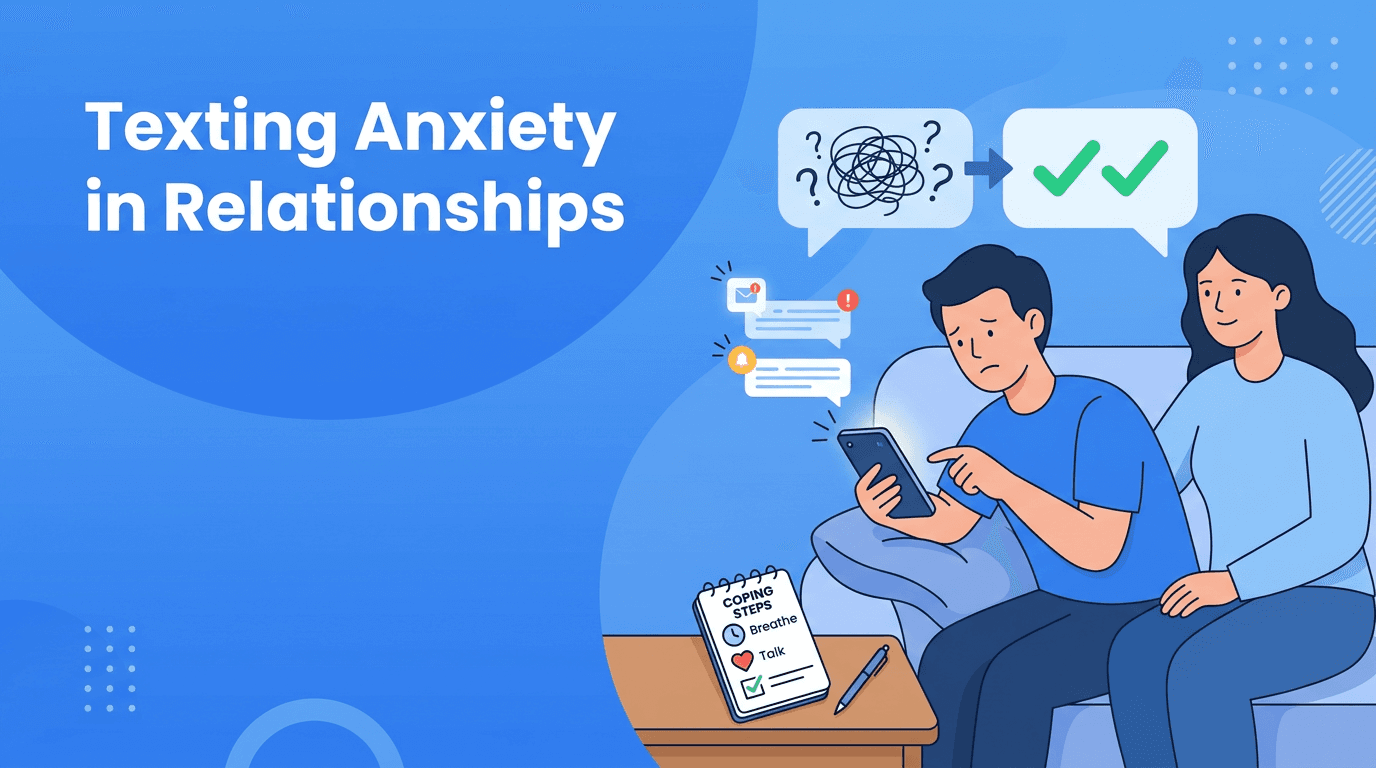
Texting anxiety can quietly shape modern relationships, especially when a delayed reply starts to feel personal. If you have ever reread a message ten times, worried you sounded needy, or built a whole story from one short response, you are not alone. The good news is that better communication, stronger social skills, and a little more self-awareness can help you protect real connection instead of spiraling.
Why texting anxiety hits so hard
Texting removes tone, timing, facial expression, and context. That gap invites the brain to fill in the blanks, often with fear. If you already care deeply about being liked, understood, or emotionally safe, a simple message can start to feel like a test you might fail.
- You may treat response time as proof of interest or rejection
- You may confuse brevity with coldness
- You may over-edit messages to avoid conflict or embarrassment
- You may check your phone constantly, which increases stress instead of easing it
"Clarity builds connection. Assumptions build distance."
How texting anxiety affects relationship communication
When texting anxiety takes over, it can change your behavior in ways that make communication harder. You might send too many follow-ups, avoid saying what you really mean, or withdraw completely to protect yourself. In close relationships, this can create confusion because the issue is not just the message, it is the meaning attached to it.
Common patterns to notice
- Mind reading: assuming you know what the other person meant without asking
- Catastrophizing: turning one late reply into a story about the whole relationship
- People-pleasing: trying to sound endlessly easygoing while hiding your real needs
- Protest behavior: sending passive-aggressive messages, disappearing, or testing the other person
These habits do not mean you are bad at social skills. They usually mean you are trying to create safety with the tools you have. The goal is not perfection. It is learning how to respond in a way that supports trust, empathy, and emotional regulation.
A 5-step reset for texting anxiety
1. Pause before you personalize
Before reacting, ask yourself: "What are three neutral reasons for this message or delay?" This small step interrupts the urge to turn uncertainty into rejection. Often, the simplest explanation is the most accurate.
2. Say the clearer thing
Instead of hinting, try direct and kind language. For example, "I enjoy hearing from you, and I sometimes overthink texts. Clear communication helps me." Honest wording supports stronger connection than guessing games do.
3. Move important topics off text
If a conversation involves conflict, vulnerability, or mixed feelings, text is often the wrong place. A call, voice note, or in-person talk gives you tone and nuance, which improves communication and reduces misunderstanding.
4. Build a response-time boundary
Choose a rule that protects your peace, such as not checking for a reply every five minutes or waiting thirty minutes before sending a follow-up. Boundaries are not punishment. They are structure for your nervous system.
5. Practice empathy, not decoding
Real empathy means staying curious about another person's experience, not just analyzing their wording. You can ask, "Hey, I was not sure how to read that text. What did you mean?" That question creates room for repair instead of assumption.
Want help changing anxious communication habits?
Haply is an AI life coaching app for iOS and Android with specialized Relationships coaches, chat-based support, habit tracking, and daily reminders to help you build calmer communication patterns.
Try Haply FreeHealthy texting habits that strengthen connection
- Use text for coordination, warmth, and simple check-ins, not for every emotional conversation
- Match effort without turning it into a scorecard
- Ask for clarity early instead of silently collecting evidence
- Notice when your body is activated before you hit send
- Remember that secure relationships are built through patterns over time, not one message
If this feels hard, start small. Pick one texting habit to change this week. Then track it daily. With Haply, you can use the habit tracker, streaks, and personalized coaching prompts to practice healthier communication and strengthen your sense of self between conversations.
When texting anxiety points to a deeper issue
Sometimes texting anxiety is not only about phones. It may reflect old attachment wounds, fear of abandonment, low self-trust, or a relationship dynamic that truly lacks consistency. If anxiety stays intense, pay attention to the pattern. The answer may be better coping skills, a more honest conversation, or clearer standards for the kind of connection you want.
Frequently Asked Questions
How do I stop texting anxiety in a relationship?
Pause before reacting, consider neutral explanations, and communicate directly instead of guessing. It also helps to move sensitive topics off text and create boundaries around checking your phone.
Is texting anxiety a red flag in relationships?
Not by itself. Texting anxiety is often a stress response, but it can reveal communication problems, insecurity, or inconsistent behavior that deserves attention.
Can poor texting hurt emotional connection?
Yes. Misreading tone, delaying honest conversations, and relying on text for serious issues can weaken connection. Clearer communication habits usually help.
What are healthy texting habits for dating and relationships?
Use text for simple connection, be clear instead of vague, avoid mind reading, and discuss important topics by phone or in person when possible.