Personal Development Technology in 2026: Which App Features Actually Help You Grow?
Personal development technology is evolving fast. Learn which app features create real behavior change, which ones distract, and how to build a smarter growth stack.

By Haply Team
Haply Editorial Team
Personal development technology is no longer just a category of habit trackers and meditation apps. It is becoming a full operating system for how ambitious people manage focus, learning, energy, and decision-making. The challenge is not finding more tools. It is identifying which app features actually help you improve, and which ones simply make your home screen busier.
If you follow current tech trends, you have probably noticed a shift from single-purpose apps to adaptive platforms that combine coaching, planning, analytics, and behavior design. That sounds promising, but it also creates noise. This guide takes a practical angle: instead of listing random downloads, it breaks down the specific product features that make personal growth technology worth using.
Why personal development technology is changing now
Three forces are reshaping the space. First, AI coaching apps are making personalization cheaper and more accessible. Second, users increasingly want fewer apps that do more. Third, people are measuring tools by outcomes, not novelty. A beautiful interface is nice, but if it does not improve consistency, clarity, or follow-through, it will not last in your routine.
- Personalization is replacing one-size-fits-all advice.
- Context awareness matters more than static reminders.
- Integrated workflows beat disconnected point solutions.
- Behavior feedback loops are becoming a competitive advantage.
- Low-friction design wins because busy professionals do not want setup overhead.
"The best technology for self-improvement does not demand more attention. It returns attention to what matters."
The 5 app features that create real behavior change
1. Goal-based onboarding
Strong personal growth apps start by asking what you are trying to improve: focus, sleep, fitness, learning, finances, or emotional resilience. This sounds basic, but goal-based onboarding is one of the most important app features because it shapes every recommendation after that. Without it, most apps give generic advice that feels irrelevant after day two.
2. Chat-based guidance that adapts
This is where the latest tech trends become useful instead of gimmicky. Good AI guidance should help you think, not just send motivational lines. The most effective AI coaching apps adapt to your goals, constraints, and recent behavior. For example, if your week is overloaded, the app should help you shrink the plan, not guilt you for missing it.
3. Action tools inside the app
Advice alone rarely changes behavior. The best personal development technology includes execution tools such as a focus timer, task planner, breathing exercise, journal, or habit tracker. This matters because each extra app switch adds friction. When coaching and action happen in the same place, follow-through becomes easier.
4. Progress visibility
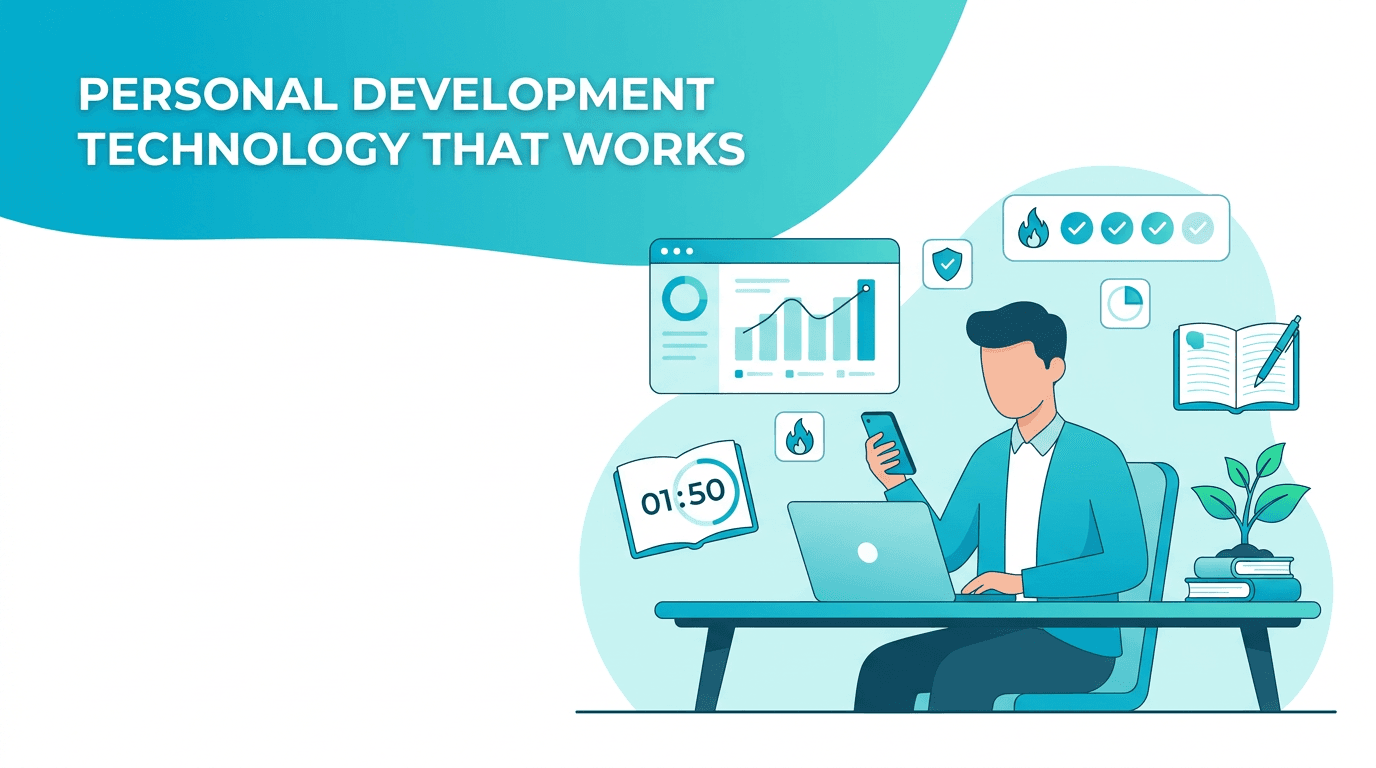
Motivation improves when progress is visible. Look for streaks, trend lines, milestone tracking, and simple daily dashboards. The goal is not perfection. It is evidence. If an app can show that your deep work sessions increased from two to four per week, that is powerful reinforcement.
5. Recovery support, not just performance pressure
Many productivity tools are excellent at pushing output and weak at supporting recovery. Better app features include reset routines, sleep support, breathing tools, and compassionate prompts after missed days. Sustainable growth requires both momentum and recovery.
How to evaluate AI coaching apps without falling for hype
When comparing AI coaching apps, ignore vague promises like "unlock your potential" unless the product clearly shows how. Use this checklist instead.
- Does the app connect coaching to a specific daily action?
- Can it personalize advice based on your actual goals?
- Does it include practical tools like timers, planners, or trackers?
- Is the feedback useful after a bad day, or only when you succeed?
- Can you see measurable progress over time?
- Does the app reduce tool sprawl, or add another disconnected layer?
For example, Haply stands out when you want a broader self-improvement system rather than a narrow utility. It combines chat-based coaching with specialized coaches across productivity, wellness, career, learning, finance, creativity, and relationships. It also includes mini-apps like a Focus Timer, Task Planner, Meditation/Breathe, Sleep Stories, Budget Tracker, and Idea Board, which makes it easier to move from insight to action without bouncing between multiple apps.
Build a smarter growth stack
If you want personalized support across focus, habits, wellness, and career goals, Haply gives you AI coaching plus built-in action tools in one app.
Try Haply FreeA practical stack for tech-savvy professionals
You do not need ten self-improvement apps. You need a small system that covers reflection, execution, and review. A simple stack often works best.
- Use one coaching layer for planning and reflection.
- Use one execution layer for focused work sessions and tasks.
- Use one recovery layer for stress regulation and sleep support.
- Review progress weekly and remove anything you did not use.
This is why integrated products are gaining traction in personal development technology. They reduce the cognitive cost of deciding where each behavior belongs. If your dashboard shows your habits, priorities, and coaching prompts in one place, your routine becomes simpler to maintain.
What the next tech trends mean for self-improvement apps
Expect the next wave of tech trends to focus less on novelty and more on orchestration. Instead of standalone tools, we will see apps acting like personal operating systems. They will connect goals, context, reminders, and adaptive guidance in a way that feels more like collaboration than tracking.
- Multimodal coaching will blend chat, voice, and visual progress views.
- Smarter reminders will respond to behavior patterns, not fixed times.
- Cross-domain guidance will connect work habits with sleep, mood, and learning.
- Achievement systems will become more personalized and less game-like for the sake of it.
The winners will be the apps that respect user attention. Better personal growth tech should feel like a trusted assistant, not another noisy feed.
Bottom line
The smartest way to use personal development technology is to stop chasing the most advanced-looking app and start choosing the most useful app features. Prioritize personalization, built-in action tools, visible progress, and recovery support. If a tool helps you make better decisions in small daily moments, it is doing its job.
For professionals who want one app that supports multiple life areas, Haply is worth a look, especially if you prefer AI-guided coaching with practical tools in the same ecosystem. The best self-improvement stack is not the biggest. It is the one you will actually use consistently.
Frequently Asked Questions
What is personal development technology?
Personal development technology includes apps and digital tools that help improve habits, focus, learning, wellness, career growth, and self-awareness through tracking, coaching, and guided actions.
Are AI coaching apps actually effective?
AI coaching apps can be effective when they offer personalized guidance, connect advice to daily actions, and show progress over time. The best ones reduce friction rather than adding more complexity.
Which app features matter most for self-improvement?
The most useful app features are goal-based onboarding, adaptive coaching, built-in execution tools, progress tracking, and recovery support. These features help turn intention into consistent behavior.
How many personal growth apps should I use?
Most people benefit from a small stack of one to three apps. Too many tools create friction, while a focused setup is easier to maintain.