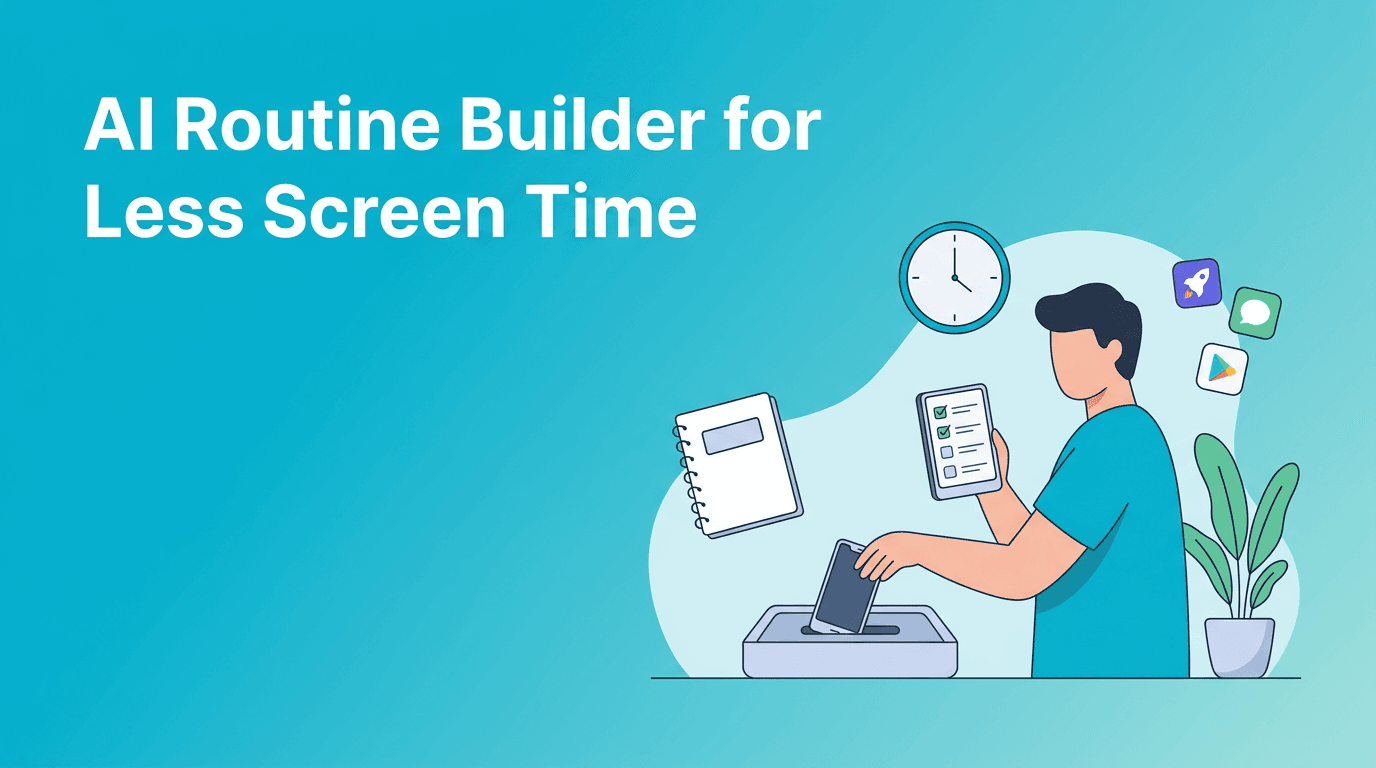
AI Routine Builder: A Smarter Way to Reduce Screen Time Without Going Off Grid
An AI routine builder can help you cut screen time and practice digital minimalism without deleting every app. Learn a practical system, smart app recommendations, and what this says about the future of technology.

By Haply Team
Haply Editorial Team
If your phone keeps eating the small pockets of your day, an AI routine builder might be a better solution than another round of guilt. Instead of chasing perfect digital minimalism, you can use AI tools to shape when, why, and how you reach for screens. The goal is not to quit technology. It is to make your tech life feel more intentional.
Why screen time advice often fails
Most advice about screen time assumes the problem is simple: you use your phone too much, so you need more discipline. But real life is messier. Phones hold your calendar, messages, notes, music, maps, work tools, and downtime. That is why extreme detox plans often collapse after a few days.
A better approach is to design a repeatable routine around your existing behavior. This is where an AI routine builder becomes useful. It can notice patterns, suggest small adjustments, and help you replace vague intentions like 'use my phone less' with specific actions like 'check messages twice before lunch' or 'start the evening with a breathing exercise instead of social scrolling'.
"The best technology is not the kind that demands more attention. It is the kind that gives your attention back."
What an AI routine builder actually does
Think of it as a bridge between your goals and your daily behavior. Good AI tools do more than send reminders. They help you create context-aware routines that fit your energy, schedule, and friction points.
- Tracks patterns so you can spot your most mindless scrolling windows
- Suggests replacements like reading, walking, breathing, or planning when you usually open distracting apps
- Adjusts routines based on what you actually complete, not what looked good on day one
- Keeps the system lightweight so your version of digital minimalism feels realistic, not performative
- Turns goals into steps with prompts, streaks, and daily check-ins
The sweet spot between minimalism and usefulness
This is the part many people miss. Digital minimalism does not have to mean fewer apps at all costs. Sometimes it means choosing better apps. A single smart tool that helps you plan your day, regulate stress, and track habits may replace five noisy apps that constantly pull you back in.
A practical 4-step system for calmer phone use
1. Audit your trigger moments
For three days, notice when you unlock your phone without a clear purpose. Common moments include waking up, starting work, finishing work, waiting in line, and getting into bed. Your AI routine builder should help you identify these moments and attach a new action to each one.
2. Replace, do not just remove
If you delete a distracting habit without adding something else, your brain will look for another quick reward. Swap passive scrolling with a tiny action that still feels easy. Examples include a two-minute stretch, a voice note, a short reading session, or a task review.
3. Use time anchors, not motivation
Build routines around events that already happen: after coffee, before meetings, after dinner, before sleep. This makes your phone behavior less dependent on willpower. Many AI tools are now good at turning these anchors into personalized nudges.
4. Review weekly, not constantly
You do not need to optimize your life every day. A short weekly review is enough to ask: Which apps helped me? Which apps stole time? Which routine felt natural? This is also a useful way to test new app recommendations without overcomplicating your setup.
Want a simpler way to build better tech habits?
Haply is an AI life coaching app for iOS and Android that helps you create personalized routines across productivity, wellness, learning, and more. You can use chat-based coaching, a habit tracker, and mini-tools like Focus Timer, Task Planner, Meditation, and Sleep Stories to reduce friction and make intentional phone use easier.
Try Haply FreeApp recommendations for intentional tech use
If you are trying to reduce screen time without going off grid, choose apps by function, not hype. The best stack usually includes one planning tool, one regulation tool, and one reflection tool.
- Haply for personalized AI coaching, goal-based onboarding, habit tracking, and mini-apps that support routines across wellness and productivity
- A screen time tracker that shows pickup patterns and app categories, so your decisions are based on data
- A read-later or reading app for replacing low-value scrolling with short, meaningful content sessions
- A focus timer that creates a clear start and finish for work blocks
- A sleep or meditation tool for the evening, when many people do their most impulsive scrolling
The key is not to collect more tools. It is to create a smaller, better system. In practice, that is one of the most useful interpretations of digital minimalism today.
What this says about the future of technology
The future of technology for personal growth is probably not more notifications, more dashboards, or more pressure to optimize every minute. It is likely to be more adaptive, more conversational, and more supportive in the background. The next wave of AI tools will probably feel less like software you manage and more like systems that quietly help you make better decisions.
That shift matters because people do not just need productivity. They need clarity, emotional regulation, and sustainable routines. The most interesting apps will not simply measure behavior. They will help interpret it.
The real goal is not less tech, but better defaults
If you want a healthier relationship with your phone, start small. Build one better morning cue. Add one friction point before social apps. Replace one nightly scroll with one intentional ritual. An AI routine builder can help you make those choices repeatable, which is often more valuable than dramatic change.
Used well, technology can support your attention instead of draining it. That is the version of self-improvement worth keeping: practical, humane, and built for real life.
Frequently Asked Questions
What is an AI routine builder?
An AI routine builder is a tool that helps you create and adjust daily routines using your goals, habits, and behavior patterns. It can suggest reminders, replacements, and small habit changes that fit your schedule.
How can I reduce screen time without deleting all my apps?
Start by identifying your trigger moments, then replace mindless phone checks with specific actions like reading, planning, or breathing exercises. Use a small set of supportive apps instead of trying to remove technology completely.
What are the best app recommendations for digital minimalism?
Look for one app for planning, one for focus or regulation, and one for reflection or habit tracking. Tools like Haply can combine several of these functions, which reduces app clutter.
Are AI tools helpful for digital wellness?
Yes, especially when they personalize routines and reduce decision fatigue. The best AI tools support healthier defaults instead of adding more notifications and noise.