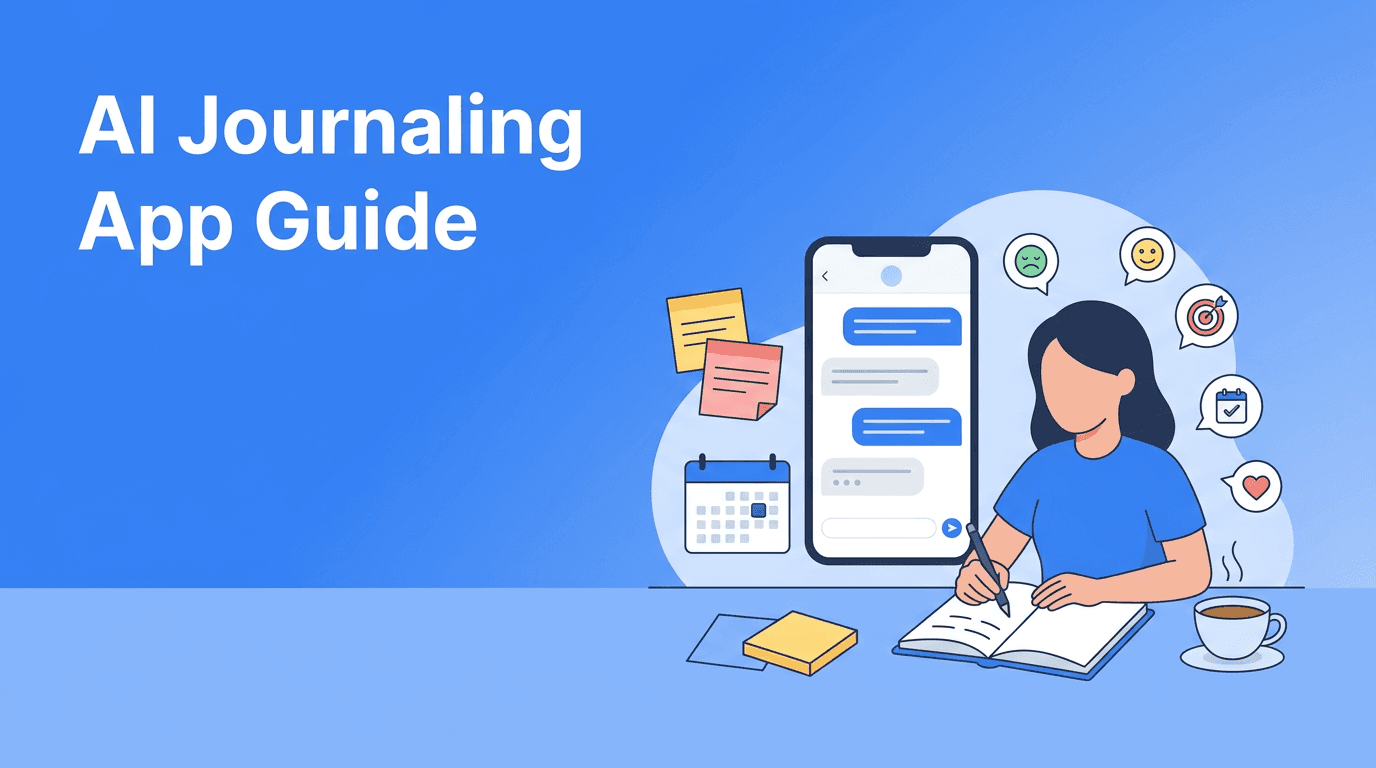
AI Journaling App Guide: Smarter Reflection With Less Friction
Looking for an AI journaling app that fits real life? This guide explains how journaling AI tools compare, what features matter, and how to choose self-improvement apps that support reflection, focus, and follow-through.

By Haply Team
Haply Editorial Team
Choosing an AI journaling app is less about finding the flashiest product and more about finding a tool you will actually return to. Among today's best apps for personal growth, journaling tools stand out because they turn quick thoughts into patterns you can learn from. For people comparing AI tools, productivity apps, and other self-improvement apps, journaling is often the missing layer that connects intention with action.
Why journaling apps are changing personal improvement
Traditional journaling can be powerful, but it also comes with friction. You need time, a prompt, and enough mental energy to start. A strong AI journaling app reduces that friction with guided questions, summaries, mood check-ins, and reminders. That makes it one of the most practical digital tools for people who want insight without turning reflection into another complicated task.
- Prompted reflection helps users start even on low-energy days.
- Pattern detection can highlight recurring stress triggers, wins, and habits.
- Mood and habit tracking connects emotions to routines over time.
- Searchable entries make it easier to revisit lessons instead of forgetting them.
What to look for in the best apps for AI journaling
1. Prompts that feel useful, not generic
Many apps advertise AI, but the quality of prompts matters more than the label. Good prompts help you think clearly about work, relationships, energy, and goals. Weak prompts feel repetitive or overly motivational. If you are evaluating self-improvement apps, test whether the app helps you uncover something specific rather than producing vague affirmations.
2. A clear link between reflection and action
The most effective productivity apps do more than capture thoughts. They help you decide what to do next. For example, after a journal entry about overwhelm, the app might suggest a smaller next step, a breathing exercise, or a focused planning session. This is where journaling tools become broader digital tools for change, not just storage for feelings.
3. Privacy and emotional safety
Because journaling is personal, privacy controls matter. Look for transparent policies, device security, and a clear explanation of how entries are processed. An AI journaling app should feel supportive, but users still need to know what happens to their data before trusting it with sensitive reflections.
"The value of reflection is not in writing more. It is in noticing what keeps repeating."
How AI tools compare across journaling, coaching, and habit support
Not every reflective app is built for the same job. Some focus on free writing. Others act more like coaches. The most useful AI tools often blend journaling with habit support, planning, and check-ins so insight does not stay trapped inside the note itself.
- Pure journaling apps are best for people who mainly want a private writing space with prompts.
- Coaching apps are better for users who want back-and-forth guidance, reframing, and goal support.
- Habit-first apps work well for people who need reminders, streaks, and visible consistency.
- Hybrid tools combine reflection, action planning, and wellbeing features in one place.
Haply fits the hybrid category. It is an AI life coaching app on iOS and Android with chat-based coaching across Productivity, Wellness, Career, Learning, Finance, Creativity, and Relationships. That matters if you want journaling-style reflection, but also want practical next steps through tools like a Focus Timer, Task Planner, Meditation/Breathe, Sleep Stories, Budget Tracker, and a personalized Today Dashboard.
Want reflection that turns into action?
Try Haply if you want more than a blank page. Its AI coaches, habit tracker, daily reminders, and mini-apps help turn insights into consistent next steps.
Try Haply FreeA practical framework for choosing the right self-improvement apps
If you are comparing the best apps in this category, use a simple filter: What problem am I actually trying to solve? People often download multiple productivity apps and still feel stuck because the tool does not match the real need.
- Choose an AI journaling app if your main problem is unclear thinking or emotional overload.
- Choose coaching-style AI tools if you want personalized guidance and accountability.
- Choose structured productivity apps if you already know your goals but need execution support.
- Choose broader self-improvement apps if you want one system for habits, reflection, wellness, and planning.
Signs you need a journaling-first tool
- You often feel busy but cannot explain what is draining you.
- You repeat the same mistakes without noticing the pattern.
- You start habits enthusiastically but lose clarity after a few days.
- You want a private, low-pressure way to process decisions.
How to get more value from digital tools without adding clutter
One common mistake is turning personal growth into app overload. The goal is not to collect more digital tools. The goal is to create a lighter system that supports reflection and follow-through. In practice, that usually means choosing one main app and one supporting tool.
- Use one primary app for daily check-ins and reflection.
- Set one recurring time for journaling, such as after lunch or before bed.
- Review entries weekly and look for repeated themes, not perfect writing.
- Turn one insight into one action item so reflection leads somewhere tangible.
This is also where Haply can be useful for users who want fewer disconnected tools. Instead of juggling separate apps for motivation, habit tracking, meditation, and planning, it combines multiple growth functions inside one guided experience with goal-based onboarding and level progression.
Final take: the best app is the one that reduces resistance
The strongest AI journaling app is not necessarily the one with the most features. It is the one that makes reflection easier, helps you spot patterns faster, and gives you a realistic next step. As best apps, AI tools, productivity apps, and self-improvement apps continue to overlap, the winning products will be the ones that turn insight into repeatable daily behavior.
Frequently Asked Questions
What is the best AI journaling app for beginners?
The best option for beginners is usually an app with simple prompts, low-friction check-ins, and clear privacy policies. Tools that combine reflection with coaching can also make it easier to stay consistent.
Are AI journaling apps better than regular journaling apps?
They can be better for people who struggle to start or want guidance. AI features like prompts, summaries, and pattern spotting reduce friction, but the best choice depends on your comfort and goals.
Can an AI journaling app help with productivity?
Yes. Journaling can improve productivity by clarifying priorities, identifying mental blockers, and turning vague stress into concrete next steps.
How do I choose between journaling apps and self-improvement apps?
Choose a journaling app if reflection is your main need. Choose broader self-improvement apps if you want habits, reminders, coaching, and wellness tools alongside journaling-style support.