Repair Attempts: The Small Communication Habit That Protects Relationships
Repair attempts are tiny moments that can calm conflict, rebuild connection, and strengthen relationships. Learn how to use this communication skill in everyday life.

By Haply Team
Haply Editorial Team
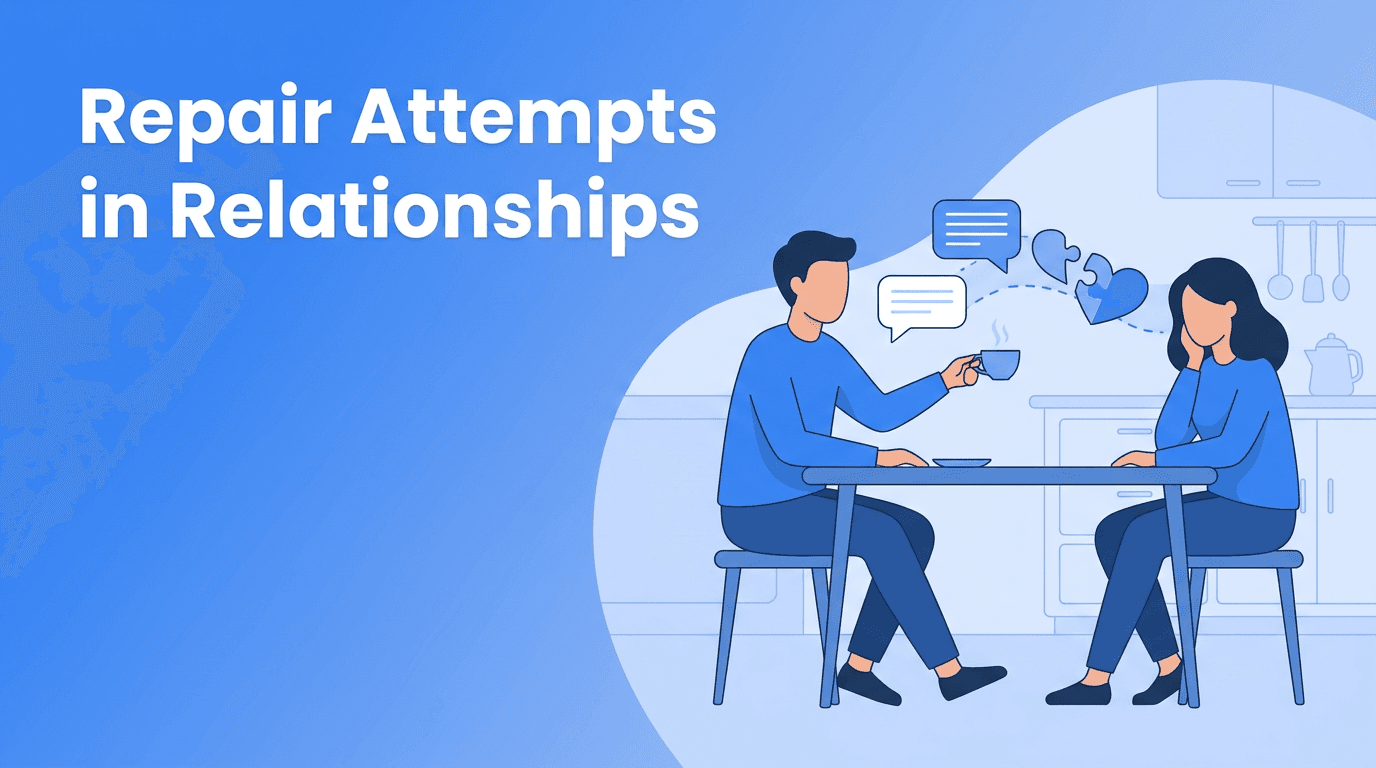
Some relationship habits look dramatic from the outside. Repair attempts do not. They are often small, awkward, and easy to miss, a softer tone, a joke that lowers tension, a hand on the table, or a simple "Can we start over?" Yet these moments can make a major difference in relationships, communication, and emotional connection.
If you want stronger social skills, fewer conversations that spiral, and more room for empathy, learning to notice and use repair attempts is one of the most practical tools you can build. It does not require perfect wording. It requires willingness.
What are repair attempts in relationships?
A repair attempt is any small action or phrase that tries to stop conflict from getting worse and move two people back toward understanding. In healthy relationships, repair attempts protect the bond even when the issue is not solved yet.
- Saying "I think we're talking past each other"
- Using a gentle touch, if physical contact feels welcome
- Admitting "That came out harsher than I meant"
- Making a light, kind joke to release pressure
- Asking "Can we take a breath and try again?"
- Offering one point of agreement before defending yourself
"Connection is not built by never rupturing. It is built by learning how to repair."
Why small repair attempts matter more than big speeches
During conflict, the nervous system often reacts before your best communication skills can catch up. You may feel defensive, misunderstood, or ready to withdraw. In those moments, long explanations rarely help. Repair attempts work because they interrupt escalation.
They also signal something deeply reassuring: "Us matters more than winning this moment." That message builds trust over time. Whether you are talking with a partner, friend, sibling, or colleague, these tiny signals create emotional safety and support lasting connection.
They improve empathy in real time
When tension rises, empathy usually shrinks. Repair attempts reopen the door. A simple phrase like "I can see why that upset you" does not erase the issue, but it helps the other person feel less alone inside it. Feeling understood is often what makes productive communication possible again.
5 repair attempts you can use in hard conversations
- Name your tone: "I hear that I sound sharp. Let me slow down."
- Return to teamwork: "I do not want this to become me versus you."
- Clarify your intention: "I am not trying to dismiss you. I want to understand."
- Ask for a reset: "Can we restart this conversation with less heat?"
- Offer a small truth: "You are right that I got defensive."
These phrases work because they reduce threat. They show maturity, emotional awareness, and strong social skills without sounding robotic. You can adapt them to your own voice.
What if your repair attempt is ignored?
That can happen. Sometimes the other person is too flooded to receive it. If so, stay calm and avoid turning your repair into another argument. You might say, "I want to keep talking, but I think we both need a pause." Respectful space is also a form of healthy communication.
How to get better at repair attempts
Like any relationship skill, this gets easier with practice. Start small. You do not need to wait for a major conflict. Use repair attempts in everyday friction, misunderstandings over text, late replies, shifting plans, or household stress.
- Notice your escalation signs: faster speech, sarcasm, shutting down, interrupting
- Prepare two go-to phrases before your next difficult conversation
- Practice after minor tension, not only serious arguments
- Respond to other people's repair attempts when you notice them
- Reflect later: What helped restore connection? What made it harder?
Want support practicing healthier communication?
Haply offers AI coaching for relationships, communication, and emotional growth. You can talk through conflict patterns, build better habits, and use tools like reminders and guided reflection to strengthen connection over time.
Try Haply FreeIf you freeze during conflict, structured support can help. Haply's Relationships coaches offer chat-based guidance for tough conversations, emotional regulation, and habit building. The app also includes helpful tools like daily reminders, a Today Dashboard, and progress tracking so healthier communication becomes more consistent, not just occasional.
A simple mindset shift for stronger connection
Many people assume good relationships depend on never saying the wrong thing. In reality, strong relationships are built by people who know how to come back from missteps. The goal is not perfect communication. The goal is repair, accountability, and renewed connection.
That shift matters in friendships, dating, marriage, family dynamics, and everyday social life. When you practice repair attempts, you strengthen trust, deepen empathy, and build the kind of social skills that help people feel safe with you.
Frequently Asked Questions
What are repair attempts in a relationship?
Repair attempts are small words or actions used to reduce tension during conflict and reconnect emotionally. They help keep communication respectful even when you disagree.
How do repair attempts improve communication?
They interrupt escalation, lower defensiveness, and make it easier for both people to feel heard. That creates space for empathy and problem solving.
Can repair attempts help friendships too?
Yes. Repair attempts work in friendships, family relationships, and even professional settings. Any relationship benefits when people know how to reconnect after tension.
What if I am bad at communicating during conflict?
You can improve with practice, especially by preparing a few calming phrases ahead of time. Coaching tools like Haply can also help you build healthier communication habits step by step.