Exercise Snacks: The 5-Minute Workout Routine Busy People Actually Keep
A 5-minute workout routine can make fitness and daily movement feel possible, even on packed days. Learn how to use walking, physical activity, and recovery to build momentum.

By Haply Team
Haply Editorial Team
A 5-minute workout can change the way you think about fitness. If your schedule makes a full workout routine feel unrealistic, short bursts of movement can help you build consistency, protect your energy, and make physical activity part of real life.
Why a 5-minute workout works for busy lives
Most people do not struggle because they dislike movement. They struggle because they think fitness only counts when it happens in a perfect 45-minute block. A 5-minute workout lowers the starting line. It helps you stop waiting for ideal conditions and start using the time you already have.
- Short sessions reduce resistance. It is easier to begin when the commitment feels small.
- Movement builds momentum. One quick set often leads to more walking, stretching, or activity later in the day.
- Consistency beats intensity for many beginners. A repeatable workout routine creates trust in yourself.
- Mini sessions support recovery better than all-or-nothing cycles of overdoing it and crashing.
"You do not need more time to begin. You need a version of wellness you can repeat."
What counts as a 5-minute workout routine?
Think of it as an exercise snack. It is a short block of intentional physical activity that raises your heart rate, wakes up your muscles, or restores stiffness from sitting. It can support fitness, improve focus, and make walking and other movement feel more natural throughout the day.
Simple options you can rotate
- Brisk walking up and down a hallway, outside, or on stairs for 5 minutes
- Bodyweight circuit: squats, wall push-ups, glute bridges, and marching in place
- Mobility flow with shoulder rolls, hip openers, calf raises, and gentle twists
- Core reset: dead bugs, bird dogs, planks, and slow breathing between sets
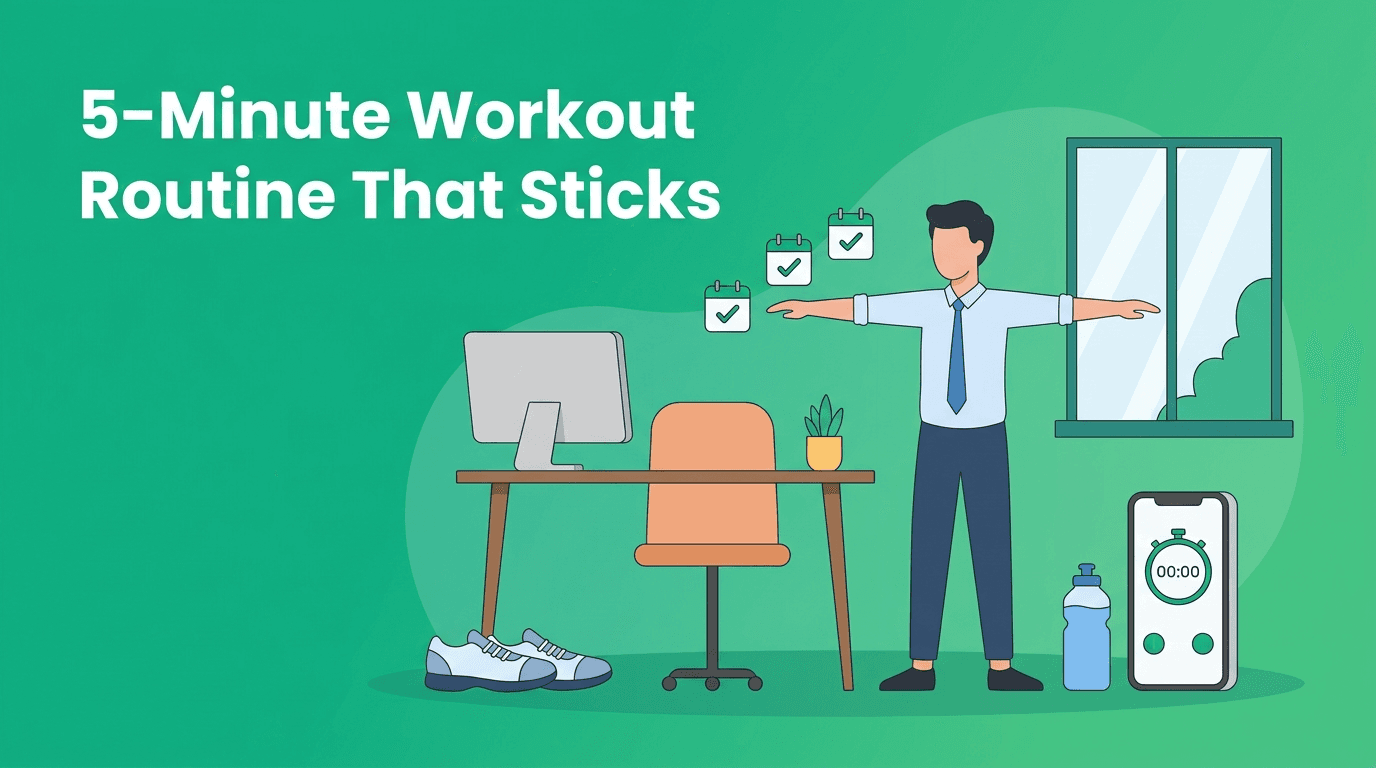
- Desk break workout routine: sit-to-stands, counter push-ups, and a 1-minute fast walk
A realistic weekly fitness rhythm
Instead of chasing the perfect plan, create a flexible rhythm. Try three strength-focused 5-minute sessions, two mobility sessions, and daily walking whenever possible. This gives your body variety while keeping recovery in the picture.
- Monday: lower-body mini strength session
- Tuesday: 5-minute walking break after lunch
- Wednesday: upper-body and core circuit
- Thursday: mobility and stretch reset
- Friday: full-body bodyweight session
- Saturday: longer walking session if time allows
- Sunday: gentle recovery, stretching, or easy physical activity
How to make movement automatic
The easiest workout routine is the one tied to something you already do. Stack movement onto existing habits. Walk right after a meeting. Do squats while coffee brews. Stretch after brushing your teeth. This turns fitness into a cue-based routine instead of a daily negotiation.
Need help turning wellness into a daily habit?
Haply is an AI life coaching app for iOS and Android that helps you build routines with personalized coaching, habit tracking, reminders, and wellness tools like Focus Timer and Meditation/Breathe. It can support your movement goals alongside professional guidance when needed.
Try Haply FreeHelpful habit anchors
- After your first morning email, do 2 minutes of stretching
- Before lunch, take a 5-minute walking break
- After work, complete one round of bodyweight moves
- Before bed, choose recovery movement like mobility or deep breathing
Do not skip recovery
Recovery is part of fitness, not a reward you earn after a hard workout. Short movement sessions work best when you respect sleep, hydration, gentle stretching, and rest days. If you are sore, choose walking or mobility instead of pushing harder. A sustainable routine leaves you feeling more capable, not drained.
When short workouts become a bigger wellness habit
A 5-minute workout is often the gateway, not the finish line. Once movement feels normal, you may naturally extend some sessions to 10 or 20 minutes. That is a win, but it is not required. The real goal is building a life where physical activity happens regularly and recovery keeps you steady.
Frequently Asked Questions
Is a 5-minute workout enough to improve fitness?
A 5-minute workout can improve consistency, energy, and daily movement, especially for beginners or busy people. It is a strong starting point that can support fitness over time.
What is the best 5-minute workout routine for beginners?
A beginner-friendly option includes squats, wall push-ups, marching in place, and gentle stretching. Keep the intensity manageable and focus on doing it regularly.
Does walking count as physical activity or a workout?
Yes. Walking is one of the most accessible forms of physical activity and can absolutely be part of a workout routine, especially when done briskly and consistently.
How often should I do short workouts each week?
Many people benefit from doing short workouts most days of the week. Aim for consistency and mix strength, walking, mobility, and recovery based on your energy and schedule.