AI Coaching Apps in 2026: Which App Features Actually Improve Personal Development?
AI coaching apps are evolving fast, but not every feature supports real growth. Learn which app features matter most for personal development technology, and how to choose tools that fit your workflow.

By Haply Team
Haply Editorial Team
AI coaching apps are no longer a novelty for early adopters. They are becoming a core part of personal development technology, especially for professionals who want tools that fit into a busy digital workflow. The real question is not whether these apps are useful, but which app features actually help people follow through, reflect better, and make progress without adding more noise.
Why AI coaching apps are part of current tech trends
One of the biggest tech trends in self-optimization is the move from static content to interactive guidance. People do not just want another library of articles or motivational quotes. They want systems that respond to context, remember goals, and help them make decisions in real time. That is why AI coaching apps are gaining traction with knowledge workers, founders, and ambitious professionals.
- Passive content informs you, but often does not change behavior.
- Interactive coaching can ask follow-up questions and adapt to your situation.
- Integrated tools like timers, planners, and trackers reduce app switching.
- Personalized prompts make reflection faster and more specific.
The app features that drive real behavior change
1. Context-aware coaching
The best coaching experience feels less like a chatbot and more like a structured thinking partner. Context-aware support means the app can connect your current challenge to your goals, habits, and recent patterns. This is one of the most valuable app features because it reduces generic advice and increases relevance.
2. Habit tracking that connects to coaching
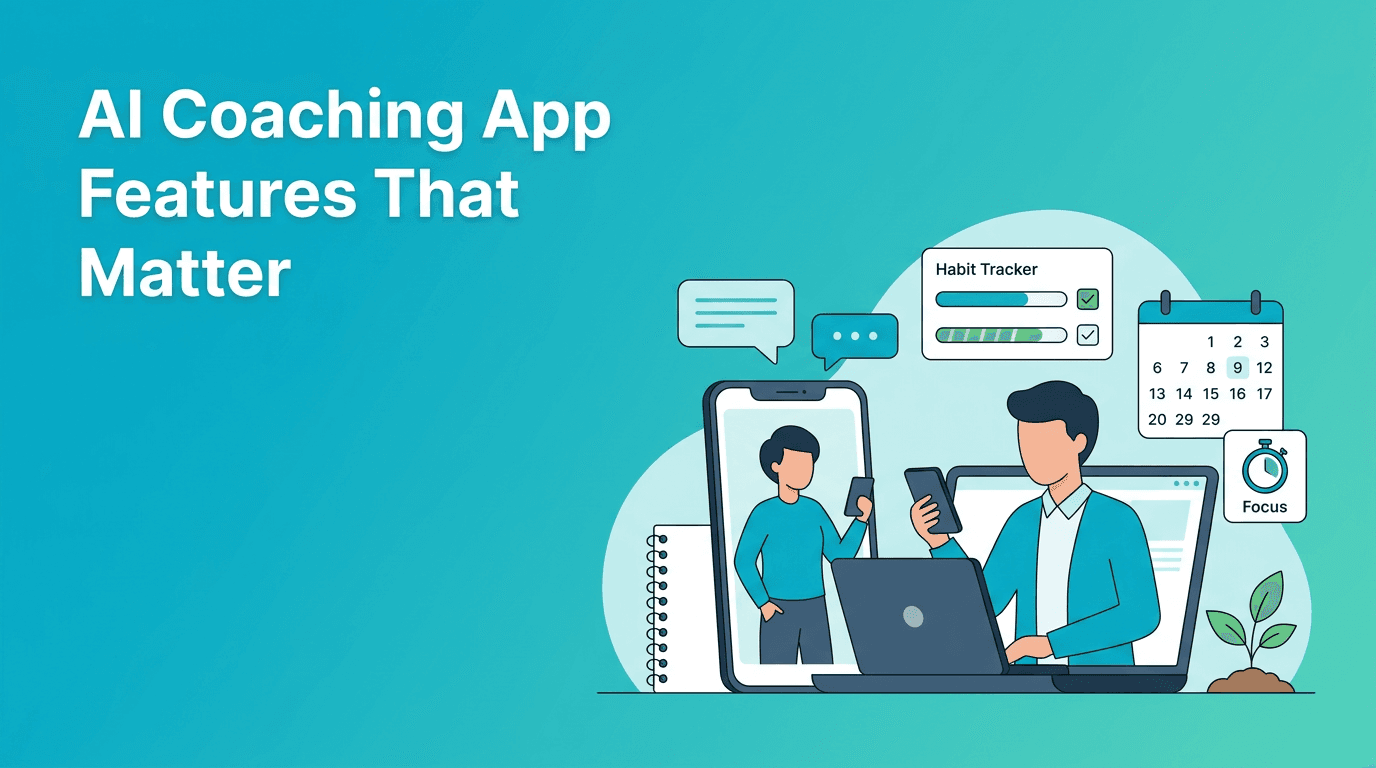
A habit tracker is common, but a tracker alone is rarely enough. Strong AI coaching apps tie habit data to coaching conversations. If your streak breaks, the app should help you diagnose the cause, not just show a missed day. That turns data into action.
3. Goal-based onboarding
Many apps fail in the first five minutes because they ask too little or too much. Good onboarding translates broad ambitions into practical setup. If a user selects career growth, stress reduction, or better learning systems, the app should tailor the experience immediately. This is where personal development technology becomes useful instead of overwhelming.
"The best digital tools do not just save time. They improve the quality of your decisions."
4. Built-in execution tools
Advice without execution support creates friction. A strong product includes practical tools like a Focus Timer, Task Planner, breathing exercises, or sleep support. When coaching and action live in the same place, there is a better chance the insight becomes a behavior.
How to evaluate AI coaching apps without falling for hype
Many products market themselves as intelligent, personalized, and transformative. That language is easy to copy. Instead of judging branding, test the workflow. Ask whether the app helps you move from intention to action in under two minutes. If not, it may be more inspiring than effective.
- Check whether the app asks useful follow-up questions instead of giving generic responses.
- See if your goals shape the dashboard, reminders, or suggested tools.
- Look for app features that support consistency, such as streaks, reminders, and progress milestones.
- Notice whether the app reduces fragmentation or adds another layer to manage.
- Test whether the advice becomes more relevant after a few sessions.
Want a more practical AI coaching experience?
Haply is an AI life coaching app for iOS and Android with specialized coaches across productivity, wellness, career, learning, finance, creativity, and relationships. You also get a habit tracker, daily reminders, a Today Dashboard, and mini-apps like Focus Timer and Task Planner.
Try Haply FreeWhere Haply fits in the personal development technology landscape
Compared with single-purpose wellness or productivity tools, Haply takes a broader systems approach. Its chat-based coaching is paired with practical support tools, which matters for people who do not want separate apps for reflection, planning, focus, and daily motivation. The goal-based onboarding also helps personalize the experience from the start, rather than forcing users to build their own system manually.
This combination aligns well with current tech trends. Users increasingly prefer platforms that combine insight, tracking, and action. Haply also adds level progression, achievements, and a 7-day free trial, which can make experimentation lower risk for professionals exploring AI coaching apps for the first time.
A practical framework for choosing the right app
If you are comparing tools this week, use a simple filter: coach, track, act. First, can the app coach you with relevant guidance? Second, can it track what matters without becoming tedious? Third, can it help you act immediately with built-in tools or clear next steps? If one of these pieces is missing, the system is weaker than it looks.
- Coach: personalized prompts, memory, and useful follow-up questions
- Track: habits, progress patterns, reminders, and milestones
- Act: timers, planners, exercises, journaling, or structured next-step tools
The bottom line on AI coaching apps
The most important shift in personal development technology is not just more AI. It is better integration. The strongest AI coaching apps combine guidance, accountability, and execution in one workflow. For tech-savvy professionals, that means fewer disconnected tools and more consistent progress. When evaluating your next app, focus less on novelty and more on whether the app features actually help you think clearly, act faster, and sustain better habits.
Frequently Asked Questions
What are the most useful app features in AI coaching apps?
The most useful features are personalized coaching, habit tracking tied to feedback, goal-based onboarding, and built-in execution tools like planners or focus timers.
Are AI coaching apps good for personal development?
Yes, especially when they combine reflection, accountability, and action. The best tools reduce friction and help users turn insights into repeatable habits.
How do I choose between AI coaching apps?
Compare how well each app helps you coach, track, and act. Look for relevance, ease of use, and features that fit your daily workflow.
What makes Haply different from other AI coaching apps?
Haply combines specialized AI coaches with tools like a habit tracker, Today Dashboard, Focus Timer, Task Planner, and goal-based onboarding in one app for iOS and Android.