Emotional Check-Ins: A Gentle Daily Habit for Anxiety and Emotional Health
Emotional check-ins can support anxiety relief, emotional health, and overall wellbeing. Learn a simple daily practice that complements therapy and builds depression awareness.

By Haply Team
Haply Editorial Team
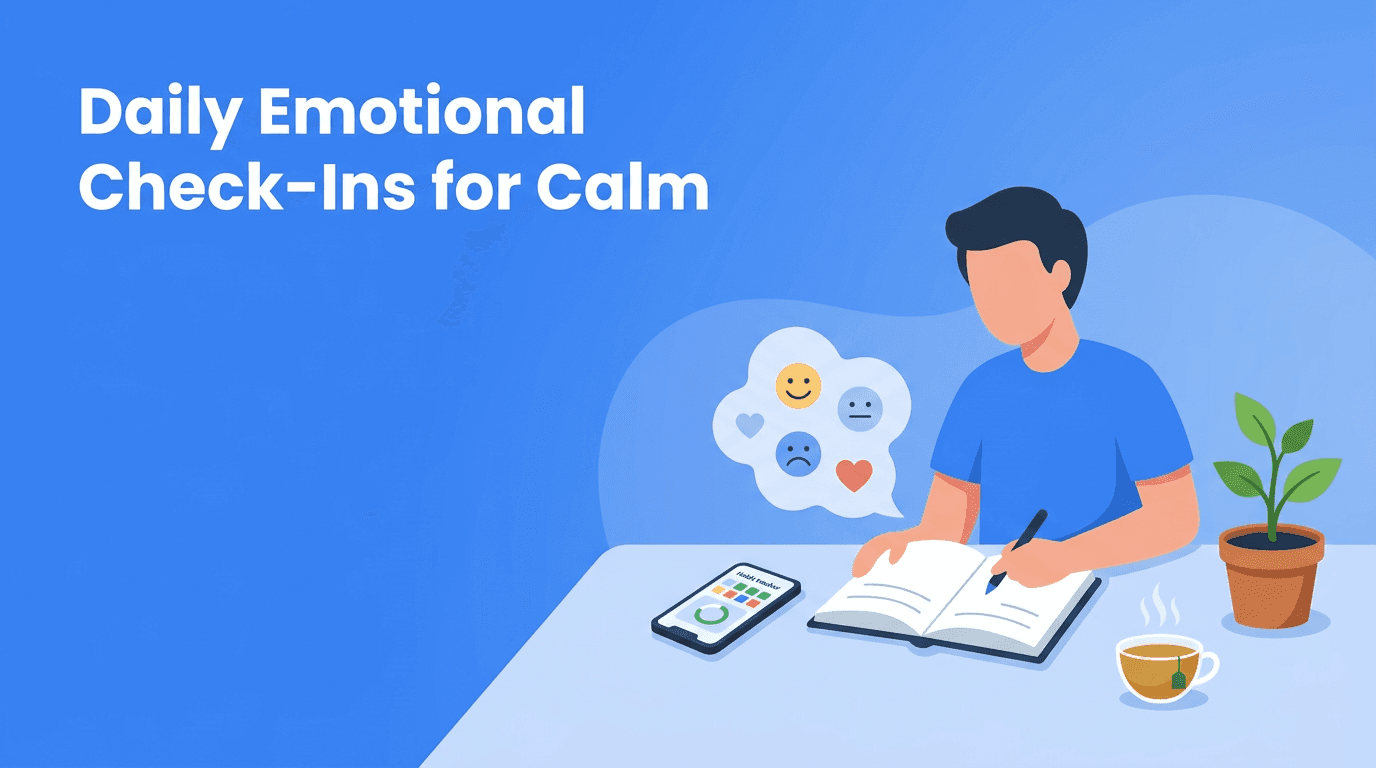
Emotional check-ins are one of the simplest ways to slow down, notice what you feel, and respond with more care. If you live with anxiety, low mood, or emotional overload, this tiny daily habit can support emotional health, build depression awareness, and complement therapy without adding pressure.
Why emotional check-ins matter for wellbeing
Many people move through the day on autopilot. They push through stress, ignore body signals, and only stop when they feel overwhelmed. A short emotional check-in creates a pause. That pause can help you name what is happening before it grows into shutdown, irritability, or panic.
This is not about judging your feelings or fixing everything immediately. It is about building self-awareness, which is a core part of long-term wellbeing. When you know what you feel, you are more likely to choose support that actually fits the moment.
"You do not need to have perfect words for your feelings to start listening to them."
What an emotional check-in actually looks like
A helpful check-in can take two to five minutes. You can do it in the morning, after work, before bed, or any time your mind feels noisy. The goal is not depth every time. The goal is consistency.
- Pause and breathe for three slow breaths.
- Ask yourself: What am I feeling right now?
- Notice where the feeling shows up in your body, like tight shoulders, a heavy chest, or restless energy.
- Rate the intensity from 1 to 10.
- Ask: What might this feeling need? Rest, reassurance, movement, food, connection, or quiet?
- Choose one small response you can do in the next 10 minutes.
If naming emotions feels hard
That is common, especially if you grew up minimizing feelings or have been under stress for a long time. Start with broad categories like sad, anxious, angry, numb, tired, hopeful, lonely, or overwhelmed. Over time, your emotional vocabulary gets stronger, which can make therapy conversations easier and more specific.
How emotional check-ins can help with anxiety
When anxiety rises, the brain often jumps into prediction mode. Everything feels urgent, even if nothing dangerous is happening in the moment. Emotional check-ins interrupt that spiral by helping you separate sensation from story. You may notice, for example, that what felt like "everything is going wrong" is actually hunger, tension, and fear about one upcoming conversation.
- They help you catch stress earlier.
- They make triggers easier to identify.
- They encourage gentle regulation instead of avoidance.
- They create a record you can reflect on later with a therapist or trusted support person.
Emotional check-ins and depression awareness
Low mood does not always look like sadness. Sometimes it shows up as numbness, irritability, exhaustion, or losing interest in things you normally enjoy. A daily check-in can improve depression awareness by helping you spot patterns, such as several days of hopeless thoughts, disrupted sleep, or social withdrawal.
This habit is not a diagnosis tool, and it is not a replacement for professional care. But it can help you notice when it might be time to reach out for therapy or additional support. If your mood feels persistently low or your symptoms are interfering with daily life, connecting with a licensed mental health professional is an important next step.
Want support turning reflection into a daily habit?
Haply is an AI life coaching app for iOS and Android with Wellness coaches, habit tracking, guided mini-apps like Meditation/Breathe, and a personalized dashboard that can help you stay consistent with emotional check-ins. It can support your self-growth alongside therapy, not replace professional care.
Try Haply FreeA simple 3-part script you can use today
- I notice... "My chest feels tight and my thoughts are racing."
- I think this may be... "Anxiety about tomorrow's meeting and not enough rest."
- What I need next is... "Ten minutes away from screens, water, and one grounding exercise."
Make it easier to stick with
- Pair it with an existing routine, like coffee, lunch, or brushing your teeth.
- Keep a note on your phone with a few emotion words.
- Set a daily reminder so you do not rely on memory alone.
- Aim for honesty, not perfection. Even one sentence counts.
When to seek extra support
Self-reflection is useful, but there are times when support should go beyond habits. Consider talking to a mental health professional if anxiety or low mood lasts for weeks, your sleep or appetite changes significantly, daily tasks feel much harder, or you feel disconnected from yourself and others. If you are in immediate danger or thinking about harming yourself, contact local emergency services or a crisis resource right away.
Frequently Asked Questions
What are emotional check-ins?
Emotional check-ins are short daily pauses where you notice, name, and respond to your feelings. They help build self-awareness and support emotional health.
Can emotional check-ins help with anxiety?
Yes, emotional check-ins can help you notice anxiety earlier, identify triggers, and choose calming actions before stress escalates. They work best as a consistent practice.
Do emotional check-ins replace therapy?
No, emotional check-ins do not replace therapy. They are a supportive habit that can complement professional mental health care.
How do emotional check-ins support depression awareness?
They can help you notice mood patterns such as numbness, hopelessness, fatigue, or withdrawal over time. This can make it easier to recognize when extra support may be needed.
How often should I do an emotional check-in?
Once a day is a great starting point. You can also do brief check-ins during stressful moments or transitions throughout the day.