Anxiety Loops at Night: A Gentle Bedtime Reset for Emotional Health
Anxiety loops can make bedtime feel exhausting. Learn a gentle, practical reset that supports emotional health, wellbeing, and better rest without perfection.

By Haply Team
Haply Editorial Team
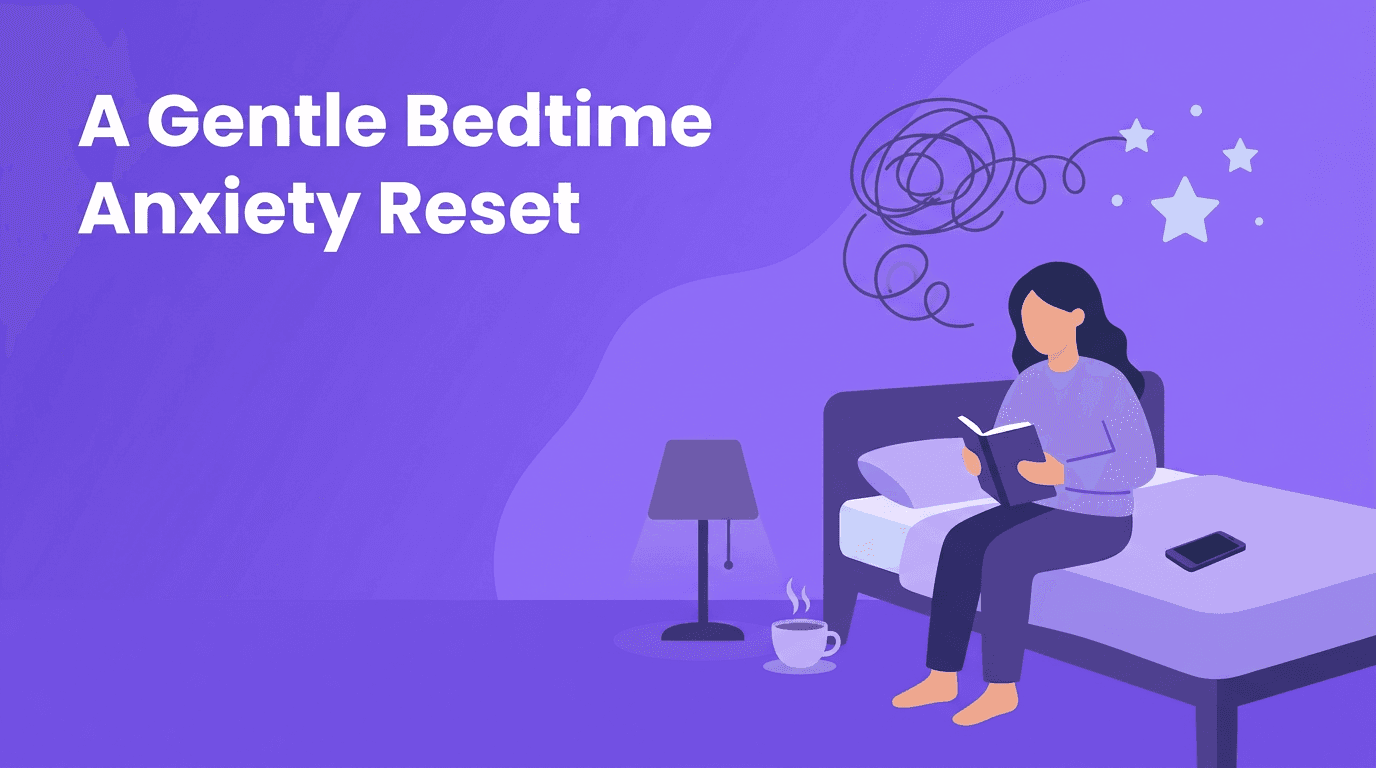
Anxiety loops often get louder at night, when distractions fade and your mind starts replaying unfinished tasks, awkward moments, or worst-case scenarios. If that sounds familiar, you are not broken, and you are definitely not alone. A small bedtime reset can support emotional health, protect your wellbeing, and make evenings feel less overwhelming.
Why anxiety loops feel stronger after dark
Night can remove the noise that kept you going all day. Without emails, conversations, errands, or background stimulation, your brain may suddenly turn inward. For some people, this becomes racing thoughts. For others, it feels like body tension, restlessness, or an urge to keep scrolling to avoid being alone with their thoughts.
This is also why anxiety, low mood, and sleep struggles can overlap. In some cases, persistent nighttime rumination may show up alongside symptoms that deserve deeper attention, including depression awareness signs such as hopelessness, loss of interest, or constant exhaustion. A blog post cannot diagnose anything, but it can help you notice patterns and respond with care.
"You do not have to solve your whole life before bed. You only need to help your mind feel safe enough to rest."
A 15-minute bedtime reset for anxiety loops
1. Shrink the mental tab overload
Take 3 minutes to write down everything your brain keeps trying to remember. Use a note, paper, or a simple checklist. Divide it into two columns: "tomorrow" and "not mine tonight." This helps your mind stop treating every thought like an emergency.
2. Ground your body before your thoughts
When anxiety loops are active, reasoning with yourself is not always enough. Start with the body. Try one of these for 2 to 4 minutes: slow exhale breathing, unclenching your jaw, relaxing your shoulders, or placing one hand on your chest and one on your stomach. Physical cues of safety can soften mental spirals.
- Do 4 slow exhales that are longer than your inhales
- Release tension in your forehead, jaw, neck, and hands
- Dim stimulation by lowering lights and putting your phone face down
- Repeat one calming phrase like "I can rest without fixing everything tonight"
3. Give your mind one place to land
Choose a single anchor instead of forcing yourself to think about nothing. That anchor could be your breath, a short prayer, a body scan, soft music, or a familiar audiobook. The goal is not perfect silence. The goal is gentle redirection.
4. Make tomorrow feel less threatening
A lot of bedtime worry is actually fear about the next day. Write one tiny promise to your future self, such as "I will start with one email" or "I will text my therapist to book a session." Small clarity reduces the brain's need to stay on alert.
When therapy can help with anxiety and emotional health
If anxiety loops are frequent, intense, or tied to panic, sleep loss, or persistent sadness, therapy can be a strong next step. A licensed mental health professional can help you understand triggers, challenge thought patterns, and build coping tools that fit your life. Support is not only for crisis moments. It is also for prevention, insight, and steadier wellbeing.
It is also worth paying attention to the broader picture of emotional health. Ongoing rumination can sometimes appear with burnout, grief, or symptoms that raise depression awareness concerns. Reaching out early can make support feel more manageable.
Need a gentler way to build calming habits?
Haply is an AI life coaching app for iOS and Android that can help you create supportive evening routines with chat-based guidance, habit tracking, reminders, and wellness tools like Meditation/Breathe and Sleep Stories. It can complement therapy, not replace it.
Try Haply FreeHow to make the reset stick in real life
- Keep it short so it feels doable even on hard nights
- Use the same order each evening to reduce decision fatigue
- Avoid doom-scrolling when you notice your mind searching for relief
- Track patterns like caffeine, stress, conflict, or late work that make nights harder
- Celebrate partial wins because a calmer night is still progress, even if sleep is not perfect
If structure helps you stay consistent, tools can make a difference. Some people use Haply's Today Dashboard, habit streaks, and mini-apps to create a simple wind-down ritual and stay accountable to it. Personalized support can be especially helpful when your brain feels noisy and motivation is low.
A kinder way to think about nighttime anxiety
You do not need to win a fight with your mind. Often, the most effective approach is to lower pressure, reduce stimulation, and offer your nervous system a few clear signals of safety. Over time, that gentle repetition can help nighttime feel less like a battleground and more like a transition.
Frequently Asked Questions
How do I stop anxiety loops at night?
Start with a short reset: write down tomorrow's tasks, reduce stimulation, and use one calming anchor like breathing or a body scan. If it keeps happening, therapy can help you address the root pattern.
Can anxiety loops be a sign I need therapy?
Yes, especially if they are frequent, disrupt sleep, trigger panic, or come with persistent sadness or hopelessness. Therapy can help you build coping skills and understand what is driving the rumination.
What is the difference between anxiety and overthinking at bedtime?
Overthinking is a pattern of repetitive thoughts, while anxiety often includes emotional and physical symptoms like dread, tension, or restlessness. They often overlap at night.
Can depression awareness include noticing nighttime rumination?
Yes. Nighttime rumination can appear alongside low mood, fatigue, hopelessness, or loss of interest. It is not a diagnosis by itself, but it can be a useful signal to check in with your emotional health.