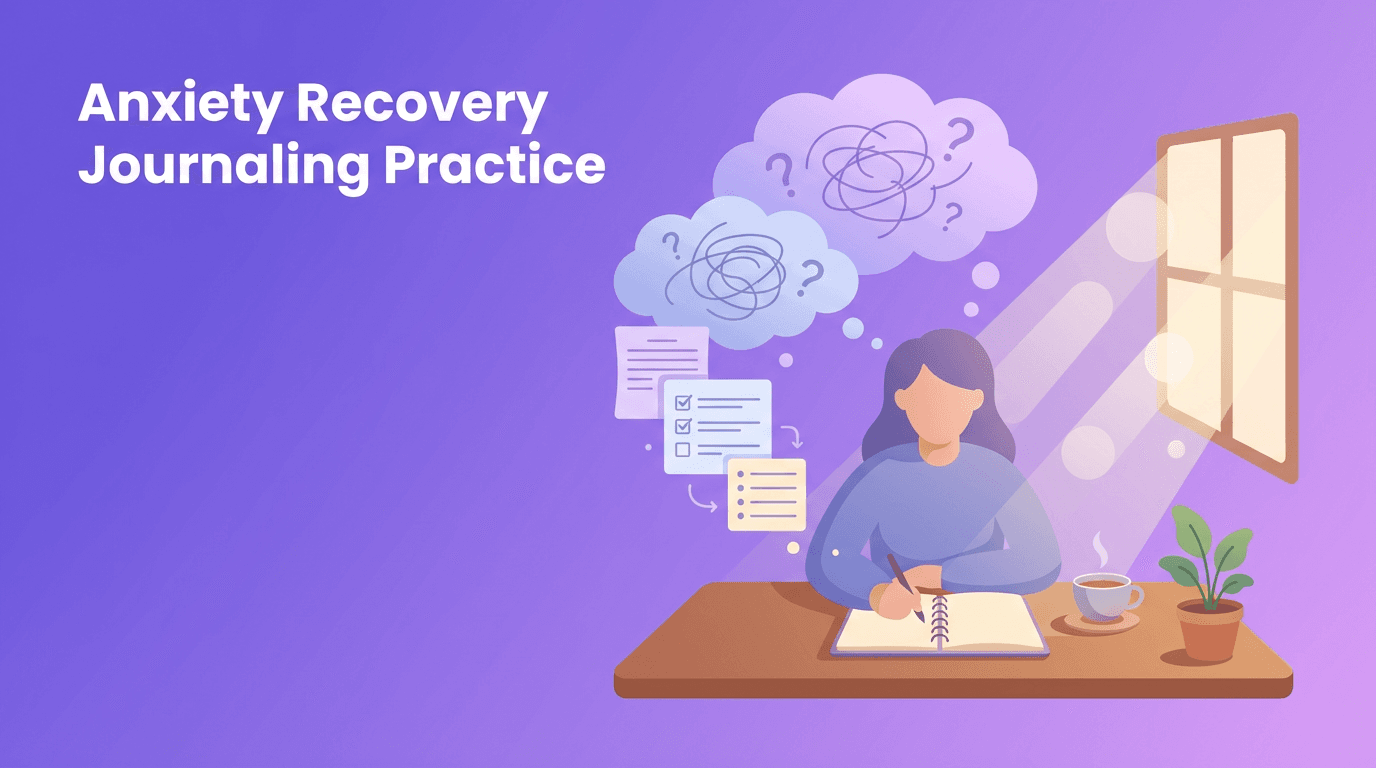
Anxiety Recovery Journaling: A Gentle Practice for Emotional Health
Anxiety recovery journaling can support emotional health, therapy goals, and everyday wellbeing with simple prompts that help you slow down, reflect, and respond with more self-compassion.

By Haply Team
Haply Editorial Team
Anxiety journaling is not about writing perfectly or forcing positive thoughts. It is a simple way to slow racing thoughts, notice patterns, and support your emotional health with more clarity and self-kindness. For many people, it can also complement therapy by making feelings easier to name and discuss.
Why anxiety journaling feels helpful when your mind is crowded
When anxiety builds, thoughts can become fast, repetitive, and hard to sort through. Putting them on paper can create a little distance between you and the spiral. That distance often makes it easier to ask, "What am I actually feeling right now?" instead of treating every thought like an emergency.
- It helps externalize worries so they feel less tangled
- It can reveal triggers and patterns over time
- It supports depression awareness by helping you notice low mood, numbness, or loss of interest early
- It gives you language to bring into therapy sessions
- It encourages a more intentional daily wellbeing routine
"You do not have to untangle every thought at once. Sometimes healing begins by simply giving your feelings a place to land."
A gentler way to start journaling for anxiety
A common mistake is turning journaling into pressure. If the page feels intimidating, start small. Set a timer for three minutes. Write one sentence. Use bullet points. The goal is not to produce insight every day. The goal is to build a safe and repeatable habit that supports anxiety journaling without becoming another task to perform.
Try this 5-minute structure
- Name the feeling: "I feel..."
- Name the trigger: "This started when..."
- Name the body signal: "I notice..."
- Name the need: "Right now I need..."
- Name one next step: "Today I can..."
Journal prompts that support emotional health
- What thought keeps repeating today, and what might it be trying to protect me from?
- What am I assuming right now, and what facts do I actually have?
- Where do I feel stress in my body?
- What would I say to a friend feeling this exact way?
- What helped me feel 1 percent safer or calmer before?
- What is one thing I can postpone, simplify, or ask for help with today?
How anxiety journaling can complement therapy
Journaling is not a replacement for professional care, but it can be a helpful bridge between sessions. If you are already in therapy, a journal can help you track what happened during the week, capture emotional shifts, and remember questions you want to bring up. If you are considering support, journaling may also help you describe your experience more clearly when reaching out.
Want guided support between reflections?
Haply is an AI life coaching app on iOS and Android with Wellness coaching, habit tracking, daily reminders, and mini-apps like Meditation/Breathe and Sleep Stories. It can support your self-reflection and routines alongside professional help.
Try Haply FreeMake the habit easier to keep
The best journaling routine is the one that feels realistic. Keep your notebook visible. Pair it with tea, a morning check-in, or an evening wind-down. If you prefer digital tools, use a notes app or guided prompts. With Haply, some people find it easier to stay consistent through chat-based check-ins, streaks, and a Today Dashboard that keeps wellbeing goals visible without feeling overwhelming.
- Choose a tiny daily target, like three lines
- Use the same time cue each day
- Stop before you feel drained
- Re-read only if it feels supportive
- Share useful patterns with your therapist if you have one
When journaling may not feel helpful
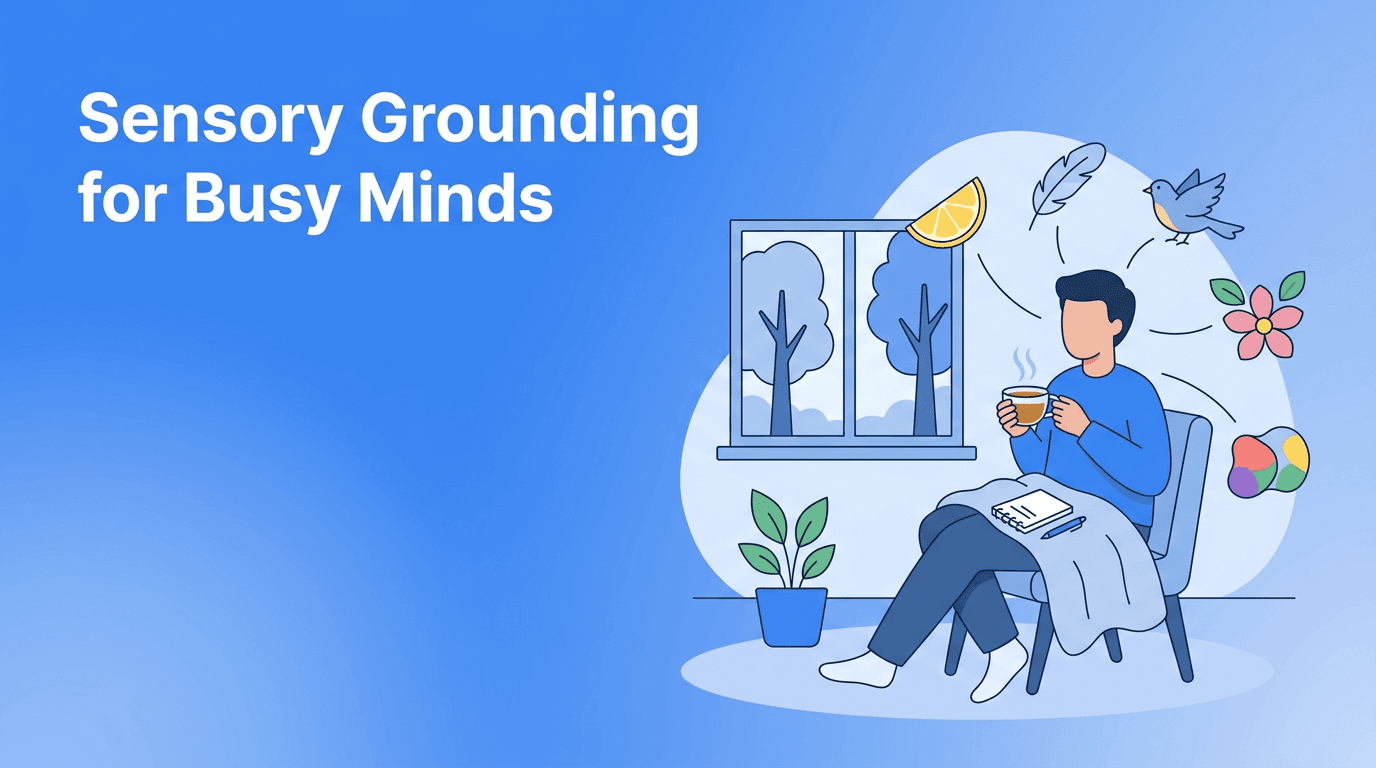
Sometimes writing can intensify rumination, especially if you are only circling fears without grounding yourself. If that happens, shift the format. Try shorter entries, sensory observations, or a simple check-in with one action step. If anxiety feels persistent, intense, or connected with symptoms of depression, reaching out for professional support is a strong next step.
Frequently Asked Questions
Does journaling really help anxiety?
For many people, journaling helps by organizing thoughts, identifying triggers, and creating emotional distance from spiraling worries. It works best as a gentle practice, not a pressure-filled task.
What should I write in an anxiety journal?
Start with what you are feeling, what triggered it, what you notice in your body, and one small supportive action you can take next. Short entries are enough.
Can journaling replace therapy?
No. Journaling can support self-awareness and help you prepare for therapy, but it is not a substitute for professional mental health care.
How often should I do anxiety journaling?
Consistency matters more than length. Even three to five minutes a few times a week can support emotional health and wellbeing.