Anxiety Spirals: A Gentle Reset Plan for Emotional Health
Anxiety spirals can drain your emotional health and wellbeing. Learn a gentle reset plan with practical steps, therapy-friendly support, and depression awareness tips.

By Haply Team
Haply Editorial Team
Anxiety spirals can make a normal moment feel suddenly unmanageable. One thought triggers another, your body tenses, and your sense of wellbeing shrinks fast. The good news is that you do not need a perfect routine to interrupt the cycle. A few small, repeatable steps can support emotional health, build depression awareness, and work alongside therapy if you already have professional support.
What anxiety spirals really look like
For many people, anxiety is not just worry. It can feel like a chain reaction. You notice a sensation, predict the worst, and then start scanning for more danger. This can affect sleep, concentration, appetite, and mood. Over time, repeated anxiety spirals may leave you feeling discouraged or emotionally flat, which is why depression awareness matters too. Anxiety and low mood often overlap, even if they show up differently.
- A small stressor starts to feel urgent or catastrophic
- Your body reacts with a racing heart, tight chest, or restlessness
- You begin avoiding tasks, people, or decisions
- You judge yourself for struggling, which adds a second layer of distress
You do not have to calm everything at once. You only need to create enough safety for the next helpful step.
A 5-step reset for anxiety spirals
1. Name the spiral without shaming yourself
Try saying, "This is an anxiety spiral, not proof that something is wrong with me." Naming the pattern creates a little distance between you and the fear. That distance can help you respond more gently instead of reacting automatically.
2. Regulate your body first
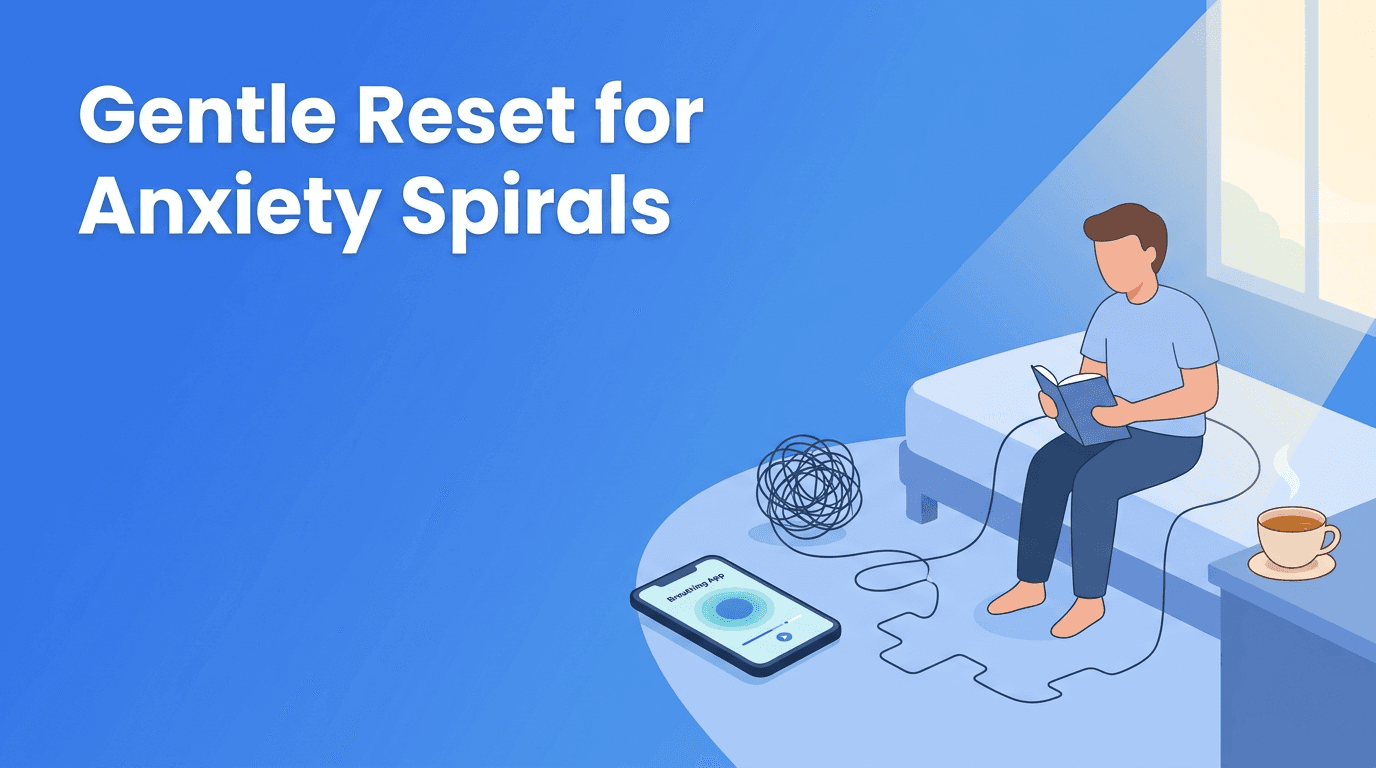
When your nervous system is activated, logic alone may not help. Start with a physical reset. Exhale longer than you inhale, place both feet on the floor, or hold something cool in your hands. These simple actions can send your body a signal of relative safety.
- Take 5 slow breaths with a slightly longer exhale
- Press your feet into the ground for 10 seconds
- Unclench your jaw and drop your shoulders
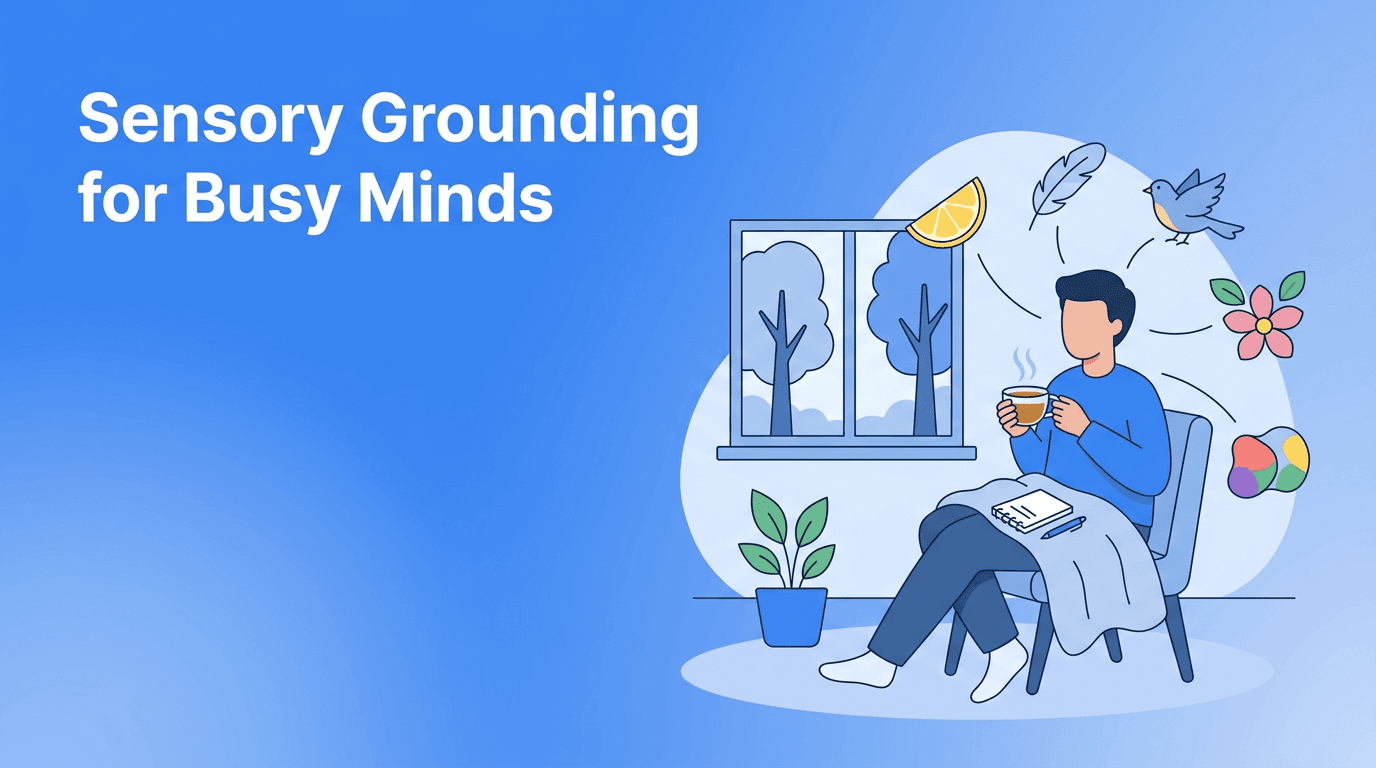
- Look around and name 5 neutral things you can see
3. Shrink the problem to the next 10 minutes
Anxiety often jumps far into the future. Bring yourself back by asking, "What do I need in the next 10 minutes?" Maybe it is water, a short walk, a text to a friend, or one tiny task. This protects emotional health by reducing overwhelm into something doable.
4. Check for the hidden story
Many anxiety spirals are fueled by a painful story such as "I am failing," "Everyone is upset with me," or "If I rest, I will fall behind." Write the thought down and ask whether it is a fact, a fear, or a habit. You do not need forced positivity. You only need a more balanced sentence.
5. Use support before the spiral deepens
Support can be personal or professional. A friend, a therapist, a journal prompt, or a structured app can all help. If you are in therapy, consider creating a "spiral plan" with your therapist so you know what to do when distress rises. If your anxiety often comes with numbness, hopelessness, or loss of interest, depression awareness is especially important and worth discussing with a qualified professional.
Need a gentle daily support system?
Haply is an AI life coaching app for iOS and Android with Wellness coaches, a habit tracker, breathing tools, and guided check-ins that can support your emotional health between therapy sessions.
Try Haply FreeDaily habits that reduce the chance of a spiral
You cannot control every trigger, but you can lower your baseline stress. Small habits help protect wellbeing before anxiety peaks. Think of them as preventive care for your mind and body.
- Keep a consistent sleep and wake window most days
- Eat regularly so anxiety is not amplified by low energy
- Limit doomscrolling, especially early in the morning and late at night
- Build short movement breaks into your day
- Use journaling or voice notes to release looping thoughts
- Track patterns to notice what tends to trigger your anxiety
When therapy can help
If anxiety is interfering with work, relationships, sleep, or daily functioning, therapy can be a meaningful next step. A therapist can help you identify triggers, challenge unhelpful thought patterns, and practice coping tools tailored to your life. Therapy is not only for crisis. It can also be a proactive investment in emotional health and long-term wellbeing.
Apps like Haply can complement that process, not replace it. Its chat-based coaching, Today Dashboard, and mini-apps like Meditation/Breathe and Task Planner can help you stay connected to supportive habits between sessions.
A kinder way to think about progress
Healing is rarely linear. Some days you will notice the spiral early. On other days, you may only realize what happened afterward. That still counts as awareness. Every moment of noticing is a form of progress. With practice, anxiety spirals can become shorter, less intense, and easier to recover from.
Frequently Asked Questions
How do I stop anxiety spirals quickly?
Start with your body first. Slow your breathing, ground your senses, and focus only on the next 10 minutes instead of solving everything at once.
Can anxiety and depression happen at the same time?
Yes. Anxiety and depression often overlap, which is why depression awareness matters when symptoms include hopelessness, numbness, or low motivation.
Is therapy helpful for anxiety spirals?
Yes. Therapy can help you identify triggers, learn coping skills, and create a personalized plan for moments when anxiety escalates.
What habits support emotional health every day?
Consistent sleep, regular meals, movement, reduced doomscrolling, and reflective check-ins can all support emotional health and overall wellbeing.