Dopamine Menu for Stress Management: A Gentle Self-Care Tool for Mental Health
A dopamine menu can support wellness, mental health, and stress management by helping you choose small self-care actions that restore energy and make healthy living feel more doable.

By Haply Team
Haply Editorial Team
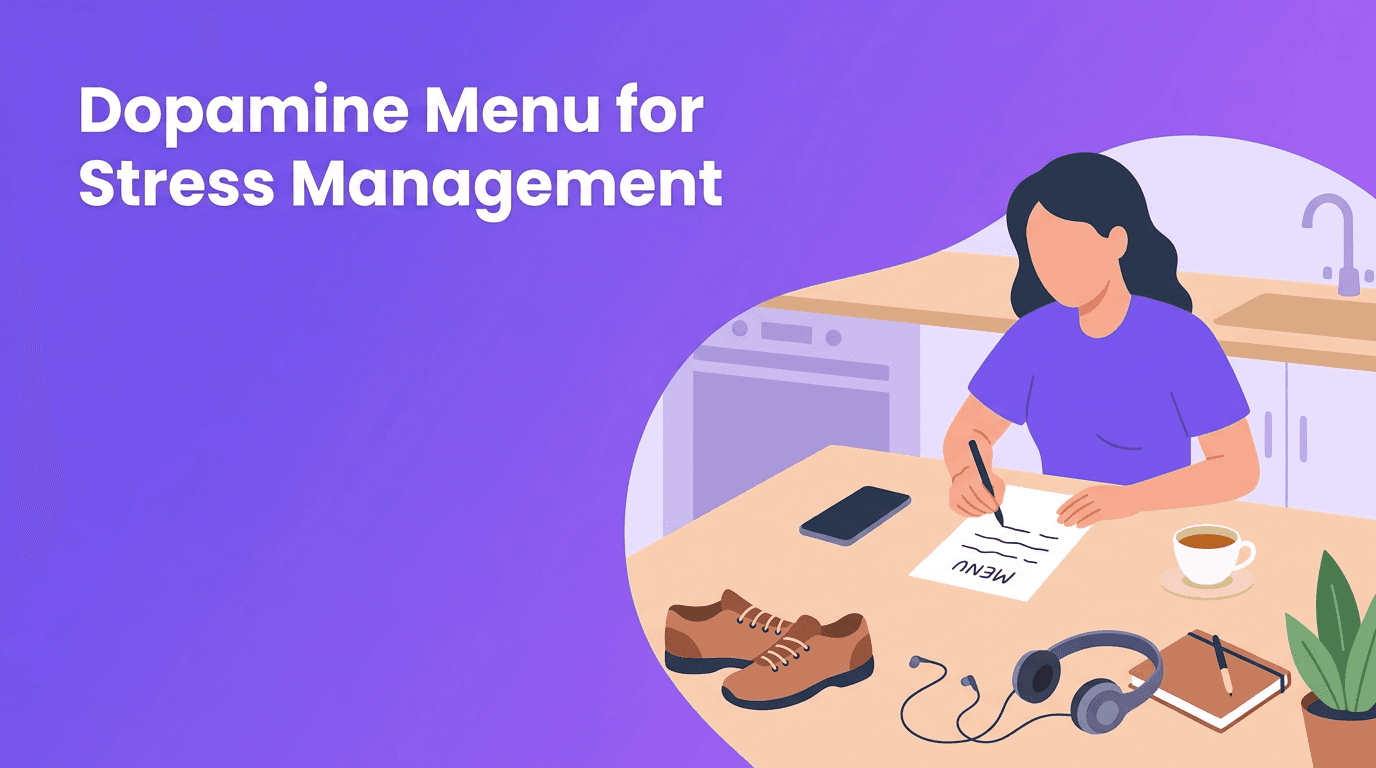
When your brain feels foggy, tense, or overstimulated, deciding what might help can feel strangely hard. A dopamine menu is a simple way to support stress management, mental health, and everyday wellness by giving you a short list of small actions that feel nourishing, realistic, and kind.
Instead of waiting until you're exhausted to think of self-care, you prepare options in advance. That can make healthy living feel less like a big project and more like a series of gentle choices you can return to throughout the day.
What is a dopamine menu?
A dopamine menu is a personalized list of activities that help you feel more regulated, engaged, or refreshed. The term is popular online, but the idea is grounded in something practical: when stress is high, your decision-making gets narrower. Having a pre-made menu reduces friction and helps you choose support faster.
Think of it like emotional meal prep
Just as meal prep makes nutritious eating easier, a dopamine menu makes supportive actions easier to access. It does not need to be perfect, trendy, or highly productive. The goal is to create options that are low-pressure, repeatable, and genuinely helpful for your nervous system and attention.
"The best self-care plan is often the one you can remember and use when life feels messy."
Why a dopamine menu can help mental health and wellness
Many people think they need more discipline when they actually need fewer decisions. A dopamine menu can help with stress management because it replaces the question "What should I do right now?" with "Which small support fits this moment?" That shift can lower resistance and make self-care more consistent.
- For wellness: it encourages brief restorative breaks before stress builds up.
- For mental health: it supports awareness of what actually helps your mood and focus.
- For healthy living: it makes small habits easier to repeat without overthinking.
- For self-care: it offers realistic options for low-energy days, not just ideal days.
How to build your own dopamine menu
1. Start with activities that are easy, not impressive
Choose actions you can do in 2 to 15 minutes. This is not the place for complicated routines you rarely follow. Think: stretch for three minutes, step outside, drink water, listen to one song, tidy one surface, text a friend, or do a short breathing exercise.
2. Organize your menu by energy level
One reason a dopamine menu works is that it respects reality. Create categories such as "very low energy," "medium energy," and "more energy." On hard days, your menu should still offer support that feels possible.
3. Include more than screen-based rewards
Scrolling can feel automatic, but it does not always leave you feeling restored. Add sensory, physical, social, and creative options too. A balanced menu supports wellness more effectively than relying on one kind of stimulation.
- Very low energy: sit in sunlight for five minutes, make tea, use a guided breathing app, hold an ice cube, pet your dog, or lie on the floor and stretch.
- Medium energy: take a short walk, shower, journal for one page, prep a snack, do a five-minute room reset, or use a focus timer.
- More energy: cook something simple, meet a friend, do a workout video, work on a hobby, or plan your week.
A practical dopamine menu for stress management at work
Work stress can blur the line between productivity and depletion. A dopamine menu for your workday can support stress management without requiring a full reset. Keep it visible on your phone notes app, desk, or planner.
- One-minute options: unclench your jaw, drop your shoulders, sip water, look away from the screen, or name what you are feeling.
- Five-minute options: walk to the window, breathe in for four and out for six, clear your desktop, or write the next single task.
- Ten-minute options: take a phone-free walk, eat a real snack, stretch your hips and neck, or do a short meditation.
Want help turning small actions into steady habits?
Haply is an AI life coaching app for iOS and Android with Wellness coaching, a habit tracker, daily reminders, and mini-apps like Meditation/Breathe and Focus Timer. It can help you build a dopamine menu that fits your real life. Haply supports your growth, but it is not a replacement for professional care.
Try Haply FreeCommon mistakes that make self-care harder
Sometimes the problem is not motivation. It is that your support list is built for a fantasy version of your day. If you want your dopamine menu to strengthen mental health and healthy living, avoid these common traps.
- Making every option too ambitious. If it takes too much effort, you will skip it when you need it most.
- Using only passive distractions. Some are fine, but include actions that help you feel grounded afterward.
- Ignoring your triggers. Notice what usually happens before you feel drained, irritable, or scattered.
- Never updating the menu. Your needs change with seasons, workload, and life transitions.
How to make your dopamine menu stick
Keep your menu visible and specific. Write exact options instead of vague goals like "relax" or "be healthier." You can also pair it with an existing routine, such as checking your menu after lunch, before opening social media, or when you notice tension in your body.
If you like structure, use Haply to support your routine. Its chat-based coaching can help you choose realistic actions, and tools like the Today Dashboard, streak tracking, and mini-apps can make self-care more actionable. For deeper or ongoing mental health concerns, professional support is still the right place to turn.
A calmer way to approach healthy living
A dopamine menu is not about chasing constant pleasure. It is about creating a compassionate system for wellness, stress management, and sustainable healthy living. When you know what helps, you do not have to invent relief from scratch every time life feels heavy.
Start small. Pick five options that genuinely support you this week. The most effective self-care tools are often the simplest ones you can return to again and again.
Frequently Asked Questions
What is a dopamine menu for adults?
A dopamine menu for adults is a personalized list of small activities that help improve mood, focus, or regulation. It makes self-care easier by reducing decision fatigue during stressful moments.
How do I make a dopamine menu for stress management?
Choose simple actions that help you feel better, then group them by energy level or time needed. Keep the list visible so you can use it quickly when stress rises.
Does a dopamine menu help mental health?
It can support mental health by making healthy coping actions easier to access. It is a helpful wellness tool, but it is not a replacement for therapy or medical care.
What should I put on a dopamine menu besides scrolling?
Try options like walking, stretching, music, breathing exercises, journaling, tea, sunlight, a short meditation, or texting someone supportive. The best choices are easy and genuinely restorative for you.