Attention Residue: The Hidden Efficiency Leak in Your Workday
Attention residue quietly drains efficiency when you jump between tasks. Learn a practical system for habits, scheduling, and prioritization that helps you protect focus.

By Haply Team
Haply Editorial Team
Attention residue is what stays behind in your mind after you switch tasks before fully finishing or mentally closing the previous one. If your day feels busy but strangely fragmented, attention residue may be the real reason your efficiency keeps dropping.
Most people try to fix this with more willpower. A better approach is to redesign your productivity systems so your brain has fewer open loops, cleaner transitions, and stronger default habits. This article walks through a practical method you can use whether you work remotely, study, or manage a crowded calendar.
Why attention residue makes smart people feel unproductive
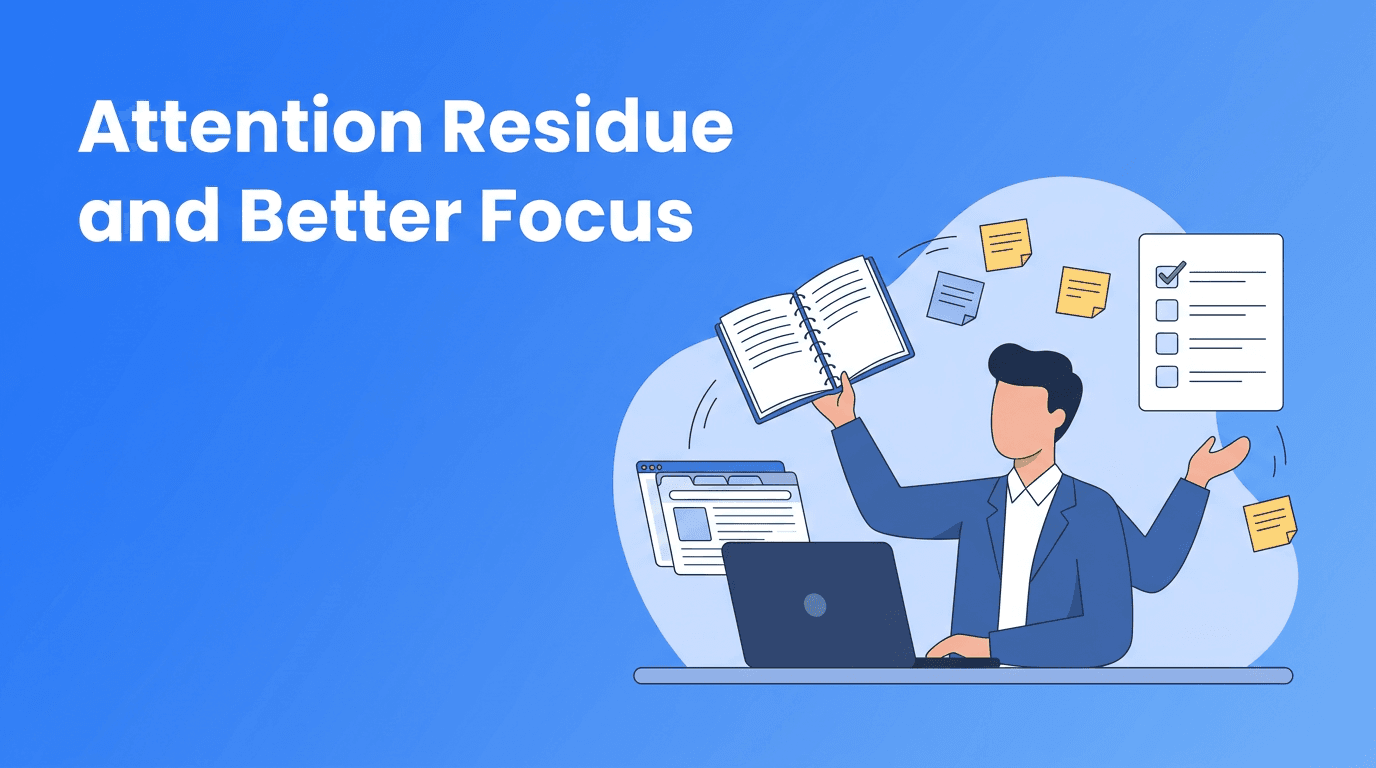
When you move from one task to another, part of your attention often stays attached to the first task. You may be answering email while still thinking about a meeting, or writing a report while replaying a message you forgot to send. The result is not just distraction. It is a measurable loss in clarity, speed, and decision quality.
- You reread the same paragraph or message multiple times
- You start tasks quickly but take too long to settle into real focus
- You feel mentally tired even when you have not done much deep work
- You rely on urgency because calm concentration feels harder than it should
You do not need more hours. You need fewer fragments of attention.
The 4-part attention residue reset
1. Use closure habits before every switch
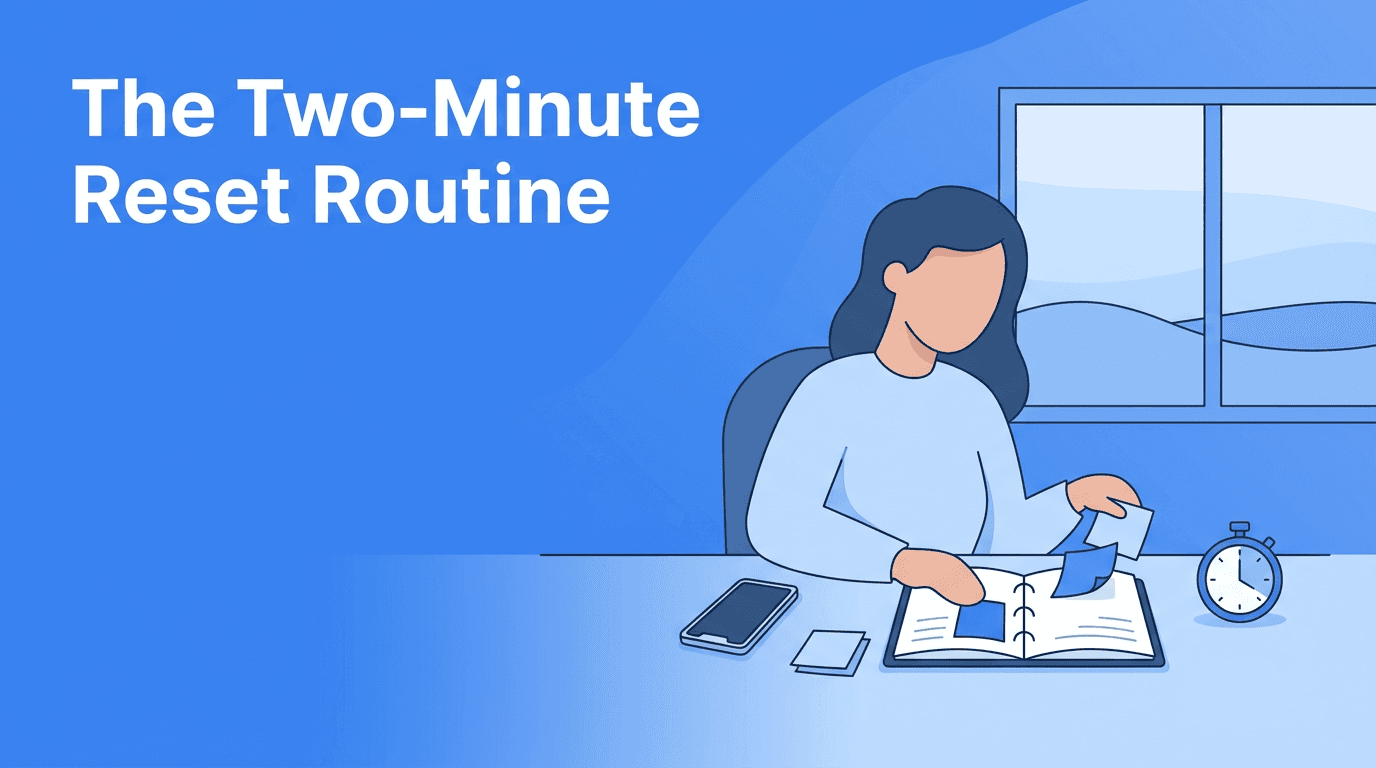
Before changing tasks, take 60 seconds to create a tiny shutdown note. Write what you finished, what is next, and what can wait. These simple habits reduce cognitive drag because your brain no longer has to keep the unfinished task active as a reminder.
- Write one sentence: 'Current status'
- Write one sentence: 'Next visible step'
- Write one sentence: 'When I will return to this'
2. Build scheduling around recovery, not just output
Better scheduling is not about packing more into your calendar. It is about grouping similar demands and protecting re-entry time. Put shallow tasks together, cluster meetings when possible, and leave 10-15 minute buffers before work that requires concentration.
3. Make prioritization visible
Weak prioritization creates hidden residue because every low-value task keeps asking for attention. At the start of the day, choose one primary task, two secondary tasks, and a short overflow list. This keeps your mental field narrower and makes decisions faster.
- Primary task - the work that matters most if the day goes wrong
- Secondary tasks - useful but not allowed to interrupt the primary task
- Overflow list - admin, messages, and small tasks for low-energy windows
4. Design task entry rituals
Starting well matters. Create a repeatable entry ritual for focused work: silence notifications, open only the required tabs, set a timer, and define the finish line for the session. Good productivity systems reduce friction at the beginning, which is where many people lose momentum.
A simple daily workflow for better efficiency
If you want a practical routine, use this sequence for one week and observe the difference in efficiency. It is intentionally simple so it can survive real life.
- Begin with 5 minutes of planning and visible prioritization
- Schedule your most demanding task before reactive work
- Use a closure note every time you switch contexts
- Batch communication into 2-3 windows instead of constant checking
- End the day with a short reset so tomorrow starts clean
Build focus with guided support
Haply is an AI life coaching app for iOS and Android that helps you turn focus tactics into lasting habits. Use Productivity coaches, the Focus Timer, Task Planner, and daily reminders to reduce attention residue and stay consistent.
Try Haply FreeWhere digital tools help, and where they hurt
Tools can either lower attention residue or multiply it. The best tools make next steps obvious and reduce unnecessary choices. The worst ones encourage constant checking, tab overload, and fragmented workflows.
If you use Haply, try pairing the Focus Timer with one clearly defined task and logging your streaks after each completed session. The Task Planner can also support better scheduling by separating priority work from reactive tasks, while the Today Dashboard gives you a cleaner daily overview.
How to know your system is working
- You reach focus faster after interruptions
- You finish more meaningful work with less mental strain
- You stop confusing activity with progress
- Your calendar reflects priorities instead of other people's urgency
- Your workday ends with fewer open loops
Final takeaway on attention residue
Attention residue is not a character flaw. It is a system problem. When you improve your habits, tighten scheduling, and simplify prioritization, focus becomes easier to recover and protect. Start small, make transitions cleaner, and let your productivity systems carry more of the load.
Frequently Asked Questions
What is attention residue in productivity?
Attention residue is the mental carryover from a previous task that makes it harder to fully focus on the next one. It often appears after frequent switching or unresolved work.
How do I reduce attention residue at work?
Use short closure notes before switching tasks, batch similar work, and schedule buffers before deep focus sessions. Visible prioritization also helps reduce open loops.
Does multitasking cause attention residue?
Yes. Multitasking and rapid task switching increase the chance that part of your attention stays stuck on the previous activity, reducing clarity and efficiency.
What is the best scheduling method to protect focus?
A simple method is to schedule demanding work first, batch communication, and leave transition buffers between different types of tasks. This reduces mental fragmentation.