Attention Residue: The Hidden Productivity Leak in Your Workday
Attention residue is one of the biggest barriers to productivity, focus, and time management. Learn how to reduce mental carryover and get more done with less friction.

By Haply Team
Haply Editorial Team
Attention residue is the invisible drag that makes smart people feel busy but unproductive. If you care about productivity, focus, time management, efficiency, and actually getting things done, this concept explains why your day can feel full while your output stays flat.
What attention residue actually is
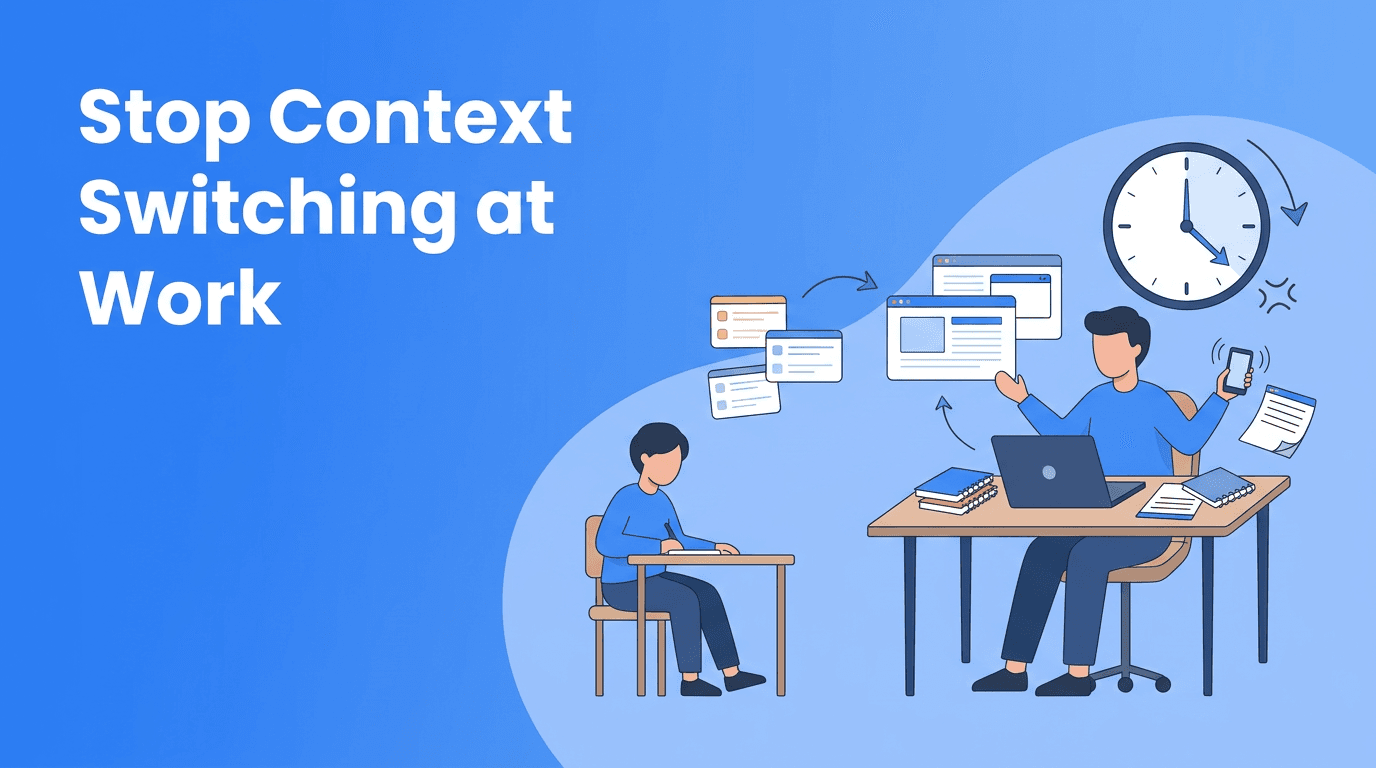
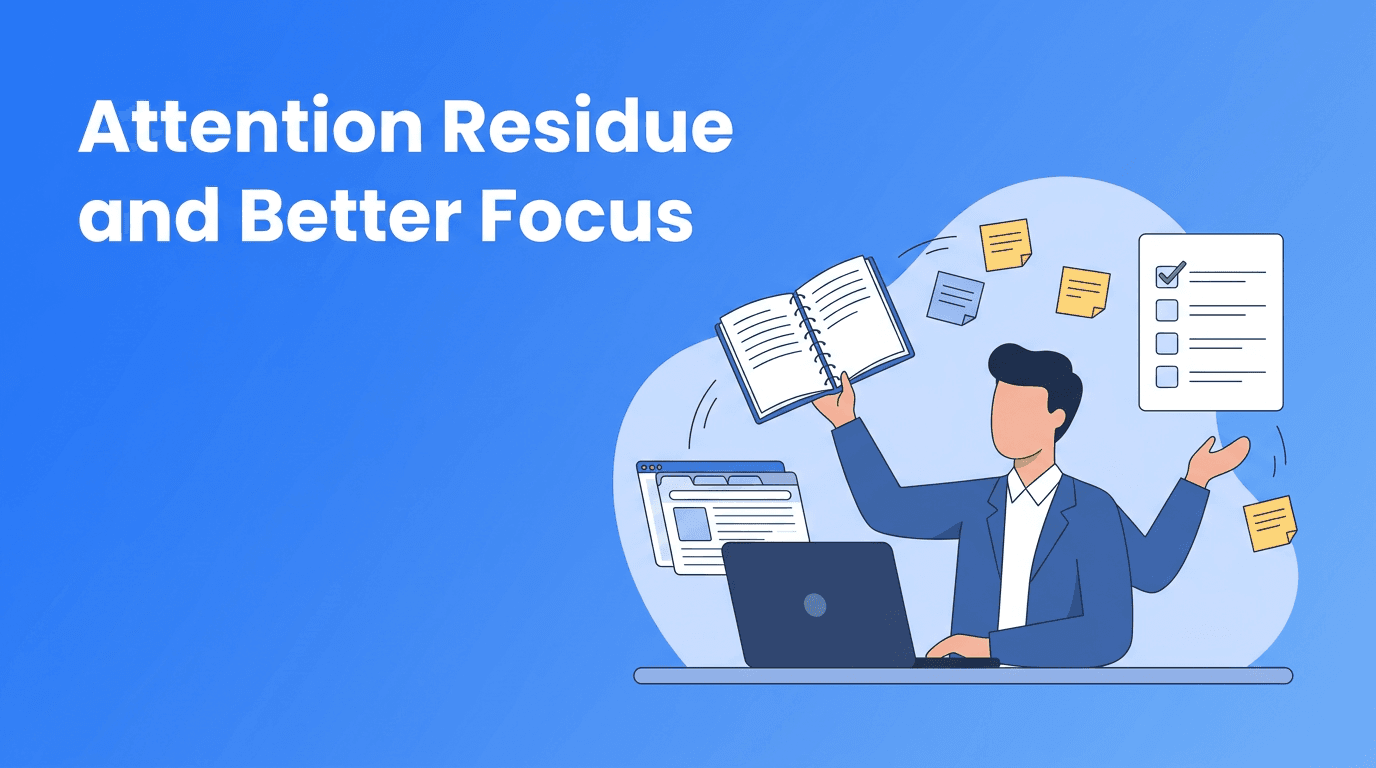
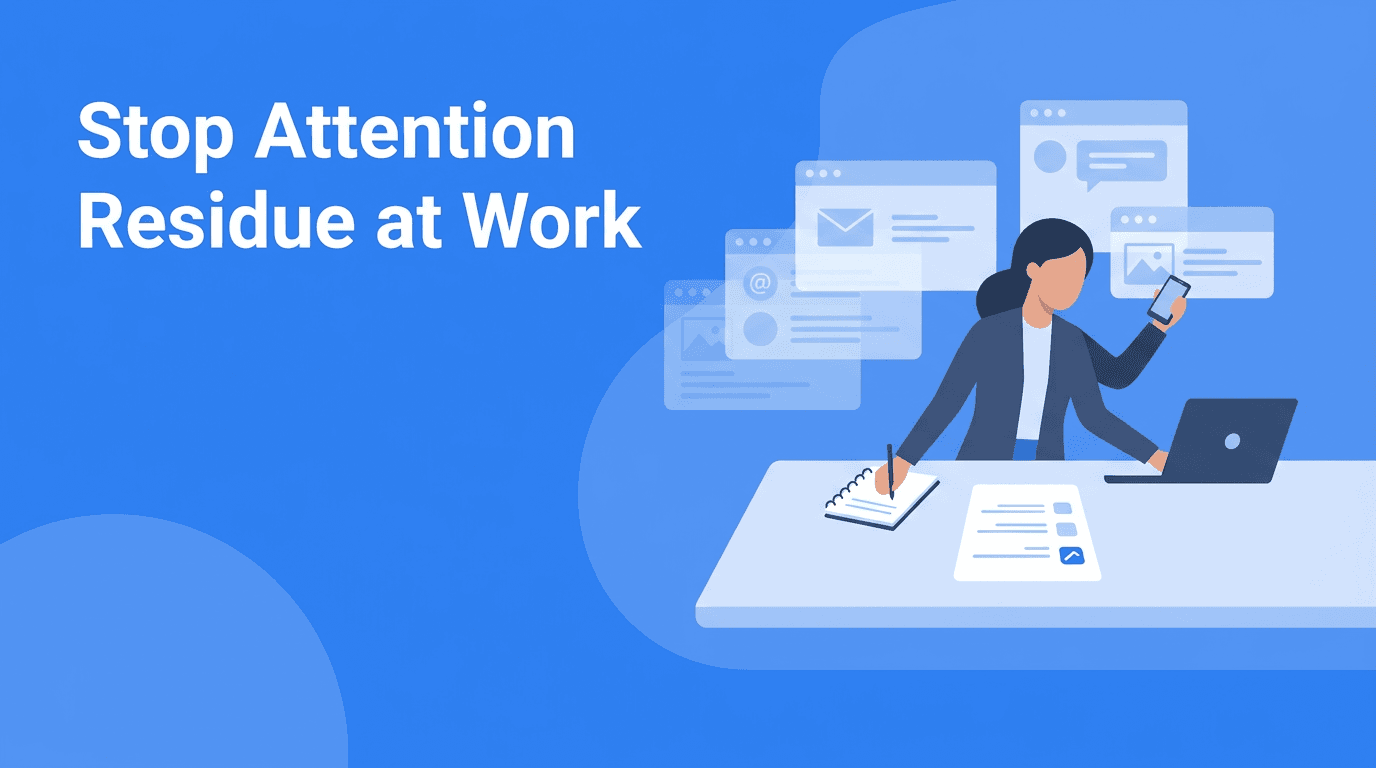
The term attention residue describes what happens when part of your mind stays stuck on the previous task after you switch to a new one. You may open a spreadsheet, join a meeting, or start writing, but your brain is still processing the email, message, or unfinished task you just left behind. The result is slower thinking, weaker concentration, and more mistakes.
"You do not lose focus all at once. You lose it in fragments every time your mind follows an unfinished loop."
This is why many professionals confuse movement with progress. You answered messages, checked updates, and bounced between tasks all day, yet the meaningful work barely moved. The issue is not always motivation. Often, it is the mental cost of constant switching.
Why attention residue destroys productivity
1. It makes shallow work feel urgent
When your attention is fragmented, quick tasks become more attractive than important ones. Small requests, chats, and admin work offer immediate closure, while strategic work demands clean concentration. That imbalance quietly reduces efficiency.
2. It weakens time management
Most time management advice focuses on calendars and to-do lists. Those matter, but they miss a key truth: one hour of fractured attention is not equal to one hour of focused attention. Your schedule can look organized while your mind remains scattered.
3. It raises the activation energy for deep work
Every switch forces your brain to reload context. What was I doing? Where did I stop? What matters most here? That restart tax makes meaningful work harder to begin and easier to avoid, which is why getting things done often feels harder in digital environments.
- Batch similar tasks so your brain stays in one mode longer, such as handling email twice a day instead of every 15 minutes.
- Leave better stopping points by writing a one-line note before switching: "Next step: draft the intro and pull last quarter's data."
- Use meeting buffers of 5 to 10 minutes to reset instead of jumping instantly into the next task.
- Close visual loops by shutting tabs and apps unrelated to the current task.
- Protect one daily focus block where notifications are off and expectations are clear.
A simple workflow to reduce attention residue
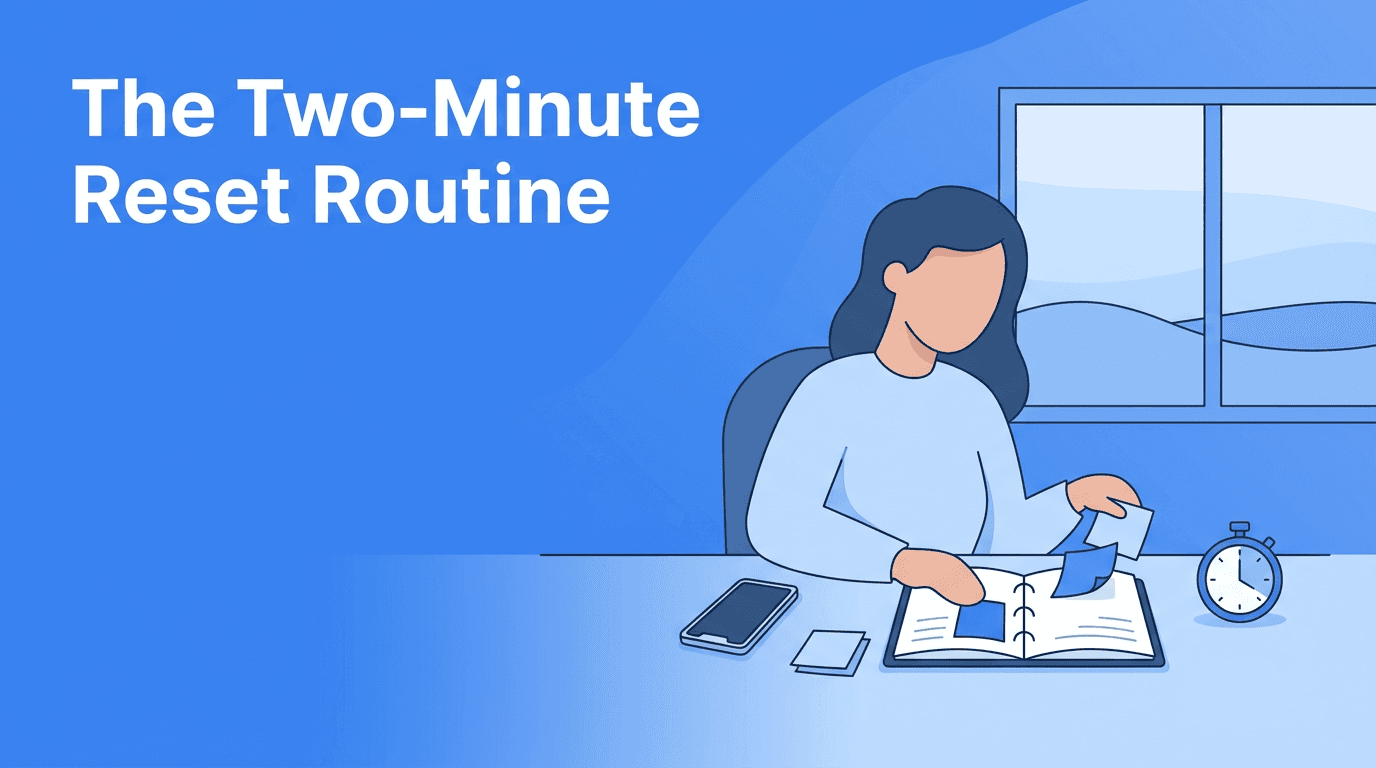
Create a reset ritual
A reset ritual helps your brain complete one task before entering another. Try this 60-second sequence: capture any loose thought, confirm the next step, and clear your screen. This tiny transition habit improves focus far more than most people expect.
Use a single source of truth
Scattered notes create mental tension. Keep tasks, deadlines, and priorities in one trusted place. This could be a digital planner, a simple document, or an app like Haply, which combines chat-based coaching with a Task Planner, Focus Timer, daily reminders, and a Today Dashboard so your work feels less chaotic and more intentional.
Match task type to energy
Not every hour is equally suited for complex work. Put analytical tasks where your energy is strongest, and reserve lower-energy windows for admin, replies, or maintenance. This is one of the most practical ways to improve productivity without adding more hours.
Want more focused workdays?
Use Haply to build better work rhythms with personalized AI coaching, a Focus Timer, habit tracking, and planning tools that help you protect attention and follow through.
Try Haply FreeThe anti-switching rules high performers use
- Finish the thought before the switch. Do not leave a task mid-sentence if you can avoid it.
- Separate communication from creation. Messaging and making require different mental gears.
- Keep a distraction parking lot. Write down non-urgent thoughts instead of acting on them instantly.
- Define what done means. Clear finish lines reduce open loops and mental spillover.
- Audit your triggers. Notice which apps, people, or routines pull you into reactive mode.
If you want better focus, do not only ask, "How can I concentrate harder?" Ask, "What is constantly breaking concentration before it can deepen?" That question leads to better systems, not just better intentions.
A better definition of efficiency
Real efficiency is not squeezing more tasks into the day. It is reducing friction between intention and execution. When attention residue drops, your brain spends less time recovering and more time producing. You think more clearly, make better decisions, and end the day with visible progress instead of mental fog.
The goal is not to become a robot. The goal is to create a workday where your mind is not constantly torn between what you did, what you are doing, and what you forgot to do next. That is the foundation of sustainable productivity.
Frequently Asked Questions
What is attention residue in productivity?
Attention residue is the mental carryover from a previous task that reduces your ability to fully focus on the next one. It often happens after frequent task switching.
How do I stop task switching from ruining my focus?
Batch similar work, add short buffers between tasks, and write your next step before switching. These habits reduce mental reload time and improve concentration.
Why do I feel busy but not productive?
You may be spending too much time in reactive mode, switching between emails, messages, and small tasks. That creates attention residue and lowers the quality of your work.
Can time management improve if I focus on fewer tasks?
Yes. Fewer switches usually mean better concentration, faster completion, and less wasted energy, which makes your time management more effective.