Best Productivity Apps for a Calmer, Smarter Personal Growth System
Looking for the best productivity apps without building a chaotic stack? This guide shows how to combine habit tracker apps, meditation apps, AI apps, and reading apps into one practical personal growth system.
By Haply Team
Haply Editorial Team
The best productivity apps do more than help you check boxes. They help you build a system that supports focus, energy, reflection, and learning, without turning your phone into another source of stress. If you have ever downloaded five tools in one weekend and used none of them by Wednesday, this guide is for you.
Stop collecting apps, start building a system
Most people do not need more apps. They need a clear role for each tool. A better setup usually includes just a few categories: one app for planning, one for habits, one for mental reset, one for learning, and maybe one AI app that helps you think clearly when motivation drops.
- Use one planning app for tasks, priorities, and weekly review
- Add habit tracker apps only if they make action easier, not guilt heavier
- Keep meditation apps for emotional regulation, not just relaxation
- Use reading apps to turn spare minutes into learning time
- Choose AI apps that personalize guidance instead of flooding you with generic tips
What the best productivity apps actually do well
When comparing the best productivity apps, look beyond polished design. The real question is whether the app reduces friction in your day. Great tools make the next action obvious, help you recover after missed days, and keep your attention on outcomes instead of endless setup.
Three features worth prioritizing
- Fast capture - You should be able to save a task, idea, or reminder in seconds
- Low-friction review - Daily and weekly check-ins should feel simple enough to repeat
- Behavior support - The app should help you restart after a lapse, not punish inconsistency
"A useful app does not just organize your life. It lowers the effort required to become the person you want to be."
How habit tracker apps fit into a real routine
The best habit tracker apps are not about creating a perfect streak forever. They are about making patterns visible. If you want to exercise, read more, sleep earlier, or drink more water, tracking helps you spot what is actually happening instead of what you hope is happening.
A good rule is to track only 2 to 4 habits at a time. More than that, and your tracker becomes homework. Choose habits that support your larger goal, such as morning planning, a 10-minute walk, or five minutes of reading before bed.
When habit tracker apps work best
- For identity-based habits, like becoming someone who writes, stretches, or reflects daily
- For routines with a clear trigger, such as after coffee or before sleep
- For goals that improve through consistency rather than intensity
- For people who need a visual reminder that progress is happening
Why meditation apps belong in a productivity stack
Many people separate performance tools from wellness tools. That is a mistake. Meditation apps can make you more productive because they improve attention, emotional regulation, and your ability to pause before reacting. A calmer mind wastes less energy.
If your workdays feel scattered, try using meditation for transitions instead of waiting until you are overwhelmed. Two minutes before a meeting, five minutes after work, or a short breathing session before bed can improve the rest of your routine.
Where AI apps can genuinely help
Not all AI apps are useful for personal growth. Some create more noise than clarity. The strongest ones help you reflect, plan, and adapt. They ask better questions, help you break goals into steps, and offer support that feels responsive rather than robotic.
This is where Haply stands out. Instead of acting like a generic chatbot, Haply is an AI life coaching app for iOS and Android with specialized coaches across productivity, wellness, career, learning, finance, creativity, and relationships. You can use chat-based coaching for specific goals, then follow through with tools like a habit tracker, Focus Timer, Task Planner, Meditation/Breathe, Sleep Stories, Budget Tracker, and Idea Board in one app.
Want one app that connects coaching with action?
Try Haply if you want personalized AI guidance, habit tracking, mini-apps, daily reminders, and a Today Dashboard that keeps your growth system simple.
Try Haply FreeA practical use case for AI coaching
Imagine you keep saying you want a better morning routine. A strong AI coach can help you define the routine, identify what is blocking it, suggest a smaller version for busy days, and check in on your progress. That is much more useful than passively saving another article.
Reading apps are underrated productivity tools
Most people do not think of reading apps as part of productivity, but they should. Reading strengthens decision-making, perspective, and problem-solving. The key is using reading apps in a way that fits your real life, not an ideal version of it.
- Keep one book for deep reading and one for short spare moments
- Use highlights sparingly and review only the notes that matter
- Read with a purpose, such as improving communication, energy, or leadership
- Pair reading with a habit cue, like commuting, lunch, or winding down
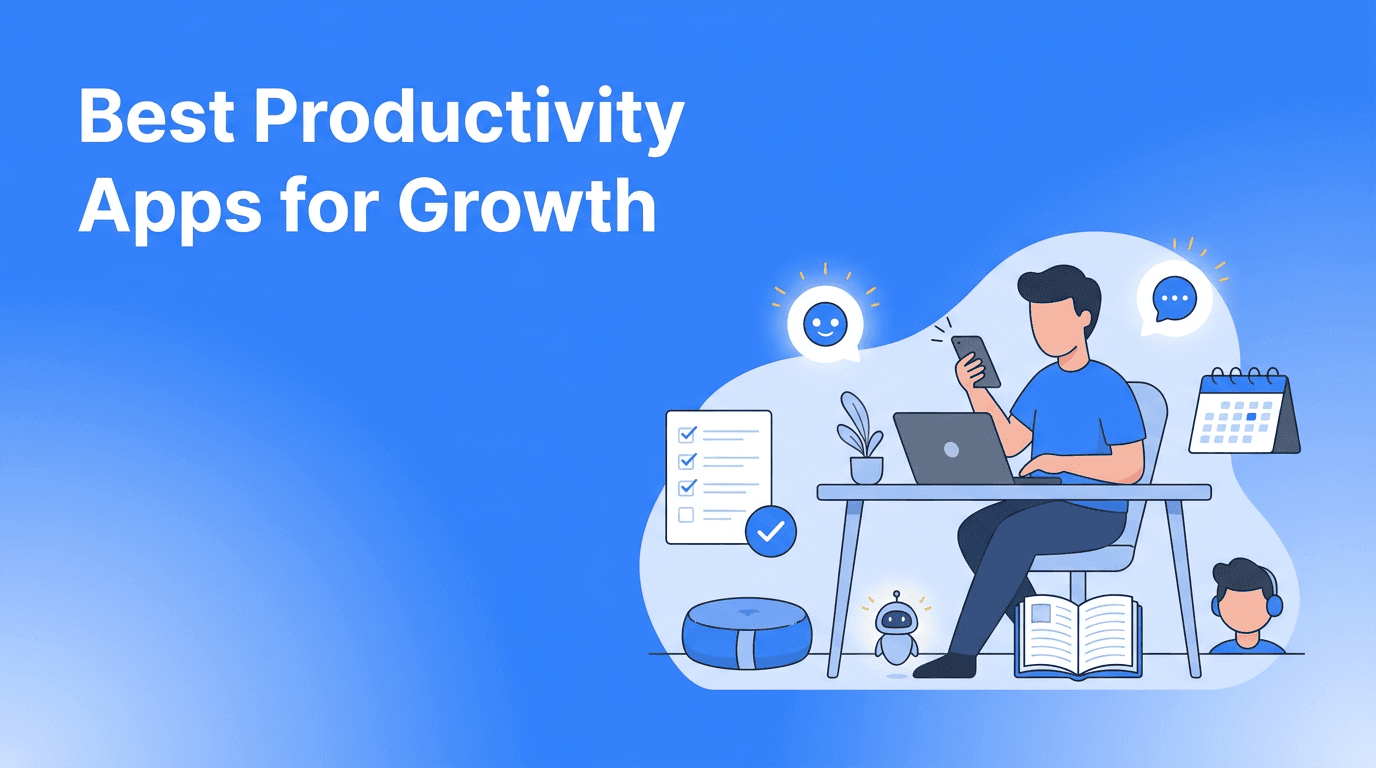
A simple 4-app setup for personal improvement
If you feel overloaded by choices, start with a small stack. The best productivity apps are often the ones that work well together, not the ones with the longest feature list.
- A planning app for tasks and priorities
- One of the better habit tracker apps for 2 to 4 daily actions
- One of the meditation apps that offers short guided sessions
- A flexible AI app like Haply that connects reflection, planning, and follow-through
If reading matters to your goals, add a reading app as an optional fifth tool. That is enough for most people. More tools often create more maintenance, not more progress.
How to choose the right app mix for your life
Before downloading anything, ask yourself three questions: What am I trying to improve? What usually causes me to stop? What kind of support do I actually respond to? These answers will tell you whether you need structure, reminders, calm, accountability, or learning.
- If you struggle with follow-through, prioritize habit tracker apps and reminders
- If stress breaks your routine, add meditation apps early
- If you overthink and stall, use AI apps that help you clarify next steps
- If you want long-term growth, make room for reading apps that fit your schedule
A strong digital system should feel lighter after a week, not heavier. That is the real test.
Frequently Asked Questions
What are the best productivity apps for personal growth?
The best productivity apps for personal growth help with planning, consistency, reflection, and focus. A balanced setup often includes a planner, habit tracker, meditation tool, and an AI coaching app like Haply.
Are habit tracker apps actually effective?
Yes, habit tracker apps can be effective when you track a small number of meaningful habits. They work best when paired with clear triggers and realistic goals.
Do meditation apps improve productivity?
Meditation apps can improve productivity by helping you regulate stress, recover focus, and transition between tasks more calmly. Even short sessions can make a noticeable difference.
How do AI apps help with self-improvement?
AI apps help with self-improvement by offering personalized guidance, reflection prompts, planning support, and accountability. The most useful ones help you take action, not just consume advice.
Are reading apps good for productivity?
Yes, reading apps support productivity by helping you learn during small pockets of time and build better thinking skills. They are especially useful when tied to a daily routine.