Best Self-Improvement Apps for Digital Minimalists Who Still Want AI Tools
Looking for the best self-improvement apps without turning your phone into a distraction machine? This guide explores focused AI tools, productivity apps, and calmer digital tools that support growth with less noise.
By Haply Team
Haply Editorial Team
The best self-improvement apps are not always the ones with the most features. For many people, the real challenge is finding AI tools, productivity apps, and other digital tools that support growth without adding more digital clutter. If you want your phone to help you think clearly, build habits, and stay focused, a minimalist approach to app choice can work better than downloading everything at once.
Why minimalist app stacks are getting attention
There is a growing gap between owning many apps and actually improving your life with them. A crowded home screen can create friction, decision fatigue, and more screen time. By contrast, a small set of carefully chosen self-improvement apps can make action easier. The goal is simple: use fewer tools, but use them more consistently.
"The right app should reduce friction, not become another task to manage."
What makes the best self-improvement apps worth keeping
When evaluating the best self-improvement apps, look beyond polished design or trend-driven features. The most useful tools tend to share a few practical strengths: they solve a clear problem, fit naturally into your day, and give enough structure without demanding constant attention.
- Low-friction onboarding so you can start quickly
- Focused core features instead of endless menus
- Smart reminders that support action without nagging
- Useful AI tools that personalize advice or planning
- Clear progress tracking for habits, goals, or routines
- Cross-purpose value, such as combining coaching, planning, and wellness in one place
A practical framework: choose one app per need
One reason people abandon productivity apps is overlap. They install a to-do app, a habit tracker, a journaling app, a meditation app, and three AI assistants, then stop using all of them. A better approach is to assign one app to each major need and avoid duplicates.
1. One app for guidance
This is where AI tools can be especially useful. An AI coaching app can help you reflect, set goals, and break problems into smaller actions. Haply fits well here because it combines chat-based coaching with specialized support across Productivity, Wellness, Career, Learning, Finance, Creativity, and Relationships. Instead of switching between multiple niche apps, users can work from one personalized system.
2. One app for execution
Execution tools should make today easier. Good productivity apps help you choose priorities, manage tasks, and protect focus. If an app makes planning feel heavy, it may be too complex for daily use.
3. One app for recovery
Personal improvement is not just output. Recovery tools for breathing, meditation, sleep, or screen time awareness help sustain progress. Many users overlook this category, then wonder why motivation fades.
How AI tools change self-improvement apps
The newest generation of AI tools does more than answer questions. In personal growth apps, AI can adapt recommendations to your goals, suggest next steps when you are stuck, and make reflection more interactive. That matters because the best systems are not only informative, they are responsive.
- Personalized coaching based on your goals and routines
- Adaptive planning that adjusts when your schedule changes
- Contextual motivation through reminders and daily prompts
- Faster reflection with guided journaling or check-ins
- Skill-specific support for learning, career growth, wellness, or finances
This is one reason Haply stands out among modern digital tools. Its goal-based onboarding personalizes the experience early, while the Today Dashboard, habit tracker with streaks, and mini-apps like Focus Timer, Task Planner, Meditation/Breathe, Sleep Stories, Budget Tracker, and Idea Board reduce the need for separate downloads. For users trying to stay intentional, consolidation is a feature, not a limitation.
Try a simpler self-growth setup
If you want fewer apps but better support, Haply combines AI coaching, habit tracking, focus tools, and wellness features in one app for iOS and Android. There is a 7-day free trial to test whether an all-in-one approach fits your routine.
Try Haply FreeA minimalist app stack for personal improvement
If you are building a calmer phone setup, here is a simple structure to follow. It keeps the number of best apps low while covering the essentials.
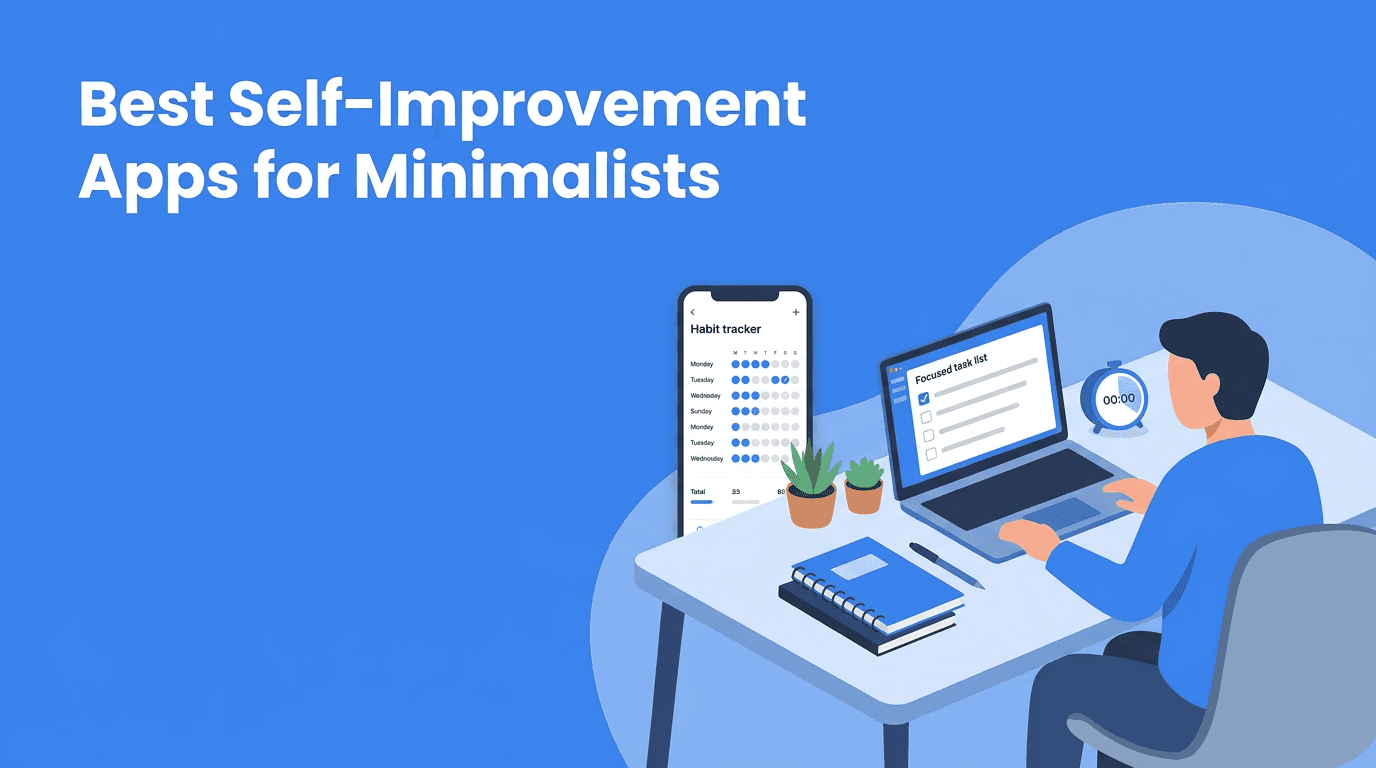
- One AI coaching app for reflection, planning, and accountability
- One calendar or task system for commitments and execution
- One reading or learning app for deliberate skill growth
- One wellness tool for meditation, breathing, or sleep
- One blocker or screen time tool if distraction is a major issue
Common mistakes when choosing digital tools
People often assume more features equal more value, but that is not always true. The wrong app can create maintenance work instead of progress.
- Downloading too many self-improvement apps at once
- Choosing tools based on hype instead of daily usefulness
- Ignoring notification settings and getting interrupted more often
- Using separate apps for tasks that could be combined
- Tracking everything, then feeling overwhelmed by your own system
How to test the best self-improvement apps without wasting time
Use a two-week trial method. Pick one or two digital tools, define one outcome, and track whether the app makes that outcome easier. For example, use an AI coach to maintain a morning planning habit, or a focus timer to complete two distraction-free work blocks per day. If the app improves behavior with little friction, keep it. If not, remove it quickly.
The bigger trend: from more apps to better systems
The future of personal technology may not be about collecting more best apps. It may be about building better systems with fewer moving parts. The strongest productivity apps, AI tools, and digital tools increasingly combine guidance, action, and reflection in one experience. For people serious about growth, that shift can mean less app fatigue and more real progress.
Frequently Asked Questions
What are the best self-improvement apps for beginners?
The best options for beginners are simple apps that support one clear goal, such as habit building, focus, or guided coaching. Look for tools with easy onboarding, reminders, and visible progress tracking.
Are AI tools actually useful for personal growth?
Yes, good AI tools can help with planning, reflection, and accountability. They are most useful when they personalize guidance and turn broad goals into specific next steps.
How many productivity apps should I use at once?
Most people do better with one main productivity app and a small number of supporting tools. Too many apps can create overlap, confusion, and more screen time.
What makes Haply different from other self-improvement apps?
Haply combines AI life coaching, habit tracking, and mini-apps for focus, wellness, planning, sleep, budgeting, and creativity in one platform. That makes it useful for people who want a more consolidated self-growth setup.