Body Doubling for Productivity: A Low-Pressure Focus Method for Remote Work and Study
Body doubling productivity gives remote work, freelancer productivity, and student productivity a simple focus boost. Learn how to use this low-pressure method with practical study tips.

By Haply Team
Haply Editorial Team
Body doubling productivity is one of the simplest ways to make solo work feel easier. If you do remote work, juggle client deadlines, or need better study tips for independent learning, this method can reduce procrastination without turning your day into a rigid system.
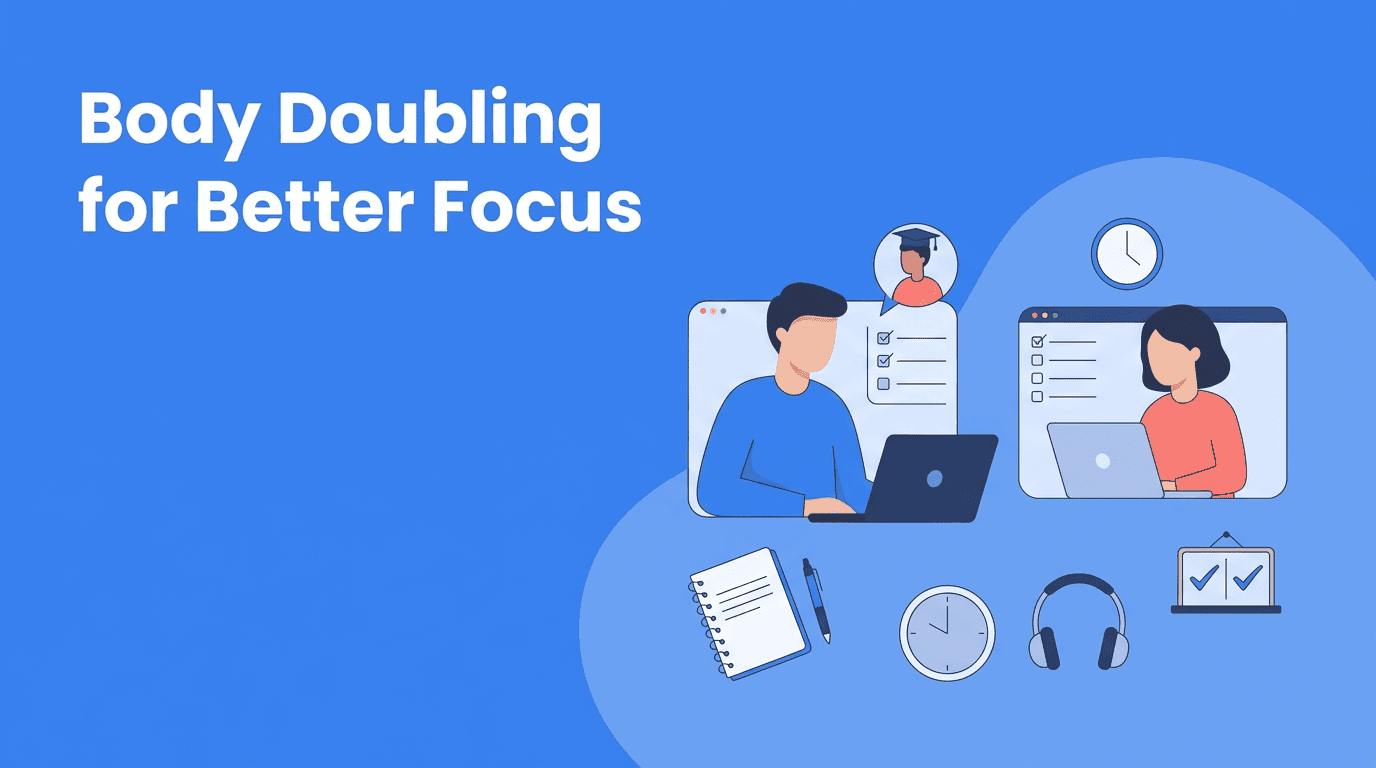
The idea is straightforward: you work while another person works too, either beside you or virtually. You are not collaborating on the same task. You are creating a shared focus environment. For many people, that small layer of accountability is enough to start, continue, and finish important work.
Why body doubling works for remote work and study
When you manage your own schedule, the hardest part is often not planning. It is starting. Body doubling helps because it adds structure without pressure. You know someone else is present, which makes distractions feel more visible and tasks feel more real.
- Remote work becomes less isolating, especially on days with low motivation.
- It supports freelancer productivity by creating a gentle deadline effect before client work drifts.
- It improves student productivity by turning study sessions into visible commitments.
- It can lower avoidance on boring, repetitive, or mentally heavy tasks.
"Sometimes the fastest way to focus is not more discipline, but a little company."
What body doubling is, and what it is not
Body doubling is not a meeting, coaching call, or brainstorming session. It works best when expectations are clear. Each person picks a task, shares it briefly, works quietly, and checks in at the end. That is enough.
A simple format to try
- Choose a session length: 25, 45, or 60 minutes.
- State one clear task at the start.
- Mute notifications before the session begins.
- Work silently with cameras on or off, depending on preference.
- Do a 2-minute check-in at the end: what got done, what comes next.
This light structure is why body doubling productivity works so well. It gives your brain a clear starting line and a visible finish point.
Best use cases for freelancers, students, and remote workers
For freelancer productivity
Freelancers often lose momentum between client calls, revisions, admin work, and self-promotion. Use body doubling for tasks you tend to delay, like sending proposals, updating invoices, or finishing edits. It is especially useful when your work has no manager watching the clock.
For student productivity
Students can use body doubling for reading assignments, problem sets, essay drafting, or exam review. One of the best study tips is to body double only the first part of a session. Once momentum builds, continue alone if you want.
For remote work
In remote work settings, body doubling can replace some of the focus you naturally get from a shared office. It helps during documentation, presentation prep, inbox cleanup, or any task that feels easy to postpone because no one sees you doing it.
How to make body doubling actually effective
- Pick specific tasks, not vague goals like "be productive."
- Use a visible timer so the session has boundaries.
- Keep the session quiet. Too much chatting weakens the effect.
- Repeat with the same partner if consistency helps.
- Track which tasks improve most with this method.
- Pair it with a short reward after the session, like coffee or a walk.
If you want extra support, Haply can help you plan the session before it starts. Its AI Productivity coach, Task Planner, and Focus Timer are useful for setting a clear intention, breaking work into steps, and staying on track. Because Haply is available on iOS and Android, it fits easily into flexible routines for freelancers and students.
Need help building a focus routine?
Use Haply's AI coaching, Focus Timer, and Task Planner to turn short work sessions into repeatable habits for productivity and balance.
Try Haply FreeCommon mistakes that make body doubling fail
- Choosing tasks that are too large to finish in one session.
- Turning the session into casual conversation.
- Working with someone whose energy distracts you.
- Skipping the starting intention and the closing check-in.
- Using it for every task instead of for tasks where resistance is high.
The goal is not to become dependent on another person. The goal is to use body doubling productivity as a tool when motivation is low, focus is shaky, or the task feels heavy.
A 5-day experiment to test it for yourself
- Day 1: Use one 25-minute session for a task you have been avoiding.
- Day 2: Try a 45-minute session for deep reading or writing.
- Day 3: Use it for admin work, like email or planning.
- Day 4: Compare solo focus versus body doubling on the same type of task.
- Day 5: Review what improved: starting speed, focus, stress, or completion rate.
This small experiment helps you decide where the method fits best. For some people, it becomes a weekly tool. For others, it is a rescue strategy for hard days. Either way, it can support freelancer productivity, student productivity, and more sustainable remote work habits.
Frequently Asked Questions
What is body doubling productivity?
Body doubling productivity is a focus method where you work alongside another person, in person or virtually, to make starting and staying on task easier.
Does body doubling help with remote work?
Yes. It adds accountability and structure to remote work, especially for tasks that are easy to delay when you work alone.
Is body doubling good for students?
Yes. It can improve student productivity by making study sessions feel more concrete and easier to begin.
How long should a body doubling session be?
Start with 25 to 45 minutes. That is usually long enough to build momentum without creating mental overload.