Workload Creep: How to Protect Focus and Improve Productivity Without Working Longer
Workload creep quietly damages productivity, focus, and efficiency by expanding your day without better results. Learn a practical system to spot it early and get more meaningful work done.

By Haply Team
Haply Editorial Team
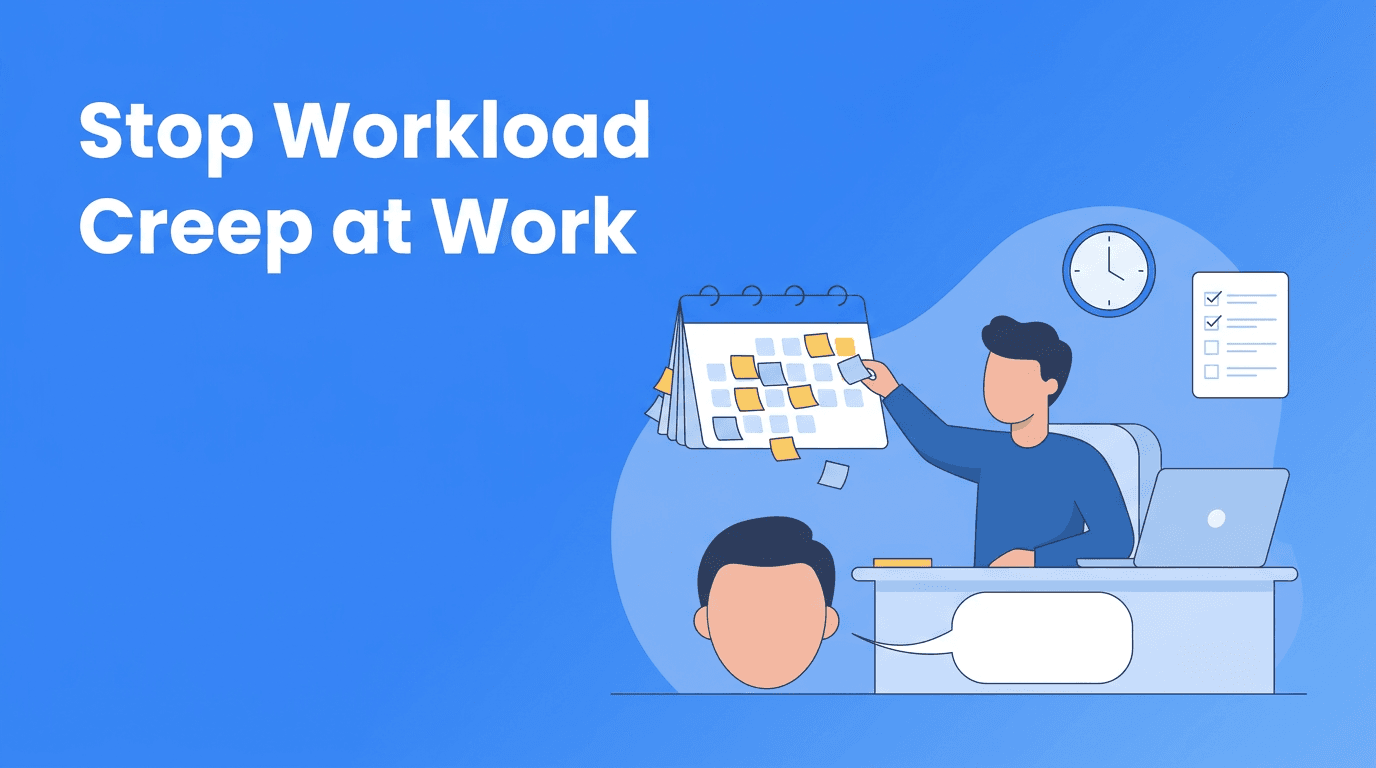
Workload creep is one of the most overlooked threats to productivity. It happens when small requests, extra responsibilities, and vague expectations quietly pile up until your calendar is full but your most important work keeps slipping. If your focus feels fragmented and your time management system never seems to catch up, workload creep may be the real issue.
Why workload creep feels normal, even when it hurts efficiency
Unlike a major deadline or a visible crisis, workload creep arrives in tiny pieces. A quick Slack message here, a last-minute review there, a meeting you were "just needed for". None of these tasks look dangerous alone. Together, they reduce efficiency, slow down decision-making, and make getting things done feel harder than it should.
- Invisible growth - extra tasks enter your week without replacing anything else
- Low-friction yeses - it feels easier to accept than to renegotiate scope
- False urgency - other people's deadlines hijack your priorities
- Fragmented focus - small interruptions break momentum on meaningful work
"What exhausts people is not always hard work. Often, it is unexamined work."
The hidden signs of workload creep
Many professionals think they need better discipline when they actually need better boundaries. Here are common signals that your workload is expanding faster than your capacity.
- You finish the day having been busy, but not moving key projects forward
- Your task list grows even on days when you work at full capacity
- You attend meetings that require your presence but not your expertise
- You carry responsibilities that were never formally assigned
- You feel guilty blocking focus time because reactive work has become the default
A quick self-audit for focus and time management
For one week, track every new task that appears after your day begins. Mark where it came from: manager, teammate, client, system, or yourself. Then ask two questions: Did this replace anything? and Did this require me? This simple audit often reveals why your productivity feels low even when your effort is high.
A 4-step system to stop workload creep
1. Name your core work
Write down the 2-3 outcomes that define a successful week. Not activities, outcomes. For example: finish the proposal, analyze user feedback, prepare the client recommendation. This creates a filter for protecting focus and improving efficiency.
2. Create a tradeoff rule
When a new task appears, pair your yes with a tradeoff question: What should move, shrink, or wait to make room for this? This is one of the strongest time management habits because it forces workload into reality instead of wishful thinking.
3. Reduce passive availability
Many cases of workload creep begin because you look continuously reachable. Set response windows for chat and email, and protect 60-90 minute blocks for concentrated work. Availability is useful, but constant availability destroys focus.
4. Close open loops weekly
At the end of each week, review unfinished tasks and categorize them: important, delegatable, unclear, or unnecessary. This keeps old commitments from silently following you into the next week and lowers the drag on getting things done.
Build better work habits with Haply
Want help protecting focus and managing your workload? Haply is an AI life coaching app for iOS and Android with Productivity coaches, a Focus Timer, Task Planner, daily reminders, and personalized routines that make follow-through easier.
Try Haply FreeScripts to push back without sounding difficult
You do not need a dramatic confrontation to stop workload creep. You need calm, specific language that makes tradeoffs visible.
- "I can take this on. Which current priority should move back?"
- "Happy to help. Can we clarify whether this needs me, or just a quick review from me?"
- "I can do a lighter version by Friday, or the full version next week."
- "I am at capacity today. If this is urgent, I need to drop something else."
How students and knowledge workers can use this approach
Students experience workload creep too. It shows up as extra group work, unplanned admin tasks, and constant digital distractions. The same rule applies: define your essential outcomes, limit reactive time, and review incoming commitments before accepting them. Whether you are managing coursework or client projects, workload creep reduces quality long before it becomes visible.
If you want extra support, Haply can help turn this into a repeatable routine. Its Today Dashboard, habit tracker, and chat-based coaching are especially useful when you are trying to protect productivity without relying on willpower alone.
The real goal is not doing more
The answer to overload is not squeezing harder. It is building a system where your calendar reflects your real priorities. When you prevent workload creep, you improve focus, strengthen time management, and make efficiency sustainable. That is how meaningful productivity grows.
Frequently Asked Questions
What is workload creep at work?
Workload creep is the gradual increase of tasks and responsibilities without a matching reduction elsewhere. Over time, it fills your schedule and reduces focus on high-value work.
How do I know if workload creep is hurting my productivity?
If you are always busy but key projects keep slipping, workload creep may be the cause. Look for extra meetings, unplanned requests, and responsibilities that were never clearly assigned.
How can I stop workload creep without saying no to everything?
Use tradeoff language instead of automatic refusal. Ask what should move, shrink, or wait when a new request is added.
Can workload creep affect students too?
Yes. Students often face workload creep through group tasks, admin demands, and digital interruptions that expand study time without improving results.