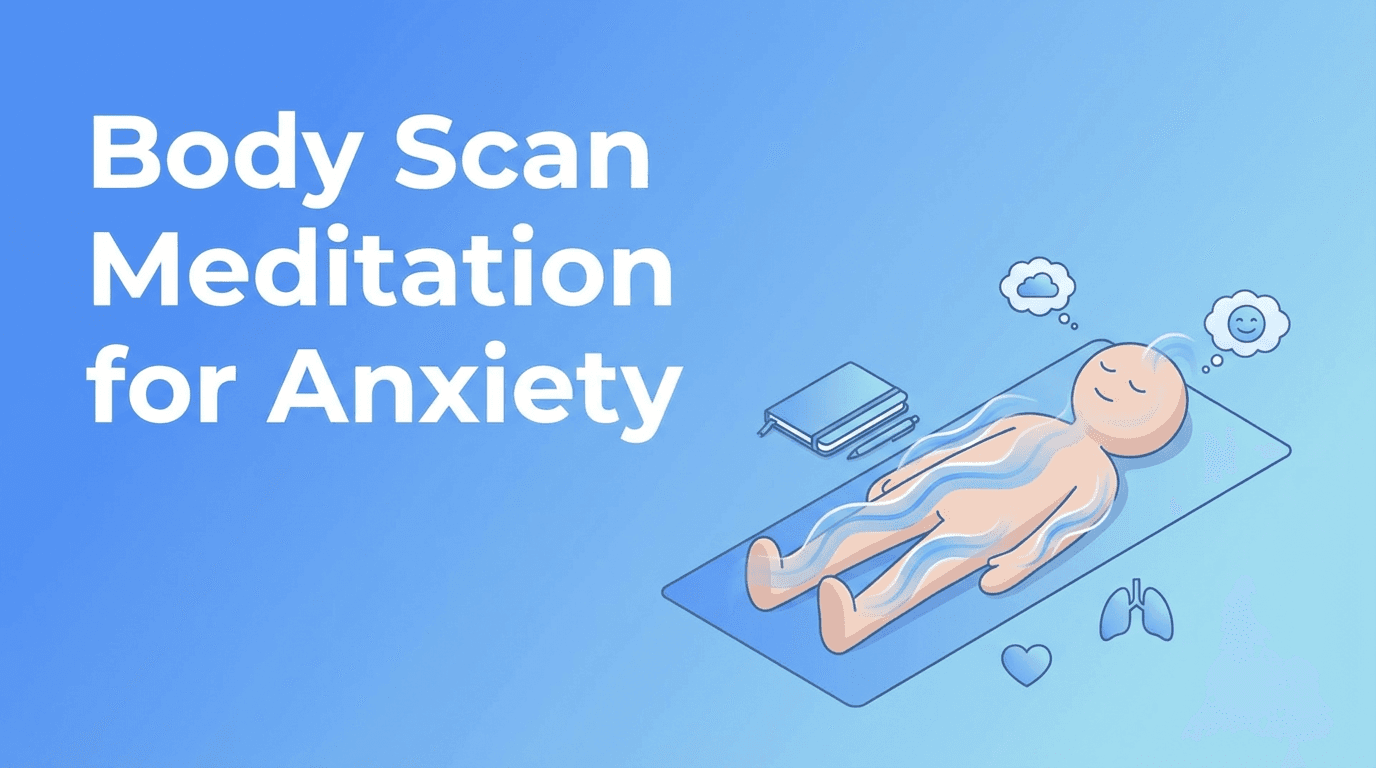
Body Scan Meditation for Anxiety: A Gentle Way to Understand Your Feelings
Body scan meditation for anxiety can help you notice feelings without judgment, build emotional awareness, and strengthen self-awareness one breath at a time.

By Haply Team
Haply Editorial Team
Body scan meditation is one of the kindest ways to slow down when your inner world feels noisy. If you often struggle to name your feelings, react before you understand them, or carry stress in your body without realizing it, this practice can help. It gently builds self-awareness, supports emotional awareness, and gives your emotions a little more space to breathe.
Why body scan meditation helps you understand emotions
Many people think emotions live only in the mind. In reality, they often show up in the body first: a tight jaw, a heavy chest, restless legs, a sinking stomach. Body scan meditation trains you to notice these signals before they turn into overwhelm. That is a powerful foundation for emotional intelligence, because you cannot care for what you have not yet noticed.
"Awareness is the first act of kindness you offer yourself."
The link between the body and your feelings
When you pause and scan your body with curiosity, you begin to recognize patterns. Maybe frustration feels hot in your face. Maybe sadness softens your shoulders. Maybe anxiety buzzes in your hands. Over time, this practice improves emotional awareness by helping you catch subtle cues earlier, so your responses can become more intentional and less automatic.
- Tension can signal stress, fear, or unspoken anger
- Heaviness may point to sadness, fatigue, or emotional overload
- Restlessness often shows up with anxiety or uncertainty
- Numbness can be a clue that you need gentleness, safety, or rest
A simple body scan meditation you can try in 7 minutes
You do not need perfect focus, a silent room, or a spiritual routine. Body scan meditation works best when you approach it simply. Sit or lie down somewhere comfortable and let this be an experiment, not a performance.
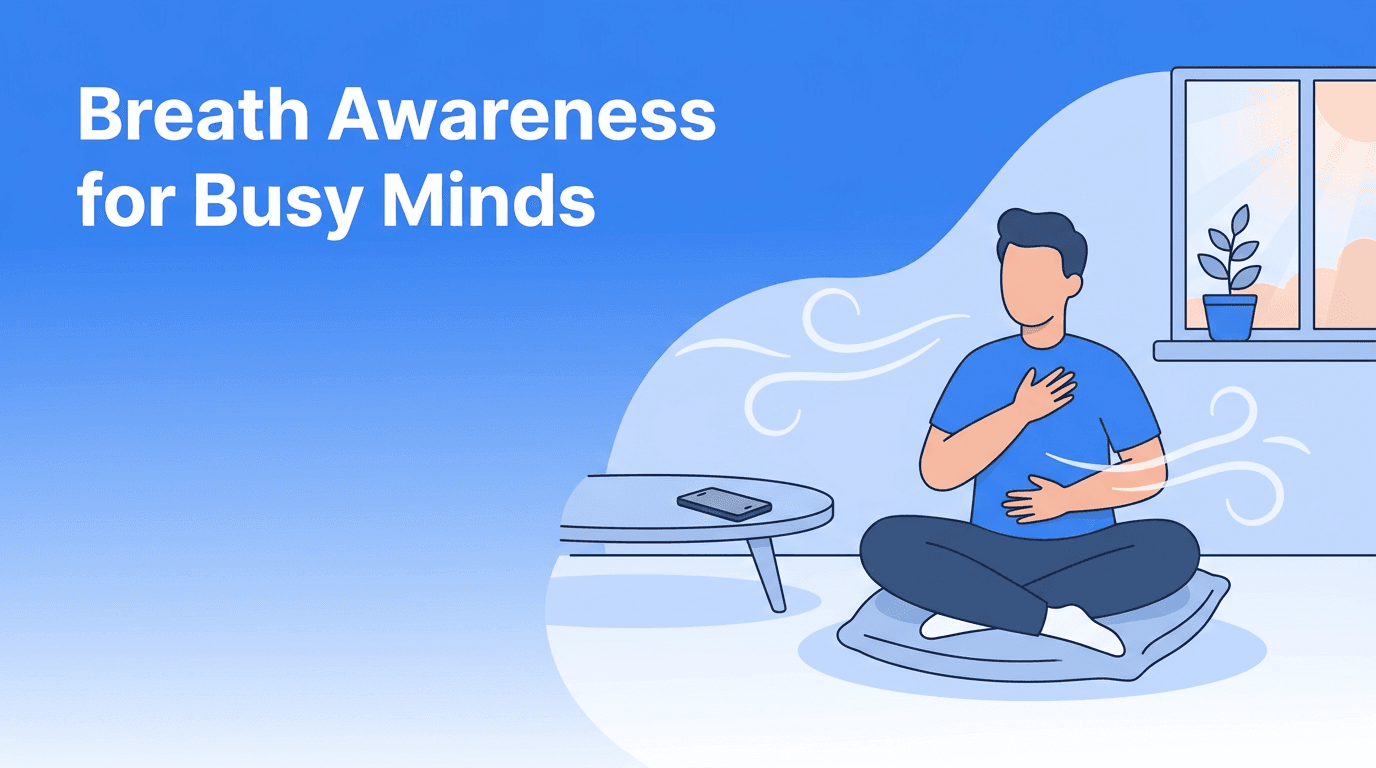
- Minute 1: Notice your breath without changing it. Just feel the inhale and exhale.
- Minute 2: Bring attention to your forehead, jaw, neck, and shoulders. Ask, "What am I holding here?"
- Minute 3: Move to your chest and upper back. Notice tightness, fluttering, warmth, or pressure.
- Minute 4: Scan your stomach and abdomen. See if any emotion seems to live there today.
- Minute 5: Feel your hands, hips, and legs. Notice restlessness, heaviness, or ease.
- Minute 6: Scan your feet and the points where your body meets the floor or bed.
- Minute 7: Ask yourself, "What feeling is here right now?" Name it softly, even if your answer is only "something uncomfortable" or "I am not sure."
Want guided support for emotional check-ins?
Haply is an AI life coaching app for iOS and Android with Wellness coaches, a Meditation/Breathe mini-app, and personalized tools that help you build mindfulness habits with daily support.
Try Haply FreeWhat to do after the scan
The goal is not to force calm. The goal is to listen. After your scan, write down three quick notes: what you felt in your body, what emotion might be present, and what you need next. This small reflection strengthens self-awareness and turns insight into action.
- If you notice anxiety: try longer exhales or the Meditation/Breathe tool in Haply
- If you notice anger: take a short walk before starting a difficult conversation
- If you notice sadness: choose rest, connection, or a few lines of journaling
- If you notice numbness: start small with warmth, water, music, or a hand on your heart
Common mistakes that make meditation feel harder
If meditation has felt frustrating before, you are not failing. Often, people expect immediate peace and miss the real benefit: clearer observation. Body scan meditation can sometimes reveal feelings you have been avoiding, and that can feel intense at first. Gentle pacing matters.
- Do not judge yourself for having distracted thoughts
- Do not force yourself to identify emotions perfectly
- Do not stay with overwhelming sensations too long - open your eyes, ground yourself, and return later
- Do not confuse awareness with weakness - noticing your emotions is a skill, not a flaw
How this practice builds emotional intelligence over time
Repeated body scans help you notice the early signs of stress, understand your triggers, and choose better responses. That is the heart of emotional intelligence. You begin to pause before reacting, speak more clearly about your needs, and relate to your inner experience with less fear and more compassion.
If you want more consistency, using a supportive app can help. Haply offers chat-based coaching, habit tracking with reminders, and a Today Dashboard that makes it easier to return to your mindfulness practice even on busy days. Small check-ins count.
A gentle reminder for difficult days
Some days, your feelings will be clear. Other days, they will feel messy, mixed, or out of reach. That does not mean you are doing anything wrong. Emotional awareness grows through repetition, not perfection. Every time you pause and listen to your body, you are building a more caring relationship with your emotions.
Frequently Asked Questions
What is body scan meditation good for?
Body scan meditation helps you notice physical tension, calm stress, and improve emotional awareness by connecting body sensations with feelings.
Can body scan meditation help with anxiety?
Yes. It can reduce anxiety by slowing your attention, grounding you in the present moment, and helping you notice signs of stress earlier.
How long should a body scan meditation be?
A body scan can be as short as 5 to 10 minutes. Consistency matters more than length, especially when you are starting.
Is body scan meditation a form of mindfulness?
Yes. It is a mindfulness practice that brings gentle, nonjudgmental attention to different parts of the body.