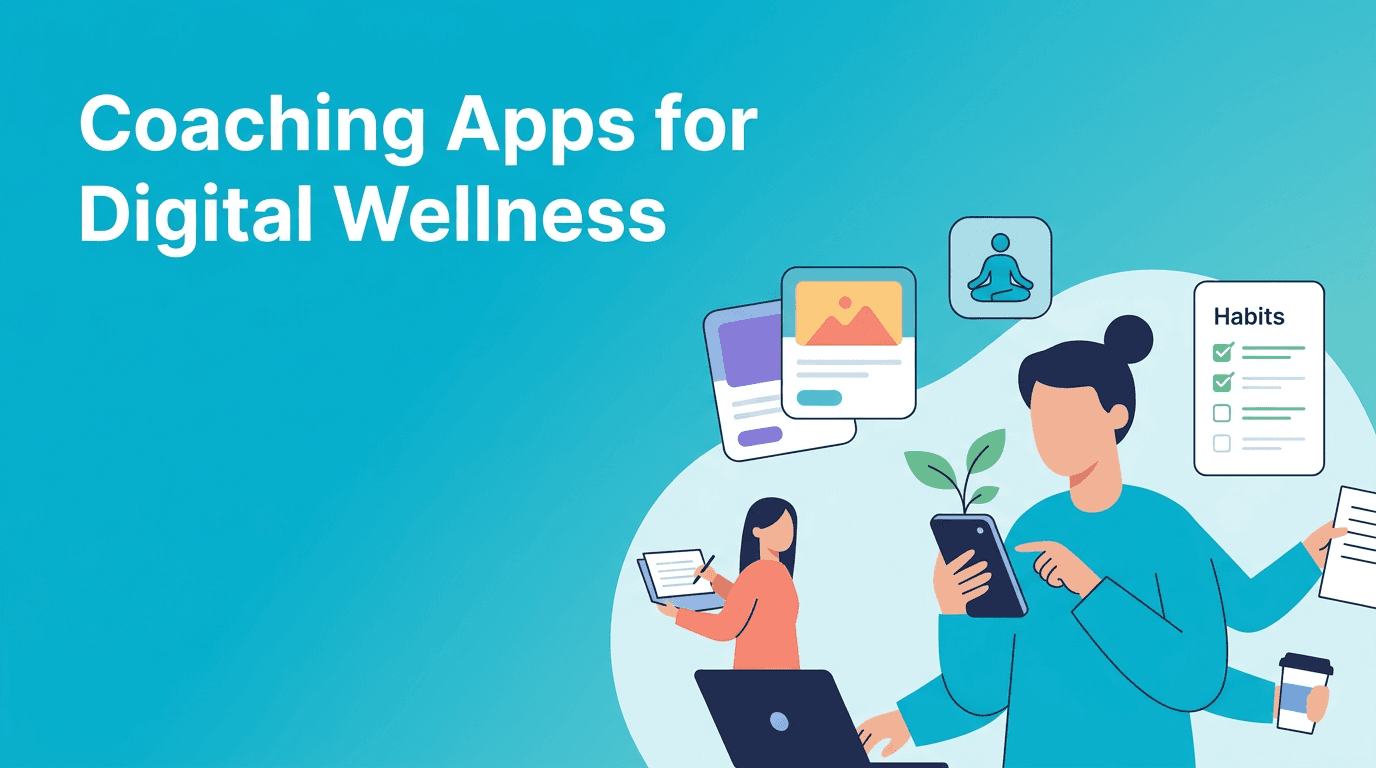
Coaching Apps for Digital Wellness: An App Comparison for People Who Want More Than Reminders
Looking for coaching apps that do more than track habits? This app comparison explores how AI guidance, digital wellness features, and personalized support can help you grow with less friction.

By Haply Team
Haply Editorial Team
Most coaching apps promise motivation, but many stop at reminders, streaks, or generic advice. If you want better digital wellness, the real question is not which app has the prettiest interface. It is which tools can help you make better decisions in the moments when your attention, energy, and habits start to drift.
This app comparison looks at a specific angle: how coaching apps fit into a healthier relationship with technology. Instead of asking which platform has the most features, we will look at which ones reduce friction, support reflection, and make personal growth feel practical. Along the way, we will also look at where AI coaching fits, and where apps like Haply stand out.
Why coaching apps are shifting from productivity to digital wellness
A few years ago, many self-improvement tools were built around output alone: more tasks, more goals, more optimization. Now users are asking for something smarter. They want apps that help them focus without overwhelm, build habits without guilt, and use technology in ways that support real life.
That is why digital wellness has become a useful lens for evaluating personal growth tools. Good coaching apps do not just push you harder. They help you notice patterns, recover from off days, and create systems that match your energy, priorities, and constraints.
"The best technology for self-improvement does not demand more attention. It helps you use your attention on purpose."
What to look for in an app comparison of coaching apps
- Personalization: Does the app adapt to your goals, routines, and challenges, or does it give the same advice to everyone?
- Actionability: Are you leaving each session with a next step, or just a nice feeling?
- Habit support: Look for trackers, reminders, and streaks that reinforce behavior without becoming stressful.
- Reflection tools: Journaling prompts, check-ins, and guided questions can turn passive app use into active self-awareness.
- Mini-tools that reduce app switching: Features like timers, planners, breathing tools, or sleep support can make growth easier to maintain.
- Tone and usability: A coaching app should feel supportive, not robotic, cluttered, or overly demanding.
Why feature overload can hurt progress
One surprising result of many app comparisons is that more features do not always create better outcomes. If an app feels like a dashboard full of disconnected tools, you may spend more time organizing your growth than actually growing. For many users, the best setup is a small number of connected features that work together naturally.
How different coaching apps approach personal improvement
There are a few common models in the market. Understanding them can save you time before you download anything.
- Habit-first apps focus on streaks, repeat actions, and reminders. They are useful for consistency, but may feel shallow if you also want guidance and reflection.
- Journal-first apps support emotional clarity and self-observation. These can be strong for insight, though some users need more structure to turn reflection into action.
- Therapy-inspired apps often emphasize mood support, mindfulness, or mental health exercises. They can help with emotional regulation, but may not cover broader life goals.
- AI coaching apps aim to combine conversation, planning, motivation, and personalized guidance. The best ones feel responsive and practical rather than generic.
- All-in-one growth platforms bundle coaching with trackers and mini-apps. When done well, this reduces friction. When done poorly, it becomes clutter.
Where Haply fits in this app comparison
Haply is a strong example of a newer generation of coaching app design. Rather than focusing on one narrow use case, it combines chat-based support with specialized AI coaches across Productivity, Wellness, Career, Learning, Finance, Creativity, and Relationships. That matters because personal improvement is rarely isolated. Trouble focusing might connect to stress, poor sleep, unclear priorities, or burnout.
From a digital wellness perspective, Haply is especially interesting because it includes tools that turn advice into action. Users can move from coaching conversations into a Focus Timer, Task Planner, Meditation/Breathe, Sleep Stories, Budget Tracker, or Idea Board without building a complicated stack of separate apps. The Today Dashboard and goal-based onboarding also help reduce setup fatigue, which is often where motivation drops.
Try a simpler personal growth stack
If you want one app that combines AI guidance, habit support, and practical mini-tools, Haply offers a flexible way to build better routines without app overload.
Try Haply FreeA practical way to choose coaching apps for your needs
1. Start with your bottleneck
Choose an app based on the problem you want to solve first. If you struggle with consistency, prioritize habit support. If you feel mentally scattered, prioritize guided reflection and planning. If you want a more adaptive experience, test AI coaching tools that can respond to changing goals.
2. Check whether the app reduces or adds friction
A useful test is this: after one week, do you feel more clear or more busy? Strong coaching apps simplify your decisions. Weak ones add more check-ins, more dashboards, and more digital noise.
3. Look for connected behavior loops
The most effective apps connect insight, action, and review. For example, you notice a pattern, choose a next step, complete it, and reflect on the result. That loop is where growth becomes sustainable. Apps like Haply support this with coaching sessions, reminders, streaks, and progress systems such as levels and achievements.
4. Test motivation style, not just features
Some apps motivate through pressure. Others use curiosity, encouragement, and momentum. If you are trying to improve digital wellness, the second approach is often more sustainable because it builds a healthier relationship with technology rather than making your phone feel like another demanding manager.
The future of AI coaching and digital wellness
The next wave of personal growth apps will likely be less about isolated utilities and more about adaptive systems. Users do not just want a timer, a planner, or a tracker. They want tools that understand context and help them make better choices at the right time. That is where thoughtful AI coaching can become genuinely useful.
Still, the best app is not the one that talks the most. It is the one that helps you take meaningful action with less friction. In that sense, the most promising coaching apps are the ones that combine guidance, behavior support, and calm design into a system you will actually return to.
Frequently Asked Questions
What are the best coaching apps for digital wellness?
The best coaching apps for digital wellness combine personalized guidance, habit support, and tools that reduce overwhelm. Look for apps that connect reflection with action instead of only sending reminders.
How is AI coaching different from a regular habit tracker app?
AI coaching adds conversational guidance, adaptive suggestions, and personalized support based on your goals. A regular habit tracker usually focuses only on logging repeated behaviors.
Is Haply a coaching app or a productivity app?
Haply is best understood as a personal growth and AI life coaching app. It includes productivity tools, wellness features, and specialized coaching across multiple life areas.
Do coaching apps actually help with digital wellness?
They can, especially when they help you use technology more intentionally. The most effective apps reduce friction, support self-awareness, and encourage healthier routines without adding more digital stress.