Context Switching at Work: How to Protect Focus and Get More Done
Context switching quietly drains productivity, focus, and efficiency at work. Learn how to reduce mental resets, improve time management, and get more done with less stress.

By Haply Team
Haply Editorial Team
Context switching is one of the biggest hidden reasons smart people feel busy all day but still struggle with getting things done. If your workday is filled with messages, tabs, meetings, and quick task jumps, your productivity, focus, time management, and overall efficiency can drop fast.
Why context switching drains productivity
Most professionals do not lose time only because tasks take too long. They lose time because every shift between tasks creates a small mental reset. You stop writing to answer a message, then jump into a meeting, then return to a spreadsheet, then check email again. Each move feels minor, but together they fragment attention and reduce the quality of your thinking.
- Focus weakens when your brain has to reload information repeatedly.
- Efficiency drops because simple tasks expand into longer sessions.
- Time management becomes reactive instead of intentional.
- Productivity suffers because important work gets pushed behind urgent interruptions.
"You do not need more hours in the day. You need fewer unnecessary switches inside the hours you already have."
What context switching looks like in real life
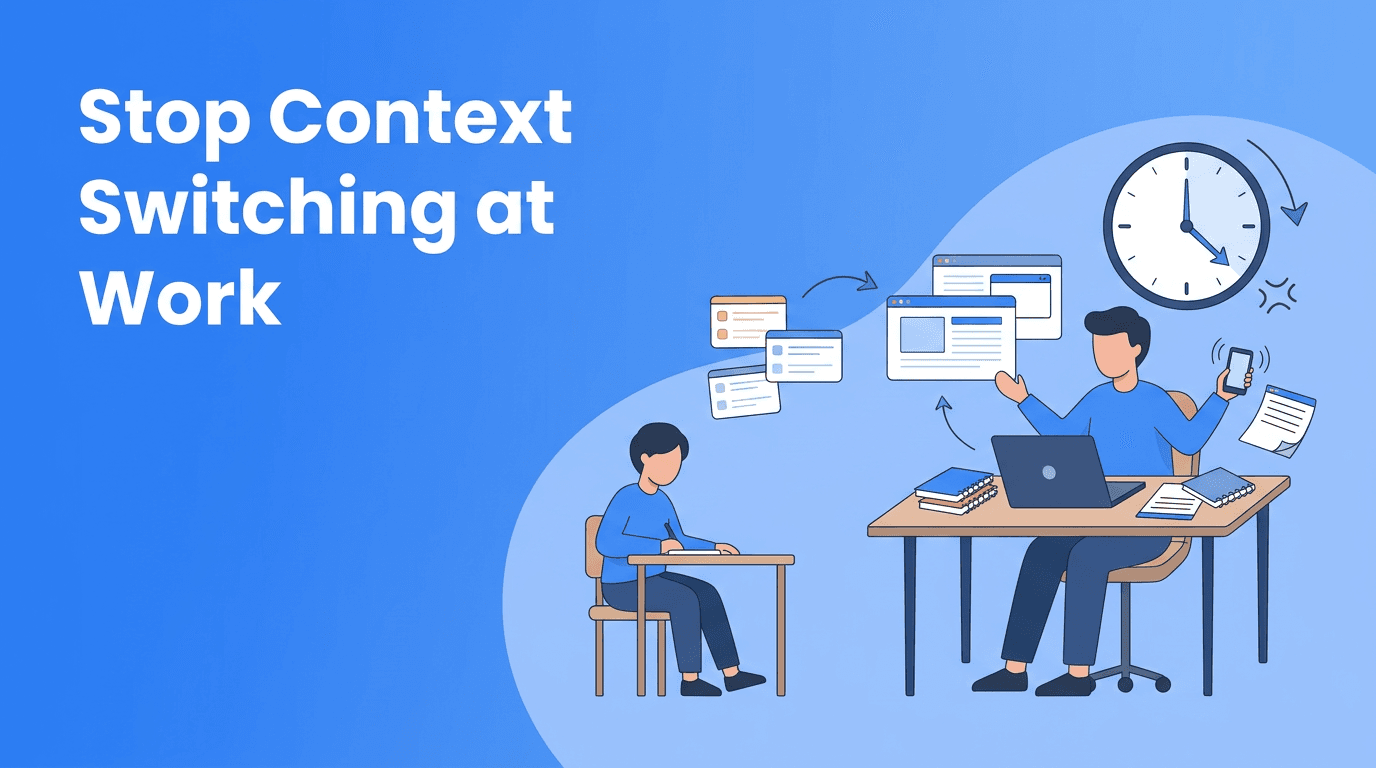
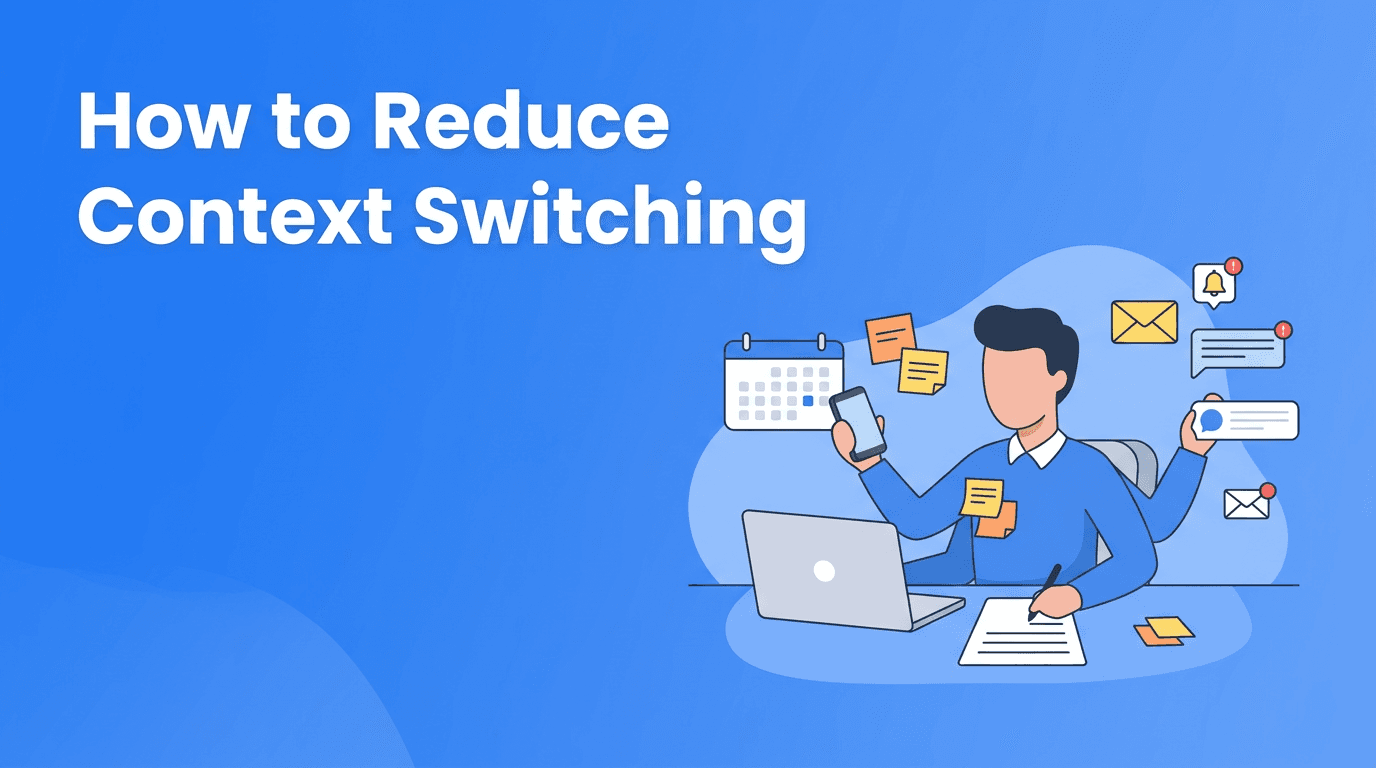
At work, context switching rarely looks dramatic. It often appears as normal behavior: checking Slack while drafting a report, reviewing notes during a call, replying to email between study blocks, or bouncing between admin work and creative work. Because these actions seem small, people underestimate their cost.
Common triggers to watch for
- Notifications from chat, email, and project tools
- Meetings placed in the middle of focused work blocks
- Keeping too many tabs and apps open at once
- Starting the day without a clear priority
- Saying yes to every request immediately
If several of these are part of your routine, there is a good chance your schedule is optimized for responsiveness, not for meaningful output.
A practical system to reduce context switching
1. Group similar tasks together
Batching is one of the fastest ways to improve efficiency. Try grouping email, admin tasks, planning, and collaborative work into dedicated windows. This helps your brain stay in one mode longer instead of constantly changing gears.
2. Protect one high-focus block daily
Set aside at least 60 to 90 minutes for work that requires real concentration. During that block, close extra tabs, mute notifications, and work on one clearly defined outcome. This is where real productivity gains happen.
3. Create restart notes
Before leaving a task, write one short line about what you were doing and what comes next. This simple habit reduces the restart cost when you return and improves time management across the day.
4. Use communication windows
Instead of replying all day, check messages at planned times. This reduces reactive behavior and helps you maintain focus without ignoring important communication.
Build a stronger focus routine with Haply
Haply is an AI life coaching app for iOS and Android that helps you improve productivity with chat-based coaching, a Focus Timer, Task Planner, habit tracking, and daily reminders. If you want more structure for protecting focus and getting things done, it is a practical place to start.
Try Haply FreeHow to redesign your day for better time management
Better time management is not only about planning more. It is about arranging your day so important work happens before distractions take over. A simple structure can help:
- Start with your top one or two outcomes, not a long to-do list.
- Schedule shallow tasks after focused work, not before it.
- Leave buffer time after meetings so your brain can reset.
- Keep a capture list for random ideas instead of changing tasks immediately.
- End the day by choosing the first task for tomorrow.
This approach improves focus, protects energy, and makes getting things done feel lighter because you spend less effort reorienting yourself.
When digital tools help, and when they hurt efficiency
Tools can improve productivity, but they can also multiply distractions. The best tools reduce decision-making and create clear workflows. The worst tools encourage constant checking. If you use an app for tasks, calendar, notes, and focus sessions, keep the setup simple. Complexity creates more switching.
With Haply, users can combine productivity coaching with practical tools like the Today Dashboard, Task Planner, and Focus Timer. That can make it easier to turn good intentions into repeatable daily actions.
The goal is not perfect focus
You do not need an interruption-free life to work well. The goal is to reduce unnecessary context switching enough that your best thinking has room to happen. Even a small drop in daily switching can improve efficiency, lower stress, and create visible gains in output over time.
Frequently Asked Questions
What is context switching at work?
Context switching at work is the mental shift that happens when you move between tasks, tools, or conversations. These shifts reduce focus and often make work take longer.
How do I reduce context switching during the day?
Batch similar tasks, mute notifications during focus blocks, and check messages at scheduled times. Also leave brief restart notes before switching away from a task.
Does context switching hurt productivity?
Yes. Frequent switching can lower productivity by increasing mental reset time, reducing concentration, and making it harder to complete important work efficiently.
What is the best way to improve focus at work?
Protect at least one daily block for uninterrupted work on a single priority. Remove distractions, define a clear outcome, and avoid checking communication tools during that time.