Conversation Starters for Social Anxiety: How to Build Rapport Without Performing
Struggling with social anxiety? These conversation starters help introverts build rapport naturally, improve social skills, and feel calmer in networking, dating, and everyday chats.

By Haply Team
Haply Editorial Team
If conversation starters make your mind go blank, you are not awkward, broken, or bad at people. For many introverts and people with social anxiety, the hardest part of connection is not talking forever, it is simply beginning. The good news is that strong social skills often start with a few low-pressure phrases that help you feel grounded, curious, and real.
Why conversation starters matter more than charisma
A lot of people think connection comes from being naturally funny, smooth, or endlessly outgoing. In reality, rapport usually grows from something simpler: noticing, asking, listening, and responding. Good conversation starters reduce pressure because they give your brain a clear first step instead of demanding instant brilliance.
- They lower anxiety by replacing guesswork with a simple script.
- They improve rapport because people usually respond well to genuine curiosity.
- They support networking without forcing fake small talk.
- They help introverts stay authentic instead of trying to perform.
- They create momentum so the next sentence feels easier than the first.
The best conversation starters for social anxiety
The easiest openers are specific, light, and connected to the moment. Instead of trying to impress, try to observe and invite. That keeps the interaction natural and reduces the pressure to be clever.
Use the setting around you
- "How do you know the host?"
- "Have you been to this event before?"
- "What brought you here today?"
- "What has been the most useful part so far?"
- "Is this seat taken?" followed by "How's your day going?"
Use gentle curiosity
- "What are you working on lately?"
- "What do you enjoy outside of work?"
- "What kind of projects do you like most?"
- "What has been keeping you busy recently?"
- "What is something you are looking forward to this week?"
Use easy follow-up questions to build rapport
This is where rapport actually forms. You do not need a perfect story. You just need a simple follow-up that shows interest.
- "How did you get into that?"
- "What do you like about it most?"
- "Was that always your plan?"
- "What was that experience like for you?"
- "That sounds exciting, what happened next?"
"Confidence in conversation is rarely about having the perfect thing to say. It is about trusting yourself to stay present for the next thing."
A simple 3-step formula introverts can use
If you freeze in social situations, remember this formula: Notice - Ask - Reflect. It works in friendships, dating, workplace chats, and even networking events.
- Notice something real: the event, their role, the environment, or a shared experience.
- Ask one open but easy question: keep it short and answerable.
- Reflect back one detail: "That sounds meaningful", "I can see why you enjoy that", or "That makes sense".
This approach is especially useful when your social anxiety tells you every interaction is a test. It is not a test. It is a shared moment.
What to say in specific situations
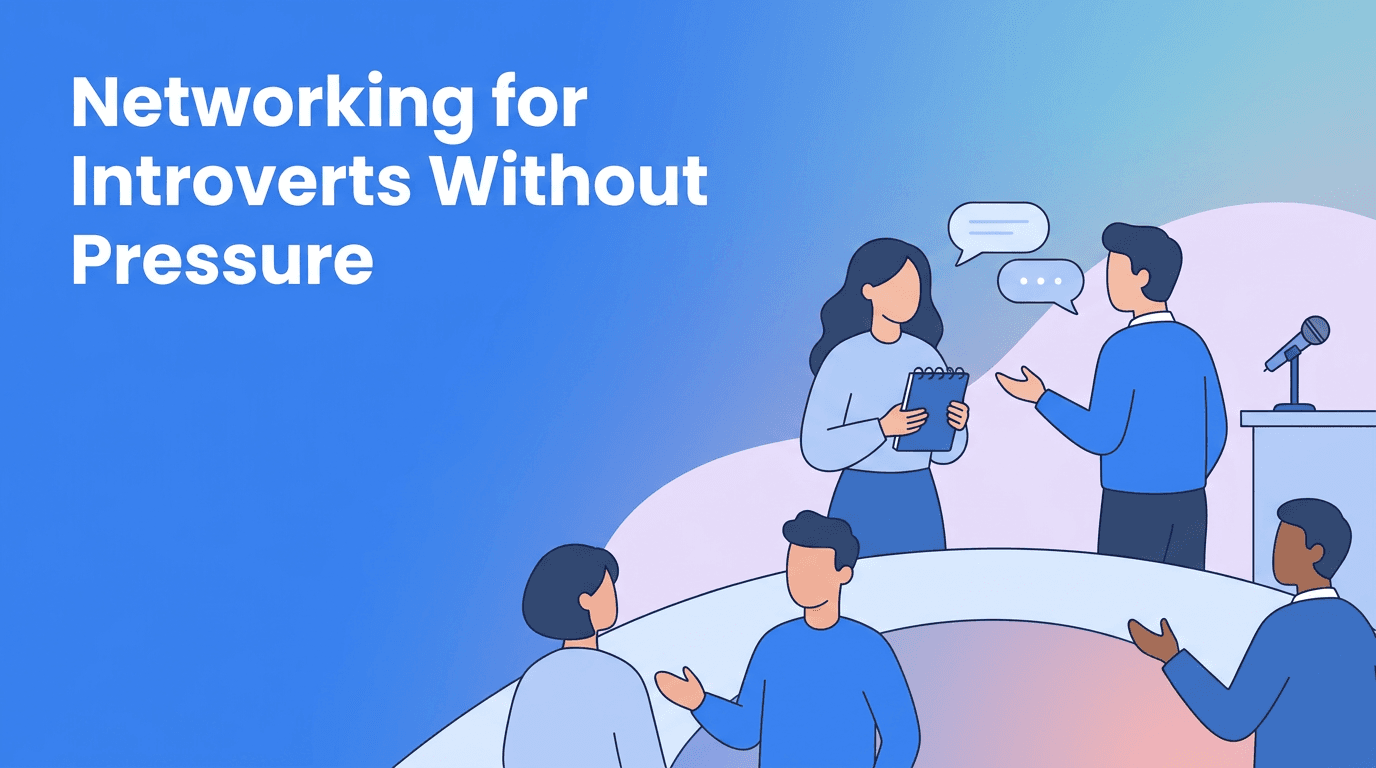
At networking events
Many people fear networking because it seems transactional. Instead of trying to sell yourself, focus on learning one useful thing about the other person.
- "What kind of work are you focused on these days?"
- "What made you decide to come tonight?"
- "What part of your job do you enjoy most?"
In everyday social settings
- "Have you tried this place before?"
- "What do you usually order here?"
- "How has your week been so far?"
Before public speaking or group discussions
If public speaking makes you tense, start connecting before you start performing. Speak to one or two people beforehand. A brief chat can make the room feel less threatening and more human.
- "What interested you in this topic?"
- "Have you heard this speaker before?"
- "What are you hoping to take away from this session?"
Common mistakes that make social anxiety worse
- Trying to sound impressive instead of interested.
- Asking too many questions in a row like an interview.
- Oversharing too early because silence feels uncomfortable.
- Judging yourself mid-conversation instead of staying present.
- Assuming pauses mean failure when they are often normal.
Healthy social skills are not about eliminating pauses or never feeling nervous. They are about recovering gently, staying engaged, and letting the conversation breathe.
Want guided support for social confidence?
Haply is an AI life coaching app for iOS and Android that helps you build confidence step by step. You can chat with coaches, set small connection goals, use daily reminders, and practice better relationship habits without pressure.
Try Haply FreeHow to practice conversation starters without overwhelm
The goal is not to become the loudest person in the room. The goal is to feel a little more capable each time. Try this weekly practice plan:
- Day 1: Write 5 conversation starters that feel natural in your own voice.
- Day 2: Use one starter in a low-stakes setting, like with a cashier, neighbor, or coworker.
- Day 3: Practice one follow-up question that helps build rapport.
- Day 4: Reflect on what felt easier than expected.
- Day 5: Try one starter in a slightly more challenging setting, like a meetup or class.
- Day 6: Reward effort, not perfection.
- Day 7: Review your progress and choose one phrase to reuse next week.
If you want structure, Haply's Relationships coaches can help you turn this into a realistic confidence plan. The app's chat-based coaching, habit tracker, daily reminders, and Today Dashboard can make practicing feel more manageable and consistent.
Your next conversation does not need to be perfect
Real connection rarely begins with a flawless line. It begins when you show up with a little courage and one simple question. The best conversation starters are not magic tricks. They are small bridges that help introverts and anxious minds move from fear into contact, one honest moment at a time.
Frequently Asked Questions
What are the best conversation starters for social anxiety?
The best conversation starters are simple, specific, and tied to the moment, such as "How do you know the host?" or "What brought you here today?" They reduce pressure and make follow-up easier.
How can introverts improve social skills without feeling fake?
Introverts can improve social skills by using natural phrases, asking thoughtful follow-up questions, and focusing on curiosity instead of performance. Authenticity usually builds stronger rapport than trying to seem outgoing.
How do I build rapport quickly in a conversation?
Build rapport by noticing something relevant, asking an easy open question, and reflecting back what the other person shares. People feel connected when they feel heard.
What should I say at networking events if I am shy?
Ask simple questions like "What brought you here tonight?" or "What kind of work are you focused on these days?" Good networking starts with genuine interest, not a polished pitch.
Can conversation starters help with public speaking anxiety?
Yes. Talking to a few people before speaking can make the room feel more familiar and lower tension. Small pre-talk conversations can help you feel more grounded and confident.