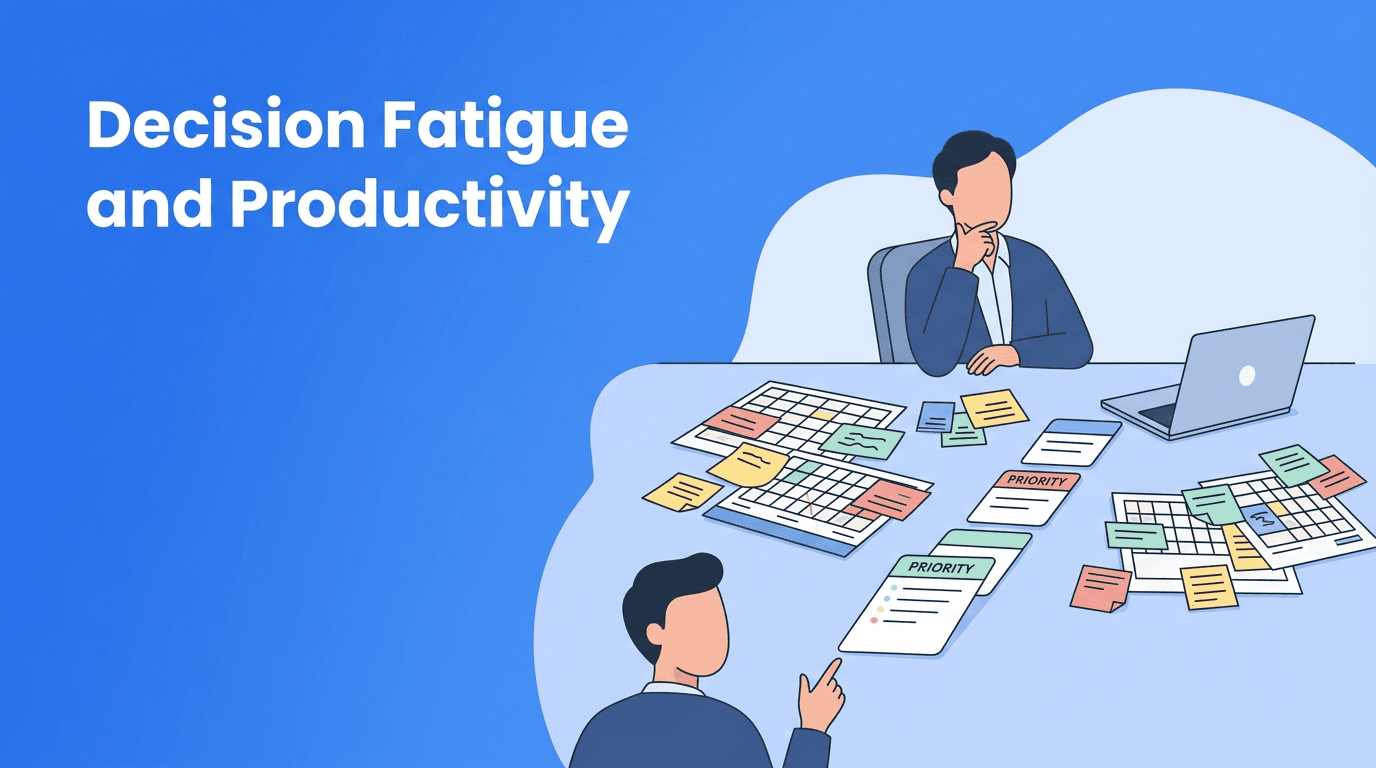
Decision Fatigue and Productivity: A Smarter Way to Protect Focus
Decision fatigue can quietly drain productivity, focus, and time management. Learn practical ways to reduce mental overload and get more done with less friction.

By Haply Team
Haply Editorial Team
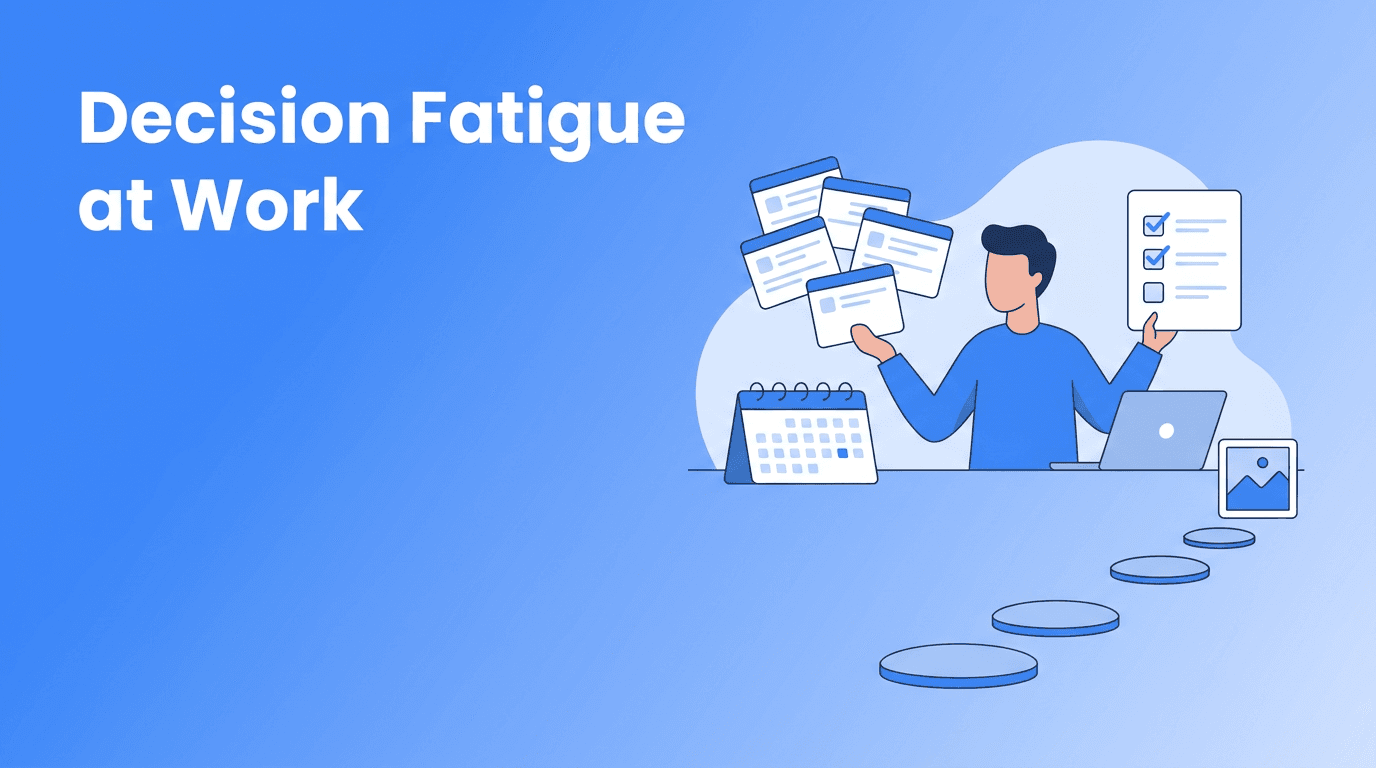
Decision fatigue is one of the most overlooked reasons smart people struggle with productivity. You may think you need better discipline, stronger motivation, or a new app, but often the real problem is that too many small choices are draining your focus, hurting time management, and making getting things done feel harder than it should.
Why decision fatigue matters more than most productivity advice admits
Every decision costs mental energy. What should you work on first? Which email deserves a reply? Should you keep researching or start writing? By midday, this constant choosing creates friction. That friction slows efficiency and makes even important tasks feel heavy.
For knowledge workers, students, and busy professionals, the challenge is not just workload. It is the sheer number of micro-decisions packed into a normal day. When your brain keeps switching into evaluation mode, your attention gets fragmented. The result is delayed starts, shallow work, and preventable stress.
"The more choices you make, the harder each next choice becomes."
The hidden signs of decision fatigue at work
Many people do not notice decision fatigue because it rarely looks dramatic. It often shows up as subtle productivity leaks that feel normal.
- You procrastinate on simple tasks because choosing where to begin feels mentally expensive.
- You over-plan instead of acting because planning feels safer than committing.
- You keep checking tools and tabs looking for clarity instead of creating it.
- You say yes too quickly because thoughtful decisions require energy you no longer have.
- You end the day busy but unsatisfied because too much time went into deciding, not doing.
Why this hurts focus and time management
When your mental bandwidth is spent on choices, less is available for execution. That is why focus fades after a morning full of meetings, messages, and task triage. Good time management is not only about calendars and deadlines. It is also about reducing the number of decisions your brain must make to move forward.
A practical system to reduce decision fatigue
The goal is not to remove all decisions. It is to eliminate the unnecessary ones so your best thinking is reserved for meaningful work. Here is a simple system that improves efficiency without making your day rigid.
1. Decide your top three before the day starts
Do not begin the morning by asking, "What should I do now?" Answer that question the night before. Pick three priority outcomes only. This creates a default path and protects your best energy for execution.
2. Use repeatable rules instead of constant choice
Create lightweight rules for common situations. For example: meetings only in the afternoon, email checked twice a day, admin tasks batched after lunch, deep work before 11 a.m. Rules reduce decision load and increase consistency.
3. Shrink the options on your task list
A long task list creates cognitive drag. Keep a master list elsewhere, but work from a short daily view with only what is realistic. Fewer visible options means less hesitation and faster action.
4. Turn recurring tasks into templates
If you often write similar emails, plan projects, study for exams, or prep meetings, use templates and checklists. This removes repeated thinking and helps you get into motion quickly.
5. Protect transition moments
Decision fatigue spikes during transitions, such as after meetings, between classes, or when finishing one task. Predefine your next step before you stop. A note like "Next: draft outline for slide deck" makes restarting much easier.
Want less friction in your day?
Haply helps you reduce decision overload with chat-based Productivity coaching, a Task Planner, Focus Timer, habit tracking, and a personalized Today Dashboard. It is a practical way to support better focus and smarter routines on iOS and Android.
Try Haply FreeHow to make better decisions when your brain is tired
Sometimes you cannot avoid a demanding day. In those moments, the best move is not to force perfect choices. It is to lower the decision stakes and create structure.
- Use a default option when the choice is low risk.
- Set a time limit for decisions that could expand forever.
- Ask what matters most now instead of what feels ideal.
- Delay non-urgent choices until your energy returns.
- Automate personal routines like meals, clothes, study blocks, or workout times where possible.
This approach is especially useful for people who want better productivity without becoming obsessed with optimization. The point is not to control every minute. The point is to stop wasting cognitive energy on choices that do not deserve it.
Where Haply fits into a lower-friction workflow
If you struggle to build these habits alone, external structure helps. Haply is an AI life coaching app with specialized coaches for Productivity, Wellness, Career, Learning, and more. You can use it to clarify priorities, build routines, track streaks, and stay accountable through short chat-based coaching sessions.
Its Task Planner can simplify what to do next, while the Focus Timer helps you stay with one task long enough to make progress. Daily reminders, goal-based onboarding, and the Today Dashboard are especially useful when decision fatigue makes planning feel heavier than it needs to be.
A simple weekly reset for lasting efficiency
To prevent decision fatigue from piling up, spend 10 minutes once a week answering four questions:
- What repeated decisions drained me this week?
- What can become a rule, checklist, or template?
- Which tasks created unnecessary choice overload?
- What should be pre-decided before Monday starts?
This tiny review helps you improve your environment, not just your willpower. That is how sustainable efficiency is built.
Final takeaway: productivity improves when choices get lighter
If your days feel mentally crowded, do not assume the answer is more effort. Often, the smarter move is to reduce avoidable choices. When you lower decision load, focus becomes easier, time management gets cleaner, and getting things done feels less like a fight. Start by pre-deciding a few key parts of tomorrow, and let simpler choices create better work.
Frequently Asked Questions
What is decision fatigue in productivity?
Decision fatigue is the mental exhaustion that comes from making too many choices. In productivity, it reduces focus, slows action, and makes simple tasks feel harder.
How do I reduce decision fatigue at work?
Pre-decide priorities, use simple rules, shorten your daily task list, and create templates for recurring work. These steps reduce mental load and improve efficiency.
Can decision fatigue affect time management?
Yes. When you spend too much energy deciding what to do, less time and attention remain for doing the work itself.
Why do I feel productive but still get little done?
You may be spending too much effort on planning, choosing, switching, and reacting. That creates activity without enough meaningful progress.
What app helps with decision fatigue and focus?
Apps like Haply can help by offering structured planning, productivity coaching, habit tracking, and focus tools that reduce daily friction.