Decision Fatigue at Work: How to Protect Focus and Make Better Choices
Decision fatigue at work quietly drains productivity, focus, and time management. Learn practical ways to reduce mental overload, improve efficiency, and get more done.

By Haply Team
Haply Editorial Team
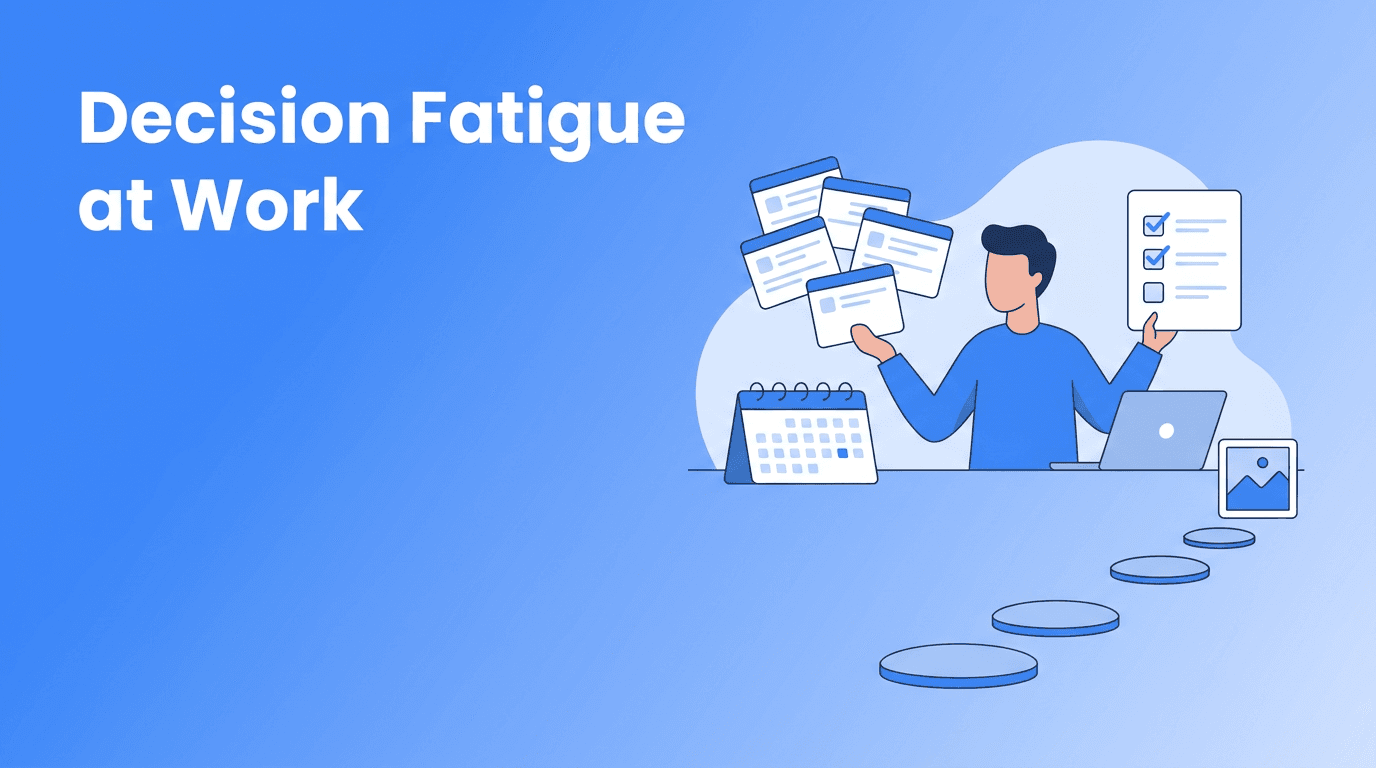
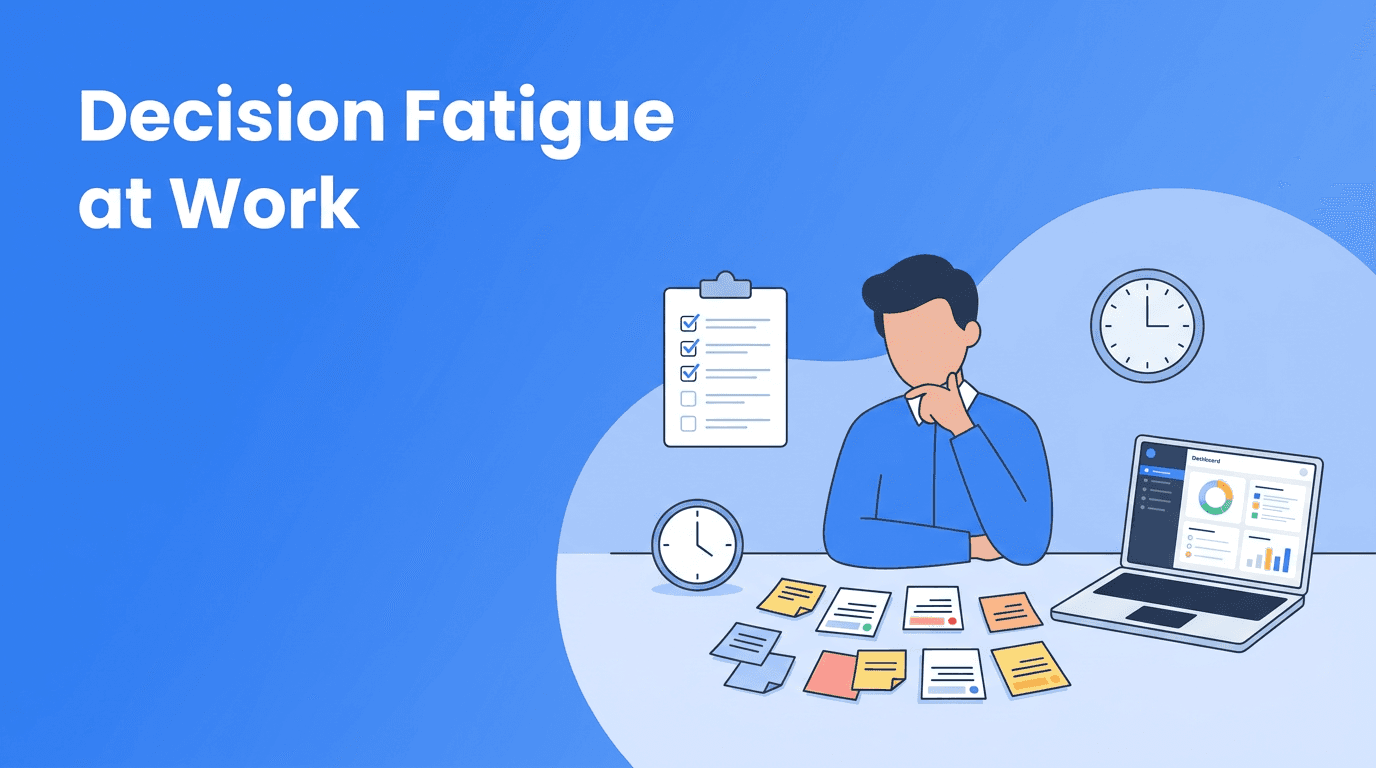
Decision fatigue is one of the most overlooked reasons smart people struggle with productivity, focus, and time management. When your brain spends the day making too many small choices, your ability to do meaningful work drops fast. The result is lower efficiency, slower progress, and that frustrating feeling of being busy without truly getting things done.
Why decision fatigue hurts productivity so quickly
Most knowledge work is not physically exhausting. It is mentally expensive. Every time you decide what to work on, which message to answer, whether to switch tasks, or how to organize your next hour, you use cognitive energy. By midday, even simple decisions can feel strangely heavy.
- You revisit the same task list multiple times without starting
- You spend too long choosing between important tasks
- You default to easy work instead of meaningful work
- You procrastinate because every option feels mentally expensive
- You end the day feeling busy but unclear about results
"The more choices you make without a system, the less energy you have for the choices that matter most."
The hidden sources of decision fatigue at work
Many people think decision fatigue only comes from big choices. In reality, it often builds from dozens of tiny moments. Notifications, unclear priorities, open tabs, shifting deadlines, and reactive communication all increase mental friction. This is why improving efficiency is often less about doing more and more about deciding less.
1. Too many task options
A long to-do list looks productive, but it often creates hesitation. If everything feels possible, nothing feels obvious. Strong time management starts by reducing active choices, not by collecting more tasks.
2. Constant context changes
Switching between meetings, email, documents, and chat forces your brain to repeatedly reorient. That reorientation cost weakens focus and makes each next decision harder.
3. Unclear personal rules
People with strong workflows often rely on default rules. They know when to check messages, how to prioritize work, and what counts as a finished task. Without those rules, you negotiate with yourself all day.
A practical system to reduce decision fatigue
You do not need perfect discipline. You need fewer repeated decisions. The goal is to build simple defaults that protect attention and make getting things done easier.
- Choose a daily top three. Limit your most important work to three priority outcomes
- Set communication windows. Check email and chat at planned times instead of continuously
- Use task templates. Reuse structures for recurring work so you do not start from scratch
- Create start rules. Decide in advance what you will work on first each morning
- Batch low-value choices. Group admin tasks, approvals, and small replies into one block
- Define done clearly. A task should have a visible finish line, not a vague intention
How to improve focus with better defaults
Defaults are powerful because they remove negotiation. If your calendar already includes a morning focus block, you do not need to decide when deep work happens. If your phone is on Do Not Disturb during that block, you do not need to keep resisting interruptions. This is where decision fatigue starts to shrink.
Build a lighter productivity system
Haply helps you reduce mental overload with AI Productivity coaching, a Task Planner, a Focus Timer, habit tracking, and a personalized Today Dashboard. It is a practical way to protect focus and make better daily decisions.
Try Haply FreeA simple daily routine for better time management
- Before work: write your top three outcomes and pick your first task
- Mid-morning: do one uninterrupted focus session before checking non-urgent messages
- Midday: review progress and remove or defer low-value tasks
- Afternoon: batch communication, meetings, and administrative work
- End of day: reset tomorrow's priorities so your future self starts with clarity
This routine is simple, but that is exactly why it works. Great productivity is often the result of reducing friction, not adding complexity. A lighter system improves focus, supports better time management, and helps you protect your best thinking for work that matters.
The long-term payoff of fewer decisions
When you reduce unnecessary choices, you create more room for strategic thinking, creativity, and calm execution. Over time, this improves efficiency without forcing longer hours. You feel less scattered, your work quality improves, and getting things done becomes more consistent.
If your days feel mentally crowded, do not ask, "How can I push harder?" Ask, "Which decisions can I remove?" That question often leads to the most sustainable productivity gains.
Frequently Asked Questions
What is decision fatigue at work?
Decision fatigue at work is the mental exhaustion that comes from making too many choices throughout the day. It can reduce focus, productivity, and the quality of your decisions.
How do I reduce decision fatigue quickly?
Start by choosing your top three priorities, batching email and messages, and creating simple default routines. Fewer repeated choices means more mental energy for important work.
Does decision fatigue affect time management?
Yes. When your brain is overloaded, it takes longer to prioritize, start tasks, and stay focused. This makes your schedule less efficient and increases procrastination.
What tools help with decision fatigue?
Tools that simplify planning and reduce mental friction can help. For example, task planners, focus timers, habit trackers, and coaching apps like Haply support clearer daily decisions.