Decision Fatigue at Work: How to Protect Focus and Improve Productivity
Decision fatigue at work quietly drains productivity, weakens focus, and hurts time management. Learn practical ways to reduce mental overload and get more done.

By Haply Team
Haply Editorial Team
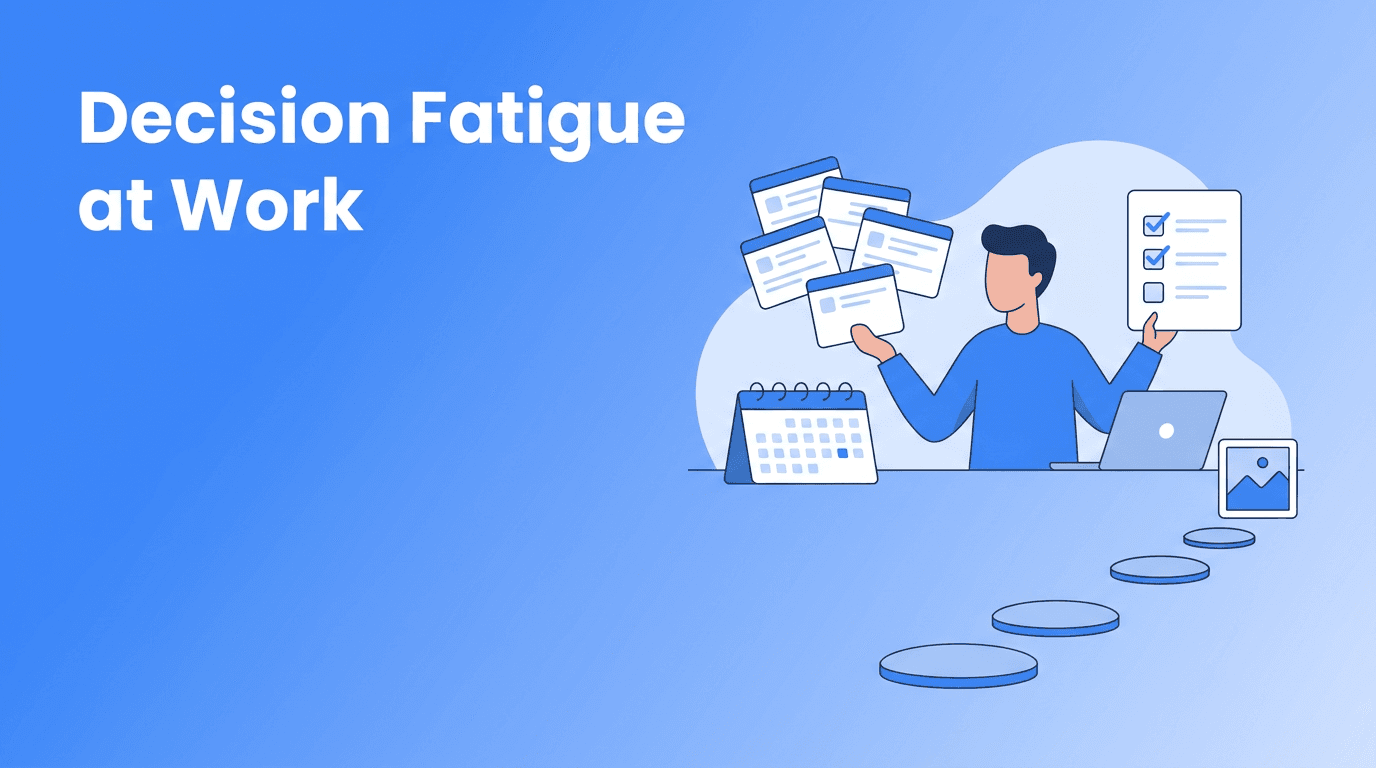
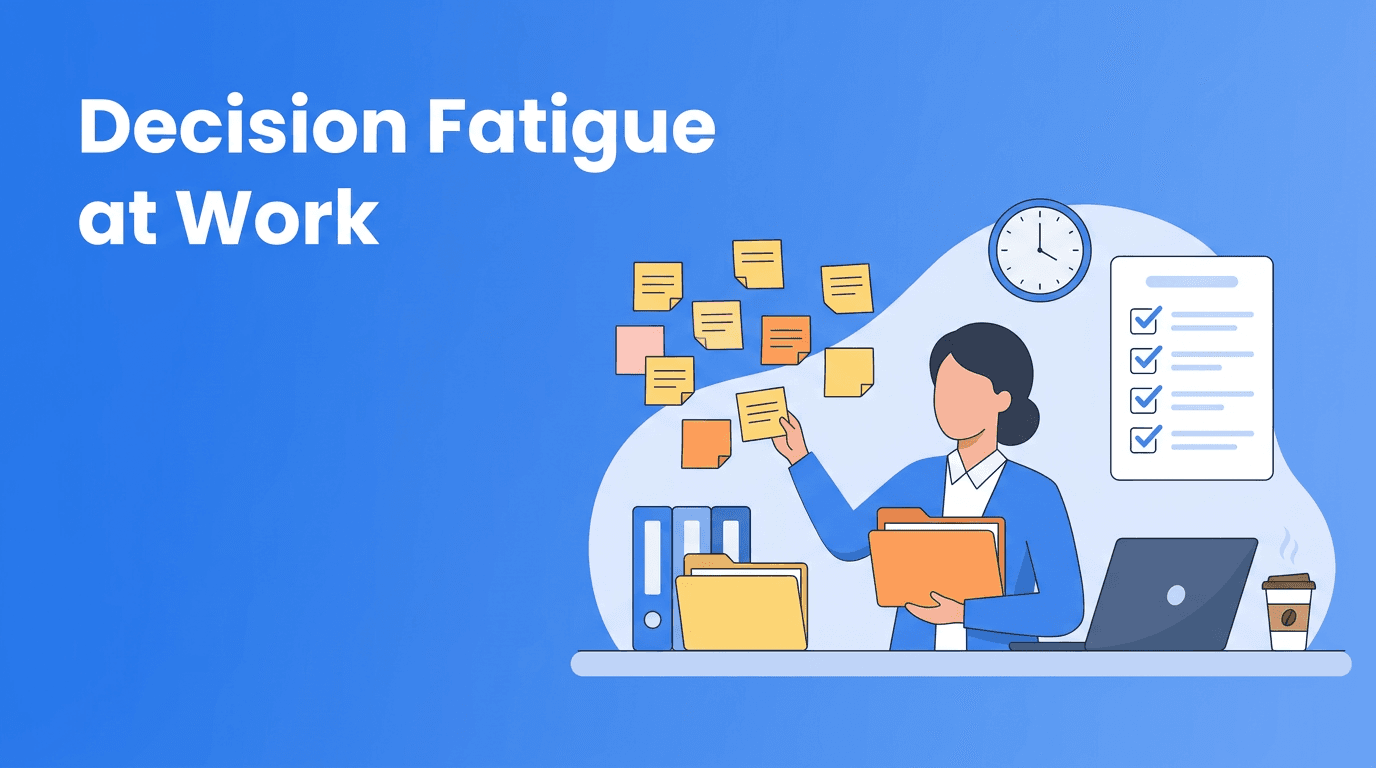
Decision fatigue is one of the most overlooked reasons smart people struggle with productivity. When your day is packed with constant choices, your focus drops, your time management gets messier, and even simple tasks start to feel heavy. If you want a practical way of getting things done with more efficiency, reducing decision fatigue is a strong place to start.
Why decision fatigue hurts productivity faster than you think
Most people assume productivity problems come from laziness, poor discipline, or weak motivation. In reality, many slow days are caused by too many decisions. Every small choice, what to work on first, whether to answer a message now, how to phrase an email, whether to keep researching or finally start, uses mental energy.
By the afternoon, that mental energy gets thinner. You are more likely to procrastinate, avoid important work, or default to easy but low-value tasks. That is why decision fatigue at work often looks like distraction, but the real issue is depleted cognitive bandwidth.
"You do not rise to the level of your goals. You fall to the level of your systems."
The hidden signs of decision fatigue at work
- You keep reopening your task list without choosing a priority
- You spend more time organizing work than actually starting it
- You delay important tasks and handle small requests first
- You feel oddly tired after meetings filled with choices
- You switch between tools, tabs, or plans because committing feels hard
- You end the day busy, but unsure what meaningful progress you made
Why knowledge workers are especially vulnerable
Knowledge work creates endless micro-decisions. Writers decide structure and tone. managers decide priorities and trade-offs. Students decide what to study, what to skip, and how long to review. Remote workers also make more self-management choices because fewer defaults are built into the day.
This is why strong time management is not just about calendars. It is also about reducing unnecessary choices before they drain your attention.
A simple 4-step system to reduce decision fatigue
1. Decide tomorrow before today ends
The best time to make important choices is often before your brain is tired. At the end of each workday, choose your top one to three priorities for tomorrow. Write the first action for each task so you do not have to think from scratch in the morning.
2. Use default options for repeat decisions
Create personal defaults for common situations. For example: meetings only in the afternoon, email checked at two fixed times, deep work before noon, and lunch at a consistent hour. Defaults protect focus because they remove decision points from your day.
3. Shrink the number of active priorities
A long task list creates the illusion of control while increasing mental friction. Keep one main task, one secondary task, and a short admin list. Fewer visible options improve efficiency and make getting things done feel lighter.
4. Set rules for low-value choices
Use simple if-then rules. If a request takes less than two minutes, do it during admin time. If a task does not support this week's goals, defer it. If a message is not urgent, reply in the next communication block. Rules reduce hesitation and preserve energy for higher-value work.
Build a lower-friction productivity system
Haply helps you reduce decision fatigue with AI Productivity coaching, a Task Planner, Focus Timer, streaks, and a personalized Today Dashboard. It is a simple way to protect focus and build better work routines.
Try Haply FreeHow to organize your day for better focus and efficiency
- Start with your hardest thinking task before reactive work
- Batch communication into scheduled windows
- Use a short shutdown routine to plan the next day
- Keep your task manager visually simple
- Limit open tabs and active tools during deep work
- Create checklists for recurring tasks so you do not rethink each step
These habits improve productivity because they reduce mental clutter, not because they make you work longer. The goal is not maximum intensity. The goal is cleaner decisions and steadier execution.
Digital tools should remove choices, not create more
Many apps promise better productivity while adding notifications, views, labels, and endless customization. A better standard is this: does the tool help you decide faster and act sooner? If not, it may be hurting your workflow.
Haply takes a more supportive approach. Its chat-based AI coaches can help you clarify priorities, its Task Planner turns vague intentions into next actions, and its Focus Timer makes it easier to start without overthinking. For busy professionals and students, that reduction in friction matters.
A practical reset when decision fatigue is already high
If your brain already feels overloaded, do not force a perfect plan. Use this quick reset:
- Write down every open task on one page
- Circle the single task with the biggest payoff
- Choose one next step that takes less than 10 minutes
- Silence extra inputs for 25 minutes
- Stop after the session and decide the next step before switching
This reset works because it replaces ambiguity with clarity. And clarity is often the fastest route back to focus.
Frequently Asked Questions
What is decision fatigue at work?
Decision fatigue at work is the mental exhaustion that comes from making too many choices throughout the day. It can reduce focus, slow time management, and make productivity feel harder.
How do I reduce decision fatigue quickly?
Use defaults, pre-plan your top priorities, limit active tasks, and create simple rules for routine decisions. These steps reduce mental load and improve efficiency.
Can decision fatigue cause procrastination?
Yes. When your brain is overloaded by choices, starting important work feels harder, so you may delay tasks or choose easier low-value work instead.
What are the best tools for decision fatigue and productivity?
The best tools reduce friction instead of adding options. A simple task planner, focus timer, and guided coaching app like Haply can help you make clearer decisions and get more done.