Attention Residue: The Quiet Productivity Leak Sabotaging Your Day
Attention residue is a hidden reason time management feels harder, procrastination grows, and deep work slips away. Learn practical productivity tips to reset focus and protect motivation.

By Haply Team
Haply Editorial Team
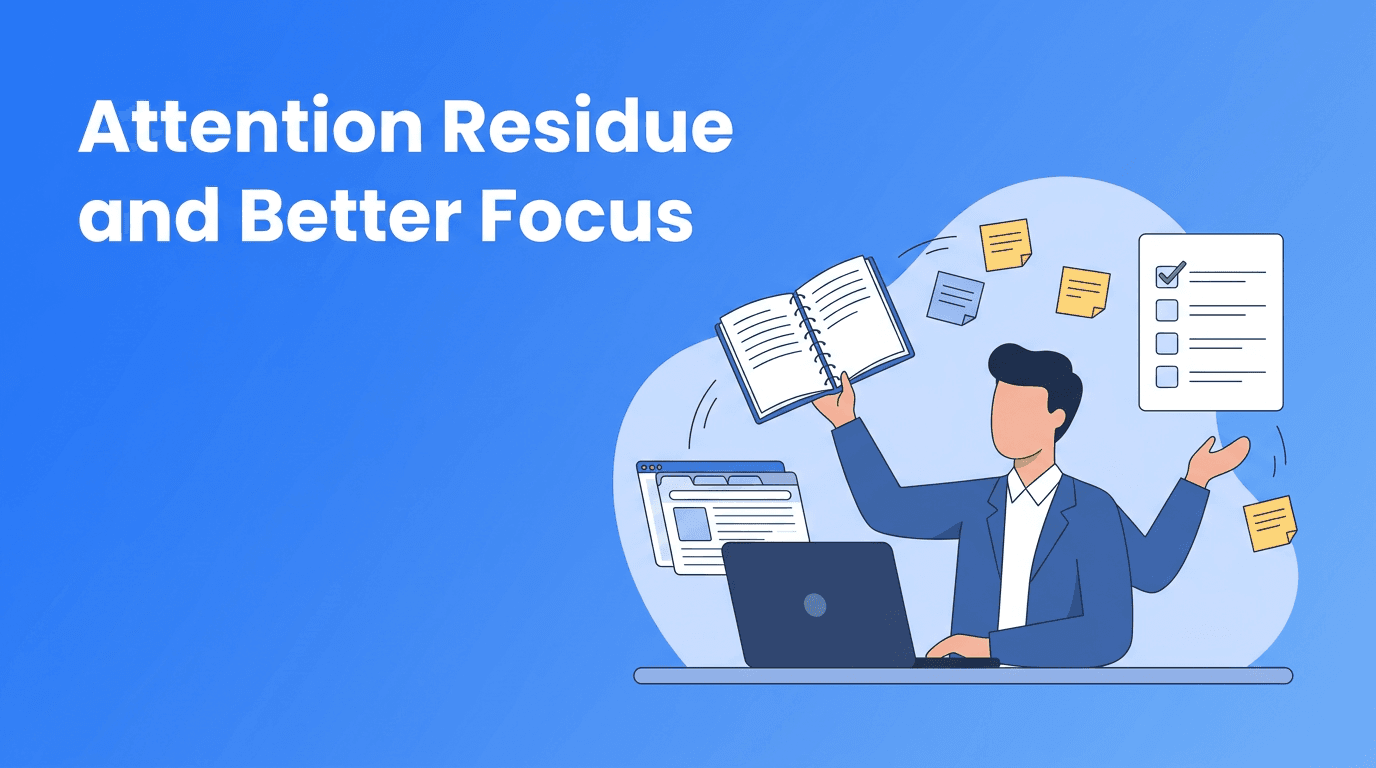
You can have a solid calendar, a long to-do list, and every good intention in the world, yet still feel oddly scattered. One major reason is attention residue. It happens when part of your mind stays stuck on the last task while you try to move to the next one. That mental carryover quietly hurts time management, weakens motivation, makes deep work harder, and can even trigger procrastination.
Most people think their problem is laziness or poor discipline. Often, the real issue is that their attention never fully lands. If your day feels busy but not satisfying, this may be the hidden leak behind it.
What attention residue actually looks like
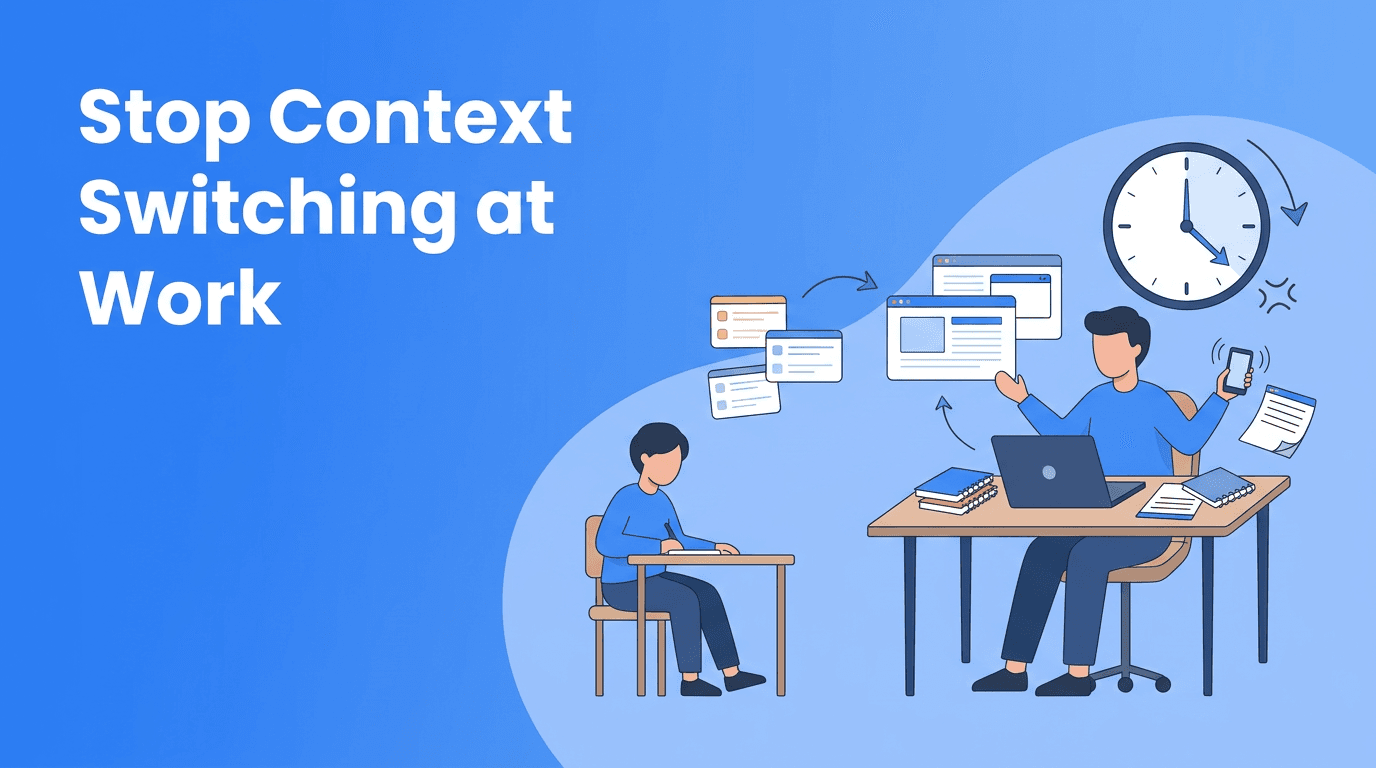
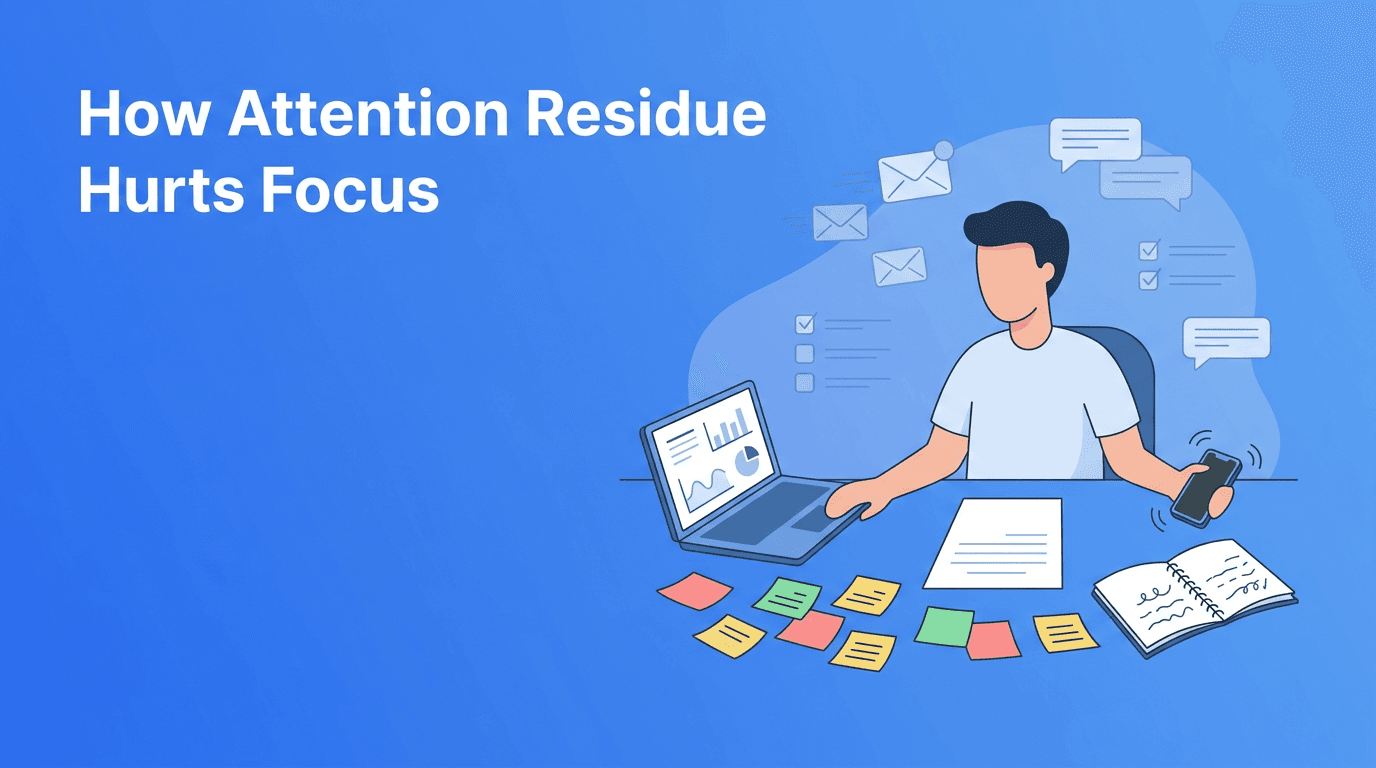
Imagine you start writing a report, then check Slack, then reply to an email, then return to the report. Even after you reopen the document, part of your brain is still replaying the message you just read. That leftover mental friction is attention residue.
- You reread the same paragraph three times before you can continue
- You switch tasks and suddenly feel the urge to scroll or snack
- You have enough time to work, but not enough mental grip to begin
- You end the day tired even though you never got into real deep work
"A distracted day is rarely a full day. What drains us is not just work, but the fragments of attention we leave behind."
Why task switching creates procrastination
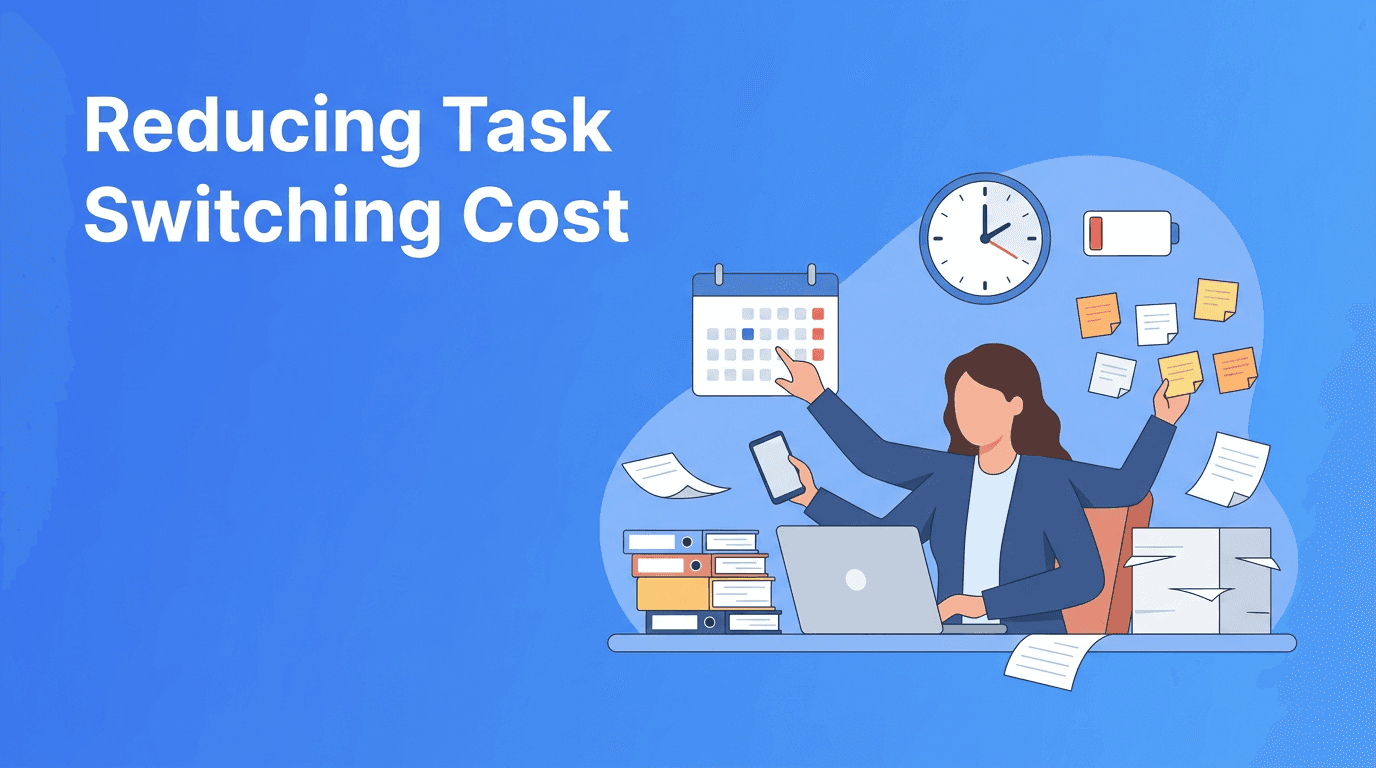
Frequent switching makes every task feel heavier to restart. That restart cost is where procrastination often sneaks in. You are not always avoiding the work itself. Sometimes you are avoiding the mental strain of re-entering it.
The emotional side of switching
Each unfinished task can leave a small emotional trace, such as worry, urgency, or guilt. Stack enough of those traces together and your brain starts craving easier wins. That is why checking messages can feel more appealing than finishing meaningful work.
- Time management breaks down because transitions take longer than expected
- Motivation drops because your brain associates important tasks with friction
- Productivity tips fail when they ignore the cost of constant interruption
- Deep work becomes rare because your mind never settles long enough
A simple 4-step reset for cleaner focus
1. Close loops before you switch
Before moving to another task, leave a short note for your future self. Write the next step in plain language, such as "Draft intro paragraph" or "Email Sam after updating slide 4". This reduces the mental drag when you return.
2. Create tiny transition rituals
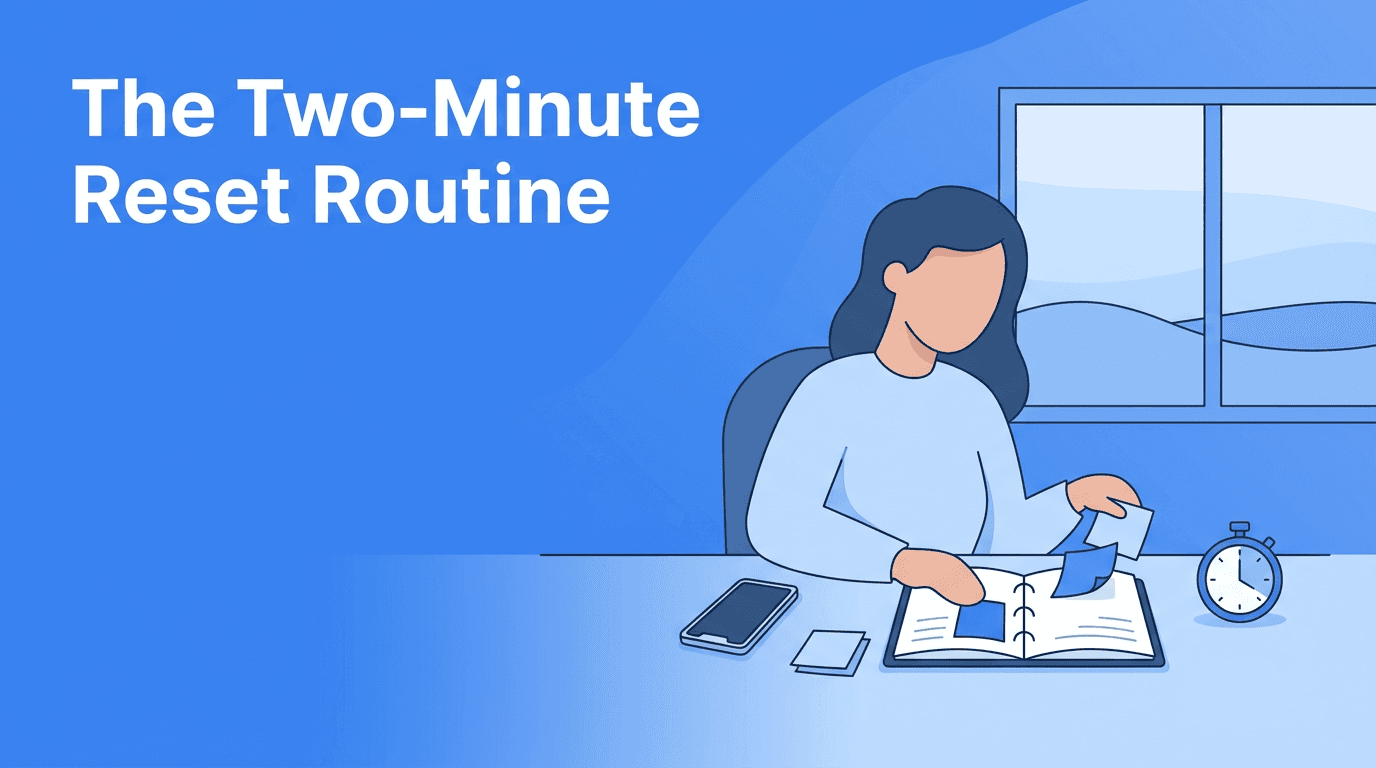
Use a 60-second reset between tasks. Stand up, take one slow breath, clear one tab, and say the next task out loud. Small rituals help your brain release the previous context instead of carrying it forward.
3. Protect one residue-free block
You do not need a perfect day. You need one protected window. Start with 25 to 45 minutes where notifications are off and only one meaningful task is open. This is often enough to rebuild trust in your ability to focus.
4. Shrink your open commitments
If everything feels active at once, your mind stays split. Keep a visible list with only three current priorities. Fewer active commitments means less residue pulling at your attention from the edges.
How to use tools without creating more noise
Digital tools can help, but only if they reduce switching instead of multiplying it. A good system should make the next action obvious, not add more places to look.
With Haply, you can use the Task Planner to narrow your daily priorities, the Focus Timer to create a clean work block, and chat with a Productivity coach when motivation slips. Because the app also includes streaks, reminders, and a personalized Today Dashboard, it can help you stay anchored without juggling five separate tools.
Want calmer focus with less mental clutter?
Try Haply to plan your day, protect deep work, and get personalized support from an AI productivity coach on iOS and Android.
Try Haply FreePractical productivity tips for high-interruption days
- Batch message checks into a few planned windows instead of constant peeking
- Keep one capture note for random thoughts so they do not hijack your current task
- When interrupted, write a one-line bookmark before leaving your work
- If motivation is low, begin with a five-minute entry task instead of the full project
- End the day by identifying tomorrow's first focus task, so you start with clarity
These productivity tips are simple, but they work because they target the real problem: not a lack of effort, but fragmented attention.
The goal is not perfect focus
Life is noisy. Work is messy. You will still get interrupted. The goal is not to become a robot who never loses concentration. The goal is to notice attention residue faster and recover from it with less drama.
When you reduce mental carryover, time management gets easier, deep work becomes more available, and motivation stops depending so much on willpower. That is when productivity starts to feel lighter, not stricter.
Frequently Asked Questions
What is attention residue in productivity?
Attention residue is the leftover mental focus from a previous task that stays with you when you switch to a new one. It makes it harder to think clearly and start quickly.
How does attention residue affect deep work?
It disrupts deep work by keeping part of your attention tied to unfinished tasks, messages, or decisions. That makes sustained concentration much harder.
Can attention residue cause procrastination?
Yes. When restarting a task feels mentally expensive, people often delay it and choose easier activities instead. That is a common form of procrastination.
How can I reduce attention residue during the workday?
Close loops before switching, use short transition rituals, limit open commitments, and protect at least one distraction-free focus block each day.