Energy Mapping for Sustainable Productivity: A Better Way to Protect Work-Life Balance
Energy mapping helps you build sustainable productivity by aligning hard tasks with your natural peaks, reducing burnout and improving work-life balance.

By Haply Team
Haply Editorial Team
Most productivity advice assumes every hour of the day is equal. Energy mapping challenges that idea. Instead of forcing yourself to perform at the same level from morning to night, you learn when your mind is sharp, when your body slows down, and when you need recovery. For professionals trying to improve work-life balance without drifting toward burnout, this is a more human way to work.
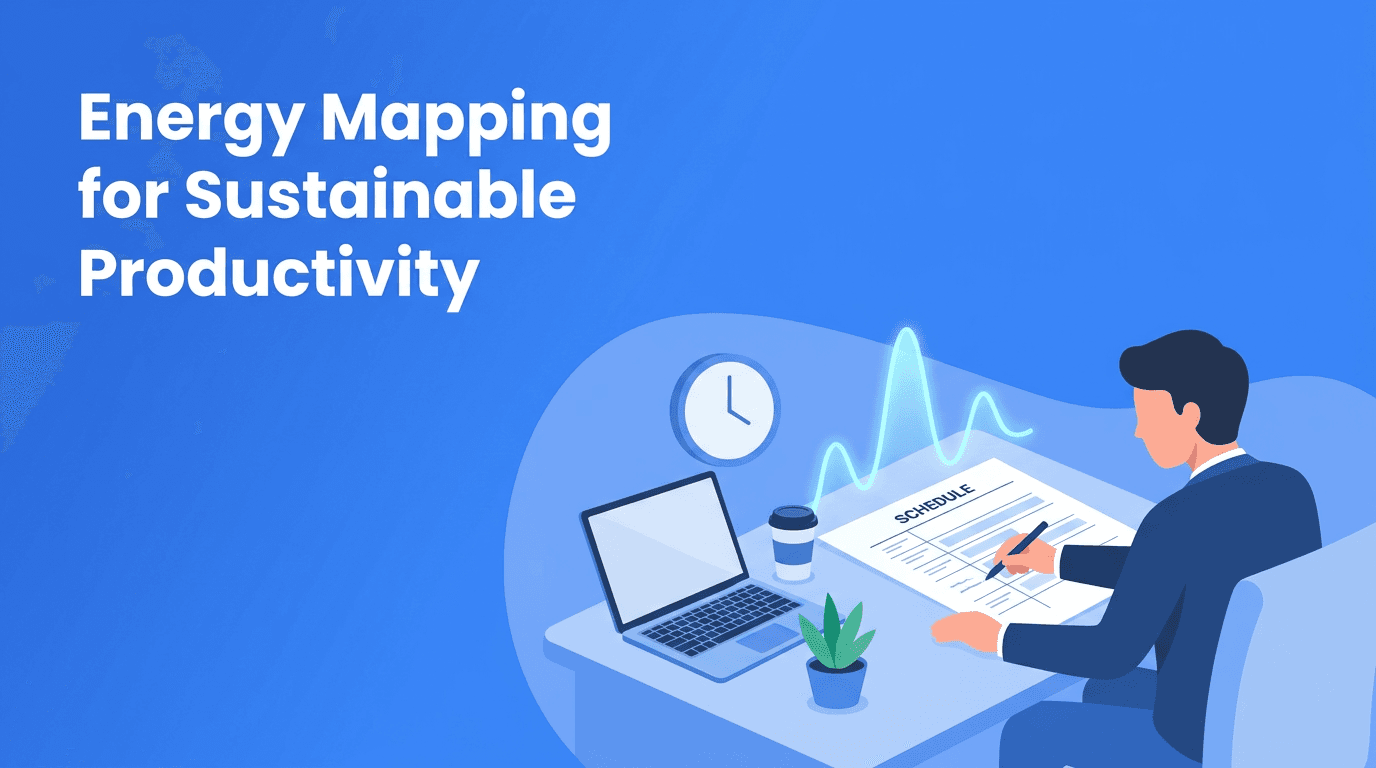
At its core, energy mapping is a simple practice: track your energy patterns, match the right work to the right window, and protect recovery as seriously as deadlines. It blends energy management with realistic planning, which is why it supports sustainable productivity better than rigid schedules alone.
Why energy mapping works when time management stops helping
You can block your calendar perfectly and still feel behind if your hardest tasks land in your lowest-energy hours. Time management tells you when to work. Energy management tells you what kind of work fits your current capacity. That distinction matters when your job demands creativity, decision-making, communication, and sustained attention.
You do not need to become more intense to become more productive. You often need to become more aligned.
- High-energy periods are best for strategy, analysis, writing, and difficult decisions.
- Medium-energy periods work well for meetings, collaboration, and routine problem-solving.
- Low-energy periods are ideal for admin, inbox cleanup, documentation, and breaks.
- Recovery periods are not wasted time. They help prevent burnout and keep output consistent.
How to create your own energy mapping system
1. Track your energy for five workdays
Set three check-in points each day, such as 9 a.m., 1 p.m., and 4 p.m. At each point, rate your energy from 1 to 5 and note your mental state: focused, restless, calm, drained, motivated, or distracted. After one week, patterns usually appear. You may notice that you do your clearest thinking before lunch, or that meetings leave you depleted for hours.
2. Label your task types
Create three task buckets: deep work, collaboration, and maintenance. Deep work includes writing, planning, analysis, and problem-solving. Collaboration includes meetings, feedback, and calls. Maintenance includes admin, follow-ups, and updates. This makes energy mapping practical because you are matching task demands to your real capacity.
3. Match effort to energy
Once you know your patterns, move your most cognitively demanding work into your strongest windows. If your energy dips after lunch, do not schedule complex planning there unless you have no alternative. Use that time for lighter execution, walking meetings, or a short reset that protects work-life balance by reducing evening catch-up work.
4. Build recovery into the plan
This is the step many ambitious professionals skip. Sustainable output depends on recovery cycles, not constant pressure. Add short breaks between demanding tasks, leave space after intense meetings, and create a clear shutdown ritual at the end of the day. These habits support sustainable productivity because they stop small strain from becoming chronic exhaustion.
Common signs your schedule ignores your energy
- You save important work for late afternoon and regularly redo it the next day.
- You feel productive only when working longer, not smarter.
- Your calendar is full, but your meaningful progress is low.
- You need evenings or weekends to finish what should fit into the workday.
- You are seeing early signs of burnout, like irritability, brain fog, or constant fatigue.
If these patterns feel familiar, the issue may not be discipline. It may be poor alignment between your workload and your natural rhythm.
A realistic energy mapping example for a busy professional
Imagine a manager who has strong focus from 8:30 to 11:00 a.m., moderate energy from 11:00 a.m. to 2:00 p.m., and a noticeable slump after 3:00 p.m. With energy mapping, their schedule might look like this: strategy work and writing in the morning, team meetings before lunch, and admin or status updates later in the day. Instead of fighting the slump, they work with it.
- 8:30-11:00: project planning, proposal writing, problem-solving
- 11:00-2:00: meetings, collaboration, reviews
- 2:00-3:00: lunch, walk, lighter tasks
- 3:00-5:00: inbox, documentation, approvals, tomorrow's plan
This approach often improves output and lowers stress because it reduces the need to compensate after hours. That is one of the clearest links between energy management and better work-life balance.
Tools that make sustainable productivity easier
You do not need a complicated system to make this work. A simple note, spreadsheet, or calendar can be enough. If you want more support, Haply can help turn insights into daily action. The app offers AI coaching on productivity and wellness, a Focus Timer for protected work sessions, a Task Planner for organizing tasks by effort level, and a Today Dashboard that helps you plan your day with more intention.
Want a gentler productivity system?
Use Haply to build habits that support sustainable productivity, stronger work-life balance, and healthier daily routines without pushing yourself toward burnout.
Try Haply FreeBecause Haply includes chat-based coaching, habit tracking, reminders, and wellness tools like breathing and meditation, it can support both performance and recovery. That balance matters if you want progress that actually lasts.
Three small changes to start this week
- Protect one peak-energy hour each day for your most important work.
- Move one draining task out of your lowest-energy window if possible.
- End each workday with a 10-minute shutdown so your brain can leave work at work.
You do not need to redesign your entire life in one week. Start by noticing patterns, then make one or two changes that reduce friction. Over time, energy mapping can become a practical foundation for sustainable productivity.
Frequently Asked Questions
What is energy mapping for productivity?
Energy mapping is the practice of tracking your daily energy patterns and scheduling tasks based on when you think and work best. It helps you use effort more strategically instead of relying on time alone.
How does energy mapping help prevent burnout?
It reduces the strain of doing demanding work when your mental and physical energy are low. By protecting recovery and aligning tasks with capacity, it supports more sustainable output.
Can energy mapping improve work-life balance?
Yes. When important work happens during your best hours, you are less likely to spill unfinished tasks into evenings and weekends.
How long does it take to see results from energy mapping?
Many people notice useful patterns within five workdays. Meaningful improvements often come after two to three weeks of adjusting schedules based on those patterns.