Time Blocking for Overthinkers: A Calm Way to Beat Procrastination
Time blocking can reduce procrastination, protect deep work, and make time management feel less chaotic. Learn a simple, flexible system you can start today.

By Haply Team
Haply Editorial Team
If your to-do list keeps growing while your motivation keeps shrinking, time blocking might be the missing bridge between good intentions and real action. Unlike vague planning, it gives your day a shape, reduces procrastination, and makes time management feel less like a daily negotiation.
Why time blocking works when to-do lists don't
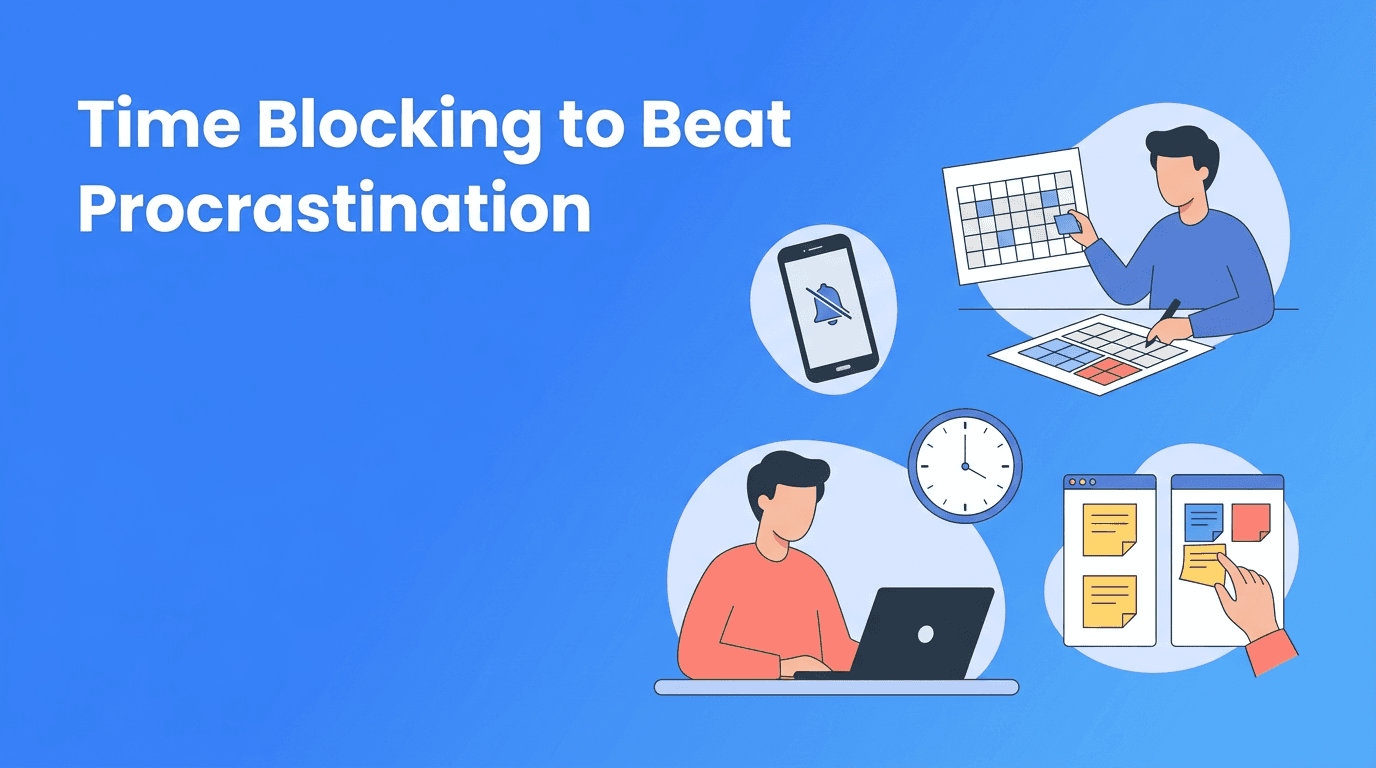
A to-do list answers what you need to do, but not when you will actually do it. That gap is where delays, distractions, and low-energy decisions creep in. Time blocking closes the gap by assigning work to a real place in your day, which makes starting easier and helps you protect deep work before small tasks take over.
- It reduces decision fatigue because you stop choosing what to do every 20 minutes.
- It makes procrastination more visible because empty intention becomes a concrete time slot.
- It supports deep work by reserving uninterrupted space for meaningful tasks.
- It improves motivation because progress feels scheduled, not accidental.
A flexible time blocking method for real life
The biggest myth is that time blocking has to be rigid. It does not. In fact, the best version is flexible enough to survive interruptions, changing energy, and unexpected tasks. Think of it as a guide, not a prison.
Step 1: Pick only 3 priorities
Choose one deep work task, one admin task, and one personal task for the day. This simple structure keeps your plan realistic. If your schedule is overloaded from the start, your brain will naturally drift toward procrastination.
Step 2: Match tasks to energy, not just time
Put analytical or creative work in your highest-energy window. Save easier tasks like email, errands, or follow-ups for lower-energy periods. Good time management is not only about hours, it is about using the right kind of attention at the right moment.
Step 3: Use small blocks first
If long sessions feel intimidating, begin with 25 to 45 minute blocks. Shorter blocks lower resistance and help you build momentum. Once starting becomes easier, you can expand into longer deep work sessions when needed.
- Morning block: priority project or study session
- Midday block: meetings, messages, or admin
- Afternoon block: lighter tasks, reviews, or planning
- Buffer block: catch-up time for anything that slipped
How time blocking helps with procrastination
Many people think procrastination is just laziness. More often, it is uncertainty, perfectionism, or emotional resistance. Time blocking helps because it lowers the size of the decision. You are no longer asking, 'Do I feel like doing this?' You are asking, 'Can I stay with this block for 30 minutes?'
You do not need more discipline to begin. You often just need a smaller, clearer starting point.
That shift matters. A block creates a contained commitment, and contained commitments are easier to keep. Over time, that consistency builds trust in yourself, which also improves motivation.
A simple daily template you can copy
- 8:30 - 9:00: Plan the day and define your top 3 priorities
- 9:00 - 10:30: Deep work block for your most important task
- 10:30 - 11:00: Break and quick messages
- 11:00 - 12:00: Second focus block or study session
- 1:00 - 2:00: Admin, meetings, or errands
- 2:00 - 3:00: Lighter work that does not require intense focus
- 3:00 - 3:30: Buffer block for unfinished tasks
- End of day: Review what worked and adjust tomorrow's blocks
You do not need to copy this exactly. The point is to create a structure that supports your reality. Some people need longer creative blocks. Others need more buffers. The best productivity tips are the ones you can repeat.
Want help turning plans into action?
Haply is an AI life coaching app for iOS and Android that can help you build a realistic productivity system. Use chat-based coaching, the Task Planner, Focus Timer, streaks, and daily reminders to make time blocking easier to stick with.
Try Haply FreeCommon mistakes that make time blocking fail
- Planning every minute: this leaves no room for life, so one disruption can derail the whole day.
- Ignoring transition time: switching tasks takes energy, so add a few minutes between blocks.
- Blocking too many priorities: if everything is important, your schedule becomes fiction.
- Using motivation as the signal to start: let the calendar decide, not your mood.
- Skipping the review: a quick end-of-day check helps you improve the system instead of abandoning it.
Make time blocking easier with supportive tools
If you struggle to stay consistent, digital tools can reduce friction. A timer can help you stay inside a block. A planner can help you map priorities before distractions take over. In Haply, users can combine the Today Dashboard, Productivity coaches, Focus Timer, and Task Planner to create a more personalized routine. That can be especially helpful when you want more structure without making your day feel robotic.
Frequently Asked Questions
How do I start time blocking if I always procrastinate?
Start with one 25-minute block for your most important task. Keeping it short reduces resistance and helps you build consistency.
Is time blocking good for time management?
Yes. Time blocking improves time management by assigning tasks to specific parts of the day, which makes priorities clearer and reduces wasted time.
Can time blocking help with deep work?
Yes. It protects uninterrupted time for demanding tasks, which makes deep work more realistic in a busy schedule.
What is the best time blocking app for productivity?
The best app is one you will actually use consistently. Tools like Haply can help by combining planning, focus sessions, reminders, and coaching in one place.