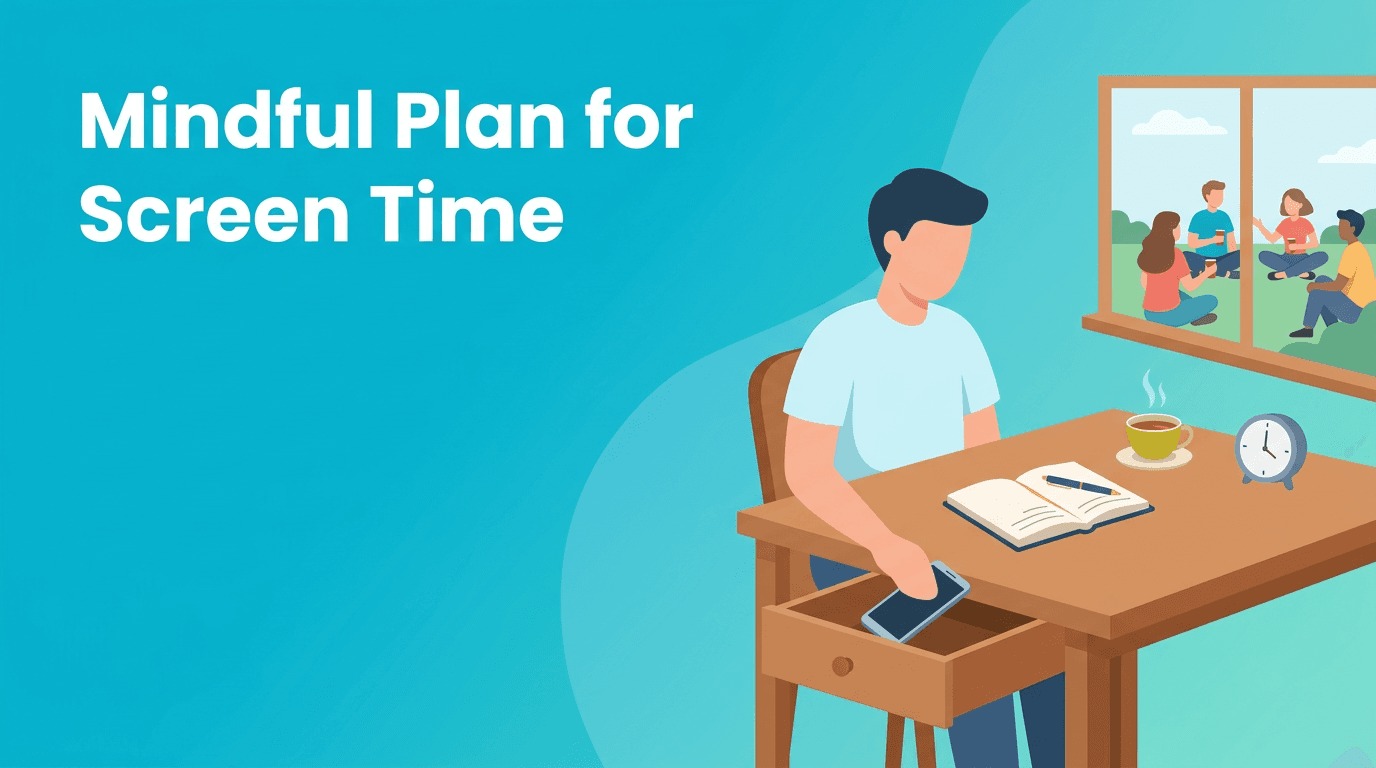
Digital Detox for FOMO: A Mindful Plan for Intentional Tech Use
A digital detox does not have to mean throwing your phone away. Learn how to reduce screen time, ease FOMO, and build intentional tech use habits that actually stick.

By Haply Team
Haply Editorial Team
A digital detox can sound extreme, especially if your phone is how you work, socialize, relax, and stay informed. But most people do not need to disappear from the internet. They need a gentler reset, one that lowers screen time, softens FOMO, and helps them practice intentional tech use without shame.
If you have ever picked up your phone for one quick check and lost 40 minutes, you are not broken. You are responding to systems designed to pull your attention back. The good news is that mindfulness gives you a different way forward. Instead of fighting your devices all day, you can learn to use them on purpose.
Why digital detox feels so hard now
The struggle is not just lack of willpower. Many apps are built around novelty, social reward, and unpredictability. Your brain gets tiny bursts of anticipation every time you refresh, scroll, or tap a notification. That loop can start to feel like phone addiction, even when what you really need is more awareness, structure, and recovery time.
- FOMO tells you that if you log off, you will miss something important.
- High screen time fills every spare moment, so your mind never fully rests.
- Notifications create a constant sense of urgency, even when nothing truly needs you.
- Habit loops make checking your phone feel automatic, not intentional.
- The phone becomes a default tool for boredom, stress, loneliness, and avoidance.
"Attention is one of the purest forms of generosity. When you reclaim it, you give your life back to what matters."
A mindful digital detox is not all or nothing
A sustainable digital detox is less about strict rules and more about better relationships. The goal is not to prove that you can survive without a phone. The goal is to notice when technology supports your life and when it starts running it.
Shift from restriction to intention
Try asking, "What do I want from my phone right now?" before you unlock it. That one question interrupts autopilot. Sometimes the answer is useful, like messaging a friend or checking directions. Sometimes the answer is emotional, like wanting comfort, distraction, or reassurance. Both are human, but they do not need the same response.
- Use your phone for a specific purpose before opening any app.
- Pause for one full breath before tapping a notification.
- Move social apps off your home screen to reduce automatic checking.
- Create a short list of high-value uses like maps, calls, music, and messages.
- Notice which apps leave you feeling informed, connected, calm, or depleted.
The 5-part reset for intentional tech use
1. Audit your real triggers
For two days, keep a simple note every time you pick up your phone unexpectedly. Write the trigger in one word: bored, stressed, lonely, tired, avoiding, curious. This reveals the emotional side of intentional tech use. You are not just managing devices, you are managing states of mind.
2. Build friction around your biggest distractions
Make unwanted behavior slightly harder. Log out of social media. Turn off nonessential notifications. Charge your phone outside the bedroom. Use grayscale if visual stimulation keeps pulling you in. A small amount of friction can dramatically cut screen time.
3. Replace, do not just remove
If you only delete apps without replacing the need they filled, the habit often returns. Pick a substitute for your most common urge. If you scroll when anxious, try a two-minute breathing exercise. If you scroll when lonely, send one voice note. If you scroll when mentally tired, lie down or step outside.
4. Create phone-free anchors
Choose repeating moments in your day that stay screen-free. Good starting points include the first 20 minutes after waking, meals, bathroom breaks, short walks, and the last 30 minutes before sleep. These anchors teach your nervous system that not every pause belongs to a screen.
5. Review without guilt
At the end of the week, ask what improved. Did your mood feel steadier? Did you focus better? Did FOMO shrink once you checked less? Reflection matters because it helps the brain link reduced screen time with real benefits, not just discipline.
What to do in the moment when FOMO spikes
FOMO often sounds urgent, but it is usually emotional, not practical. When you feel the urge to check everything right now, pause and name what you fear missing. Is it news, social connection, validation, or the feeling of being included? Naming the fear makes it smaller and more workable.
- Say, "I can feel FOMO, and I do not have to obey it immediately."
- Set a 10-minute timer before checking social media.
- Text one real person instead of scrolling many updates.
- Put both feet on the floor and take five slow breaths.
- Remind yourself that being constantly updated is not the same as being deeply connected.
Want support for healthier screen habits?
Haply can help you build a gentler digital detox with chat-based coaching, habit tracking, reminders, and Wellness tools like Meditation/Breathe. It is a practical way to turn intention into daily action.
Try Haply FreeSimple mindfulness practices that reduce phone addiction patterns
You do not need a 45-minute meditation habit to change your tech behavior. Tiny pauses are often enough to weaken phone addiction patterns because they reconnect action with awareness.
- The unlock breath: Take one inhale and exhale before unlocking your phone.
- The pocket pause: When you finish using your phone, return it to your pocket or bag instead of keeping it in your hand.
- The doorway rule: Do not carry your phone from room to room unless you need it for a reason.
- The body check: Notice your neck, jaw, and eyes after five minutes of scrolling.
- The evening exhale: Replace your final scroll with one minute of slow breathing or journaling.
If you want extra structure, Haply's Wellness coaches and Meditation/Breathe mini-app can support these micro-practices with short guided sessions, reminders, and streaks that make consistency easier.
A realistic 24-hour digital detox experiment
If a full weekend offline feels impossible, try a digital detox experiment that still fits modern life. The point is not perfection. The point is to gather evidence about how you feel when your attention is less fragmented.
- Tell key people you will be slower to reply for one day.
- Keep your phone for calls, maps, and essential messages only.
- Delete or block your most distracting apps for 24 hours.
- Plan offline replacements in advance: a walk, meal, book, nap, workout, or conversation.
- At the end, write down three things you noticed about your mood, focus, and energy.
Many people discover that the first few hours feel twitchy, then surprisingly spacious. That shift matters. It shows that discomfort is often temporary, while calm can return faster than you expect.
The goal is not less technology, but more intention
A healthy relationship with screens is not about becoming unreachable or anti-tech. It is about choosing technology that serves your values. When you practice intentional tech use, your phone becomes a tool again, not a reflex.
Start small. Lower one source of noise. Protect one phone-free moment. Notice one trigger. A mindful digital detox is built through repeated choices, not dramatic declarations. And those small choices can give you something many people are quietly craving: a mind that feels more like your own.
Frequently Asked Questions
What is a digital detox and how does it help?
A digital detox is a planned reduction in nonessential device use. It can help lower screen time, improve focus, reduce stress, and make your tech habits more intentional.
How do I reduce screen time without quitting my phone completely?
Start by removing nonessential notifications, setting phone-free times, and using your phone for specific purposes only. Small changes are often more sustainable than extreme rules.
Can a digital detox help with FOMO?
Yes. When you check less often, you often learn that most updates can wait. This reduces the urgency loop that keeps FOMO active.
What are signs of phone addiction?
Common signs include checking your phone automatically, losing track of time while scrolling, feeling anxious without your device, and using it to avoid uncomfortable emotions.
What is intentional tech use?
Intentional tech use means choosing when, why, and how you use technology instead of reacting automatically. It focuses on purpose, awareness, and boundaries.