Name Your Feelings: A Simple Emotional Granularity Practice for Everyday Calm
Emotional granularity helps you identify feelings with more clarity, build emotional intelligence, and respond with intention instead of overwhelm.


By Haply Team
Haply Editorial Team
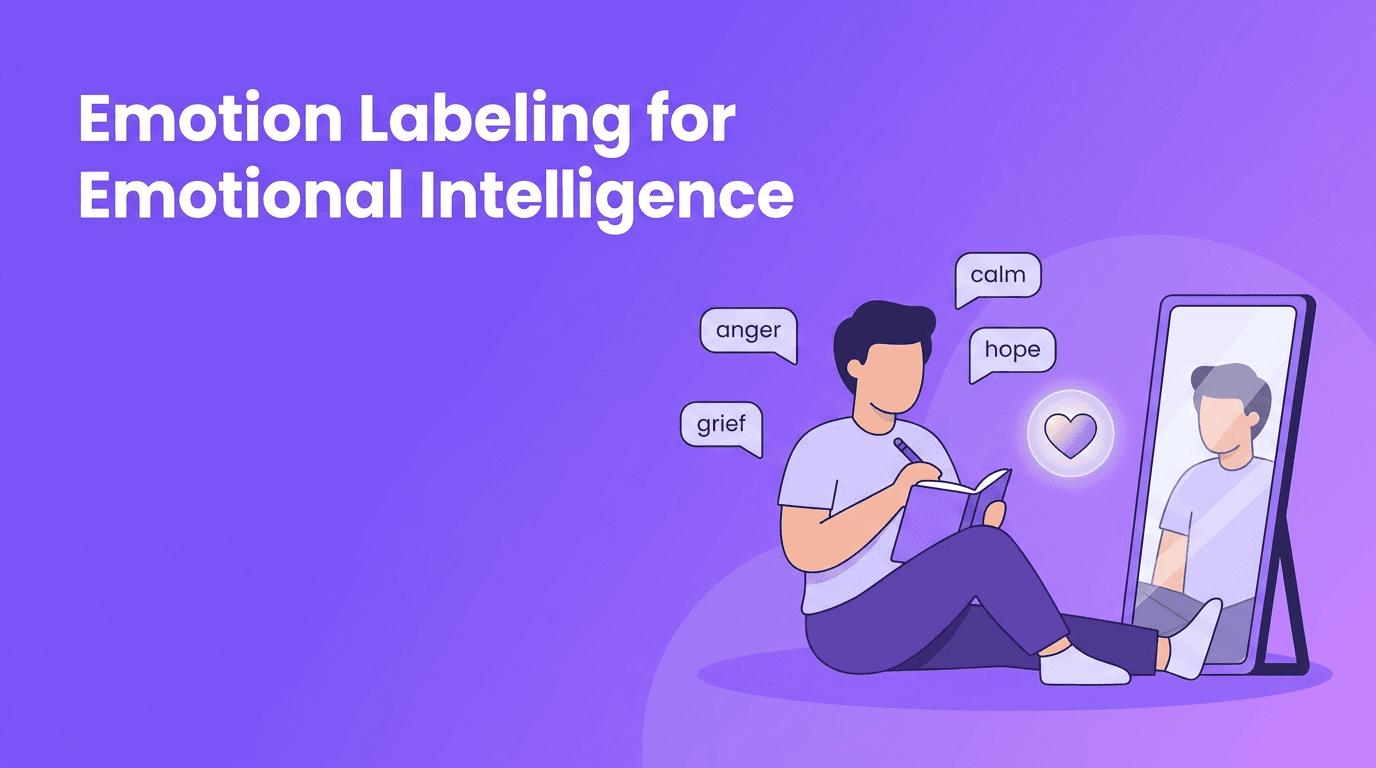
Emotional granularity is the skill of naming your internal experience with more precision than just 'good,' 'bad,' or 'stressed.' When you can identify feelings clearly, your emotional awareness, self-awareness, and emotional intelligence often improve together. Instead of being swept away by big emotions, you begin to notice what you actually feel, what triggered it, and what kind of support you need.
This is a small shift with a powerful effect. If you usually say 'I feel off,' you might discover you are actually disappointed, restless, embarrassed, or lonely. Each word points to a different need, and that makes your next step much easier.
Why naming feelings changes how you respond
When your brain lumps many experiences into one vague category, your reactions can become automatic. Emotional granularity slows that process down. It helps you move from impulse to choice. You are no longer just 'upset' - you may be frustrated by a delay, hurt by a comment, or anxious about uncertainty.
- Frustration may call for problem-solving
- Hurt may call for comfort or a boundary
- Anxiety may call for grounding and reassurance
- Guilt may call for repair or reflection
- Overwhelm may call for rest and fewer inputs
"The better you understand your feelings, the less your feelings have to shout."
A 5-minute emotional granularity practice
1. Pause and scan your body
Before labeling anything, take one slow breath and notice physical cues. Is your chest tight? Is your jaw clenched? Do you feel heavy, buzzy, warm, shaky, or flat? Your body often reveals emotions before your mind catches up.
2. Replace broad labels with specific feelings
Ask yourself, 'What exactly am I feeling right now?' Try moving from broad labels to more precise ones. For example, change 'stressed' to pressured, uneasy, frazzled, or mentally overloaded. This step strengthens both emotional awareness and emotional intelligence.
3. Ask what the feeling is pointing to
Every feeling carries information. You do not need to obey it, but it helps to listen. Ask, 'What is this feeling trying to show me?' Maybe you need rest, clarity, reassurance, space, connection, or a difficult conversation.
4. Choose one tiny response
Do not try to fix everything at once. Pick one small action that matches the feeling. Send a message, step outside, drink water, write three lines in a journal, or delay a decision until you feel steadier.
Want guided support for understanding emotions?
Haply is an AI life coaching app for iOS and Android that helps you build self-awareness through chat-based coaching, daily check-ins, and wellness tools like Meditation/Breathe. If you want help naming feelings and creating healthier habits, it is a gentle place to start.
Try Haply FreeCommon mistakes when trying to identify emotions
- Using only three labels: happy, sad, or angry
- Judging feelings as 'bad' instead of seeing them as information
- Trying to explain feelings before actually naming them
- Ignoring body signals that could guide your understanding
- Expecting clarity instantly, when emotional language takes practice
If this feels hard, that does not mean you are doing it wrong. Many people were never taught how to describe their inner world. Building a richer vocabulary for feelings is a learnable skill, not a personality trait you either have or do not have.
How to make emotional granularity part of daily life
Try a simple daily check-in with these prompts: 'What am I feeling?' 'What happened before that feeling?' and 'What would help right now?' Repeating these questions improves self-awareness over time. You can also use a feelings wheel, voice notes, or a habit tracker to make the practice easier.
If you like structure, Haply can support this routine with personalized coaching, daily reminders, and a Today Dashboard that keeps your emotional care visible. Its Wellness coaches and mini-apps can help you pause before reacting and return to intentional choices.
What emotional granularity is really helping you build
At its core, emotional granularity is not about becoming perfectly calm all the time. It is about becoming more honest and skillful with your internal experience. You learn to notice subtle differences in emotions, respond with more care, and relate to yourself with less confusion.
That is where intentional living begins, not with controlling every feeling, but with understanding it well enough to choose your next step wisely.
Frequently Asked Questions
What is emotional granularity?
Emotional granularity is the ability to identify and label your feelings with precision. Instead of saying you feel 'bad,' you might notice you feel disappointed, anxious, or lonely.
How does emotional granularity improve emotional intelligence?
It improves emotional intelligence by helping you understand what you feel, why you feel it, and what response fits the moment. Clearer labels often lead to better choices and communication.
How can I get better at naming my emotions?
Practice short daily check-ins, use a feelings wheel, and pay attention to body sensations. Start with broad labels, then refine them into more specific words.
Is emotional granularity the same as emotional awareness?
Not exactly. Emotional awareness is noticing that you are having a feeling, while emotional granularity is identifying the specific feeling with more detail.