Phone Addiction Recovery: A Mindful Reset for Intentional Tech Use
Phone addiction recovery starts with noticing how screen time shapes your mood, focus, and FOMO. Learn mindful, practical steps for intentional tech use that feels calmer and more in your control.

By Haply Team
Haply Editorial Team
Phone addiction rarely looks dramatic at first. It feels like checking one notification, opening one app during a quiet moment, or reaching for your phone before your feet hit the floor. But over time, that pattern can shape your screen time, your attention, your sleep, and even your sense of self. If you want a gentler relationship with technology, this mindful reset can help you practice intentional tech use without trying to disappear from modern life.
Why phone habits feel so hard to change
Most people do not lack discipline. They are responding to devices designed to be irresistible. Infinite scroll, unread badges, autoplay, and social comparison all pull on the brain's reward system. Add FOMO, boredom, loneliness, or stress, and your phone becomes a fast way to avoid discomfort.
This is why a strict digital detox sometimes fails. If you remove the device without understanding the need underneath it, the habit often comes back. A mindful approach asks a better question: What am I actually reaching for when I reach for my phone?
"The opposite of distraction is not perfect focus. It is presence."
The mindful trigger check for phone addiction
Before you try to cut your screen time, learn your triggers. For three days, pause whenever you unlock your phone and ask these four questions:
- What happened right before this? A task felt hard, a conversation ended, or you felt a wave of boredom.
- What am I feeling? Restless, anxious, lonely, overwhelmed, curious, tired.
- What do I want from my phone? Relief, stimulation, connection, information, escape.
- How do I feel after 5 minutes? Better, more scattered, numb, inspired, guilty, calm.
This quick check turns autopilot into awareness. You are not judging yourself. You are collecting data. That shift alone can weaken phone addiction patterns because habits lose power when they become visible.
Common emotional triggers behind high screen time
- Micro-stress between tasks
- Social insecurity and fear of missing out
- Mental fatigue that makes deep focus feel impossible
- Loneliness disguised as casual scrolling
- Avoidance of work, conflict, or difficult emotions
A 5-step reset for intentional tech use
If you want practical change, keep it small and repeatable. This five-step method is more realistic than deleting every app and hoping for the best.
1. Create one phone-free anchor
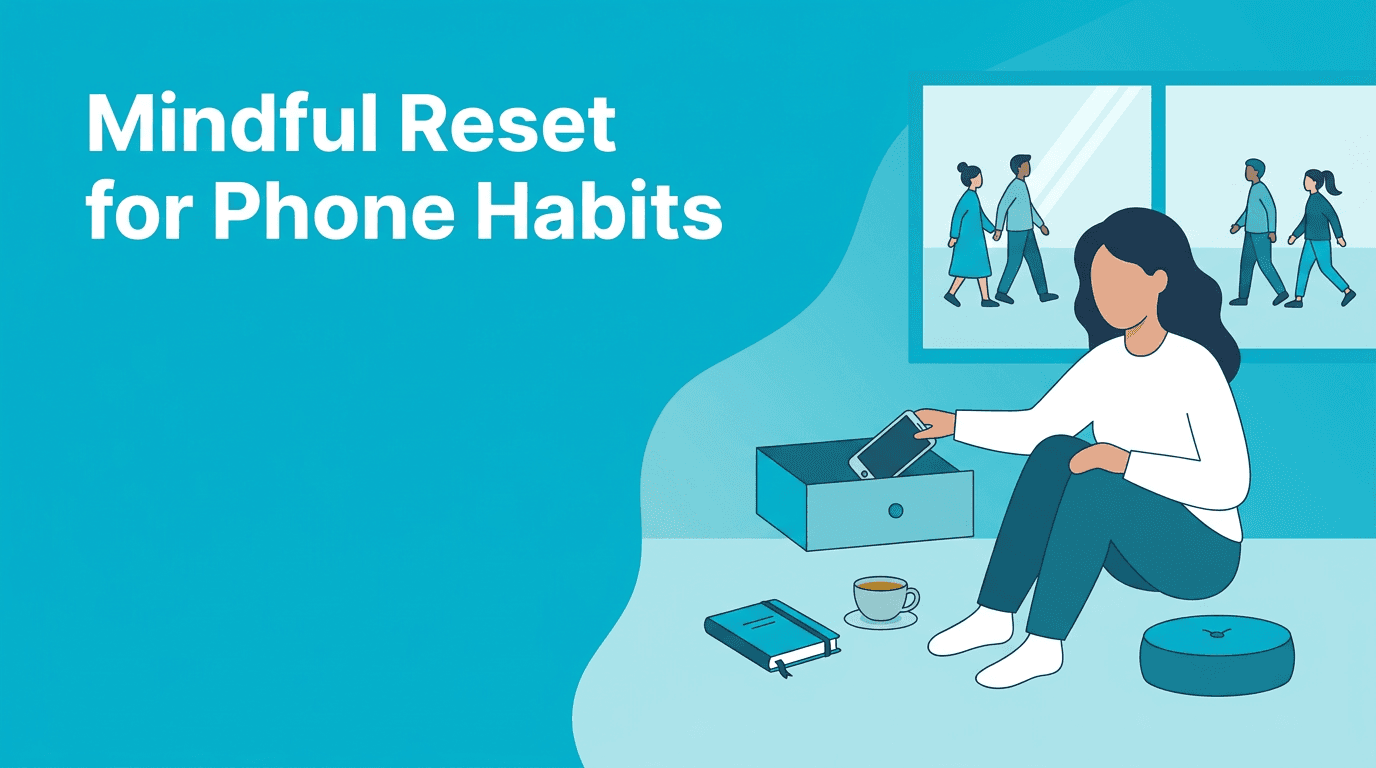
Pick one part of your day that becomes sacred and screen-free. Good options are the first 30 minutes after waking, meals, your commute, or the last hour before sleep. One anchor is enough to start rebuilding attention.
2. Make the better choice easier
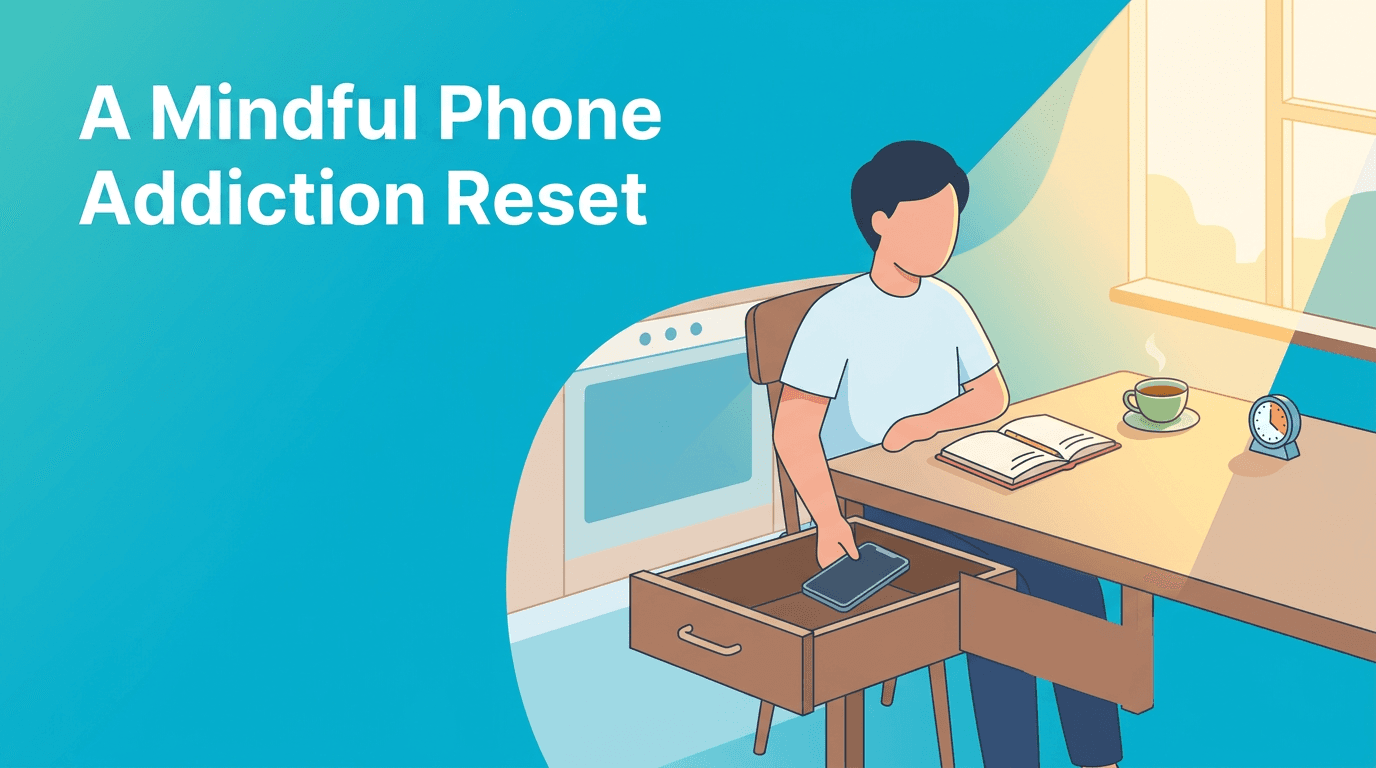
Move distracting apps off your home screen. Turn off non-essential notifications. Charge your phone outside the bedroom. Put a book, notebook, or water bottle where your phone usually sits. Environment design often works better than willpower.
3. Replace, do not just remove
Every habit serves a function. If scrolling helps you decompress, choose a replacement that meets the same need. Try a 3-minute breathing practice, stretching, a short walk, voice-noting a friend, or writing down one worry. This is where a mindful digital detox becomes sustainable.
4. Name your FOMO story
When FOMO appears, write the exact thought: "If I do not check now, I will miss something important." Then answer it with a calmer truth: "If something truly matters, I will still find out." This simple reframing reduces urgency and supports intentional tech use.
5. Track progress by energy, not perfection
Do not measure success only by fewer hours of screen time. Notice whether you feel calmer, sleep better, finish tasks more easily, or enjoy conversations more. Mindfulness works best when it connects behavior to lived experience.
A simple meditation for the urge to check your phone
The next time you feel the impulse to unlock your device, try this 60-second practice before acting:
- Pause and keep the phone face down.
- Take 3 slow breaths, with a longer exhale than inhale.
- Notice where the urge lives in your body: chest, hands, jaw, stomach.
- Silently say, "This is an urge, not an order."
- Choose your next action on purpose: check, delay, or put it away.
This tiny meditation builds the skill at the heart of behavior change: the gap between impulse and action. That gap is where freedom starts.
Want support building calmer tech habits?
Haply is an AI life coaching app for iOS and Android that can help you create healthier routines with chat-based coaching, habit tracking, daily reminders, and mini-apps like Meditation/Breathe. If you are working on mindful routines, sleep, focus, or wellness, it offers personalized support that fits real life.
Try Haply FreeHow to make mindful tech use stick
Lasting change comes from identity, not just rules. Instead of saying, "I need to stop using my phone so much," try, "I am someone who protects my attention." That identity makes small choices feel meaningful.
- Set a daily screen time intention each morning
- Use app limits for your most impulsive platforms
- Schedule deliberate check-in times for messages and social media
- Keep one offline pleasure ready, like tea, music, or a short walk
- Review your week and ask, "When did my phone help me, and when did it hijack me?"
If structure helps you, apps like Haply can support this process with habit streaks, reminders, and Wellness coaching. Its Today Dashboard can be a grounding place to start the day before the noise of notifications takes over.
You do not need to quit your phone to feel free
A healthier relationship with technology is not about becoming unreachable, extreme, or morally pure. It is about choosing when your phone serves your life and when it steals from it. Phone addiction softens when awareness grows, friction increases, and your offline life becomes more nourishing.
Start small. Protect one quiet pocket of the day. Breathe before you tap. Let your attention belong to you a little more often. That is what mindful, intentional tech use really looks like.
Frequently Asked Questions
How do I break phone addiction without deleting everything?
Start with one phone-free anchor, reduce notifications, and notice the emotions behind your checking habit. Replacing the habit with a calming alternative is usually more effective than relying on willpower alone.
What is the difference between a digital detox and intentional tech use?
A digital detox usually means taking a temporary break from devices, while intentional tech use means creating ongoing boundaries and mindful habits. The second approach is often easier to sustain in everyday life.
Can screen time affect anxiety and focus?
Yes. High screen time, especially from rapid app switching and social media, can increase mental clutter, comparison, and stress while making sustained focus harder.
Why do I check my phone even when I do not want to?
Phone checking is often linked to habit loops involving boredom, stress, loneliness, or FOMO. Your brain learns that the phone offers quick relief, even if that relief is brief.