AI Declutter: A Digital Minimalism Guide for Better Screen Time
Want digital minimalism without ditching modern convenience? This guide shows how to use AI tools to reduce screen time, simplify decisions, and build a calmer digital life.

By Haply Team
Haply Editorial Team
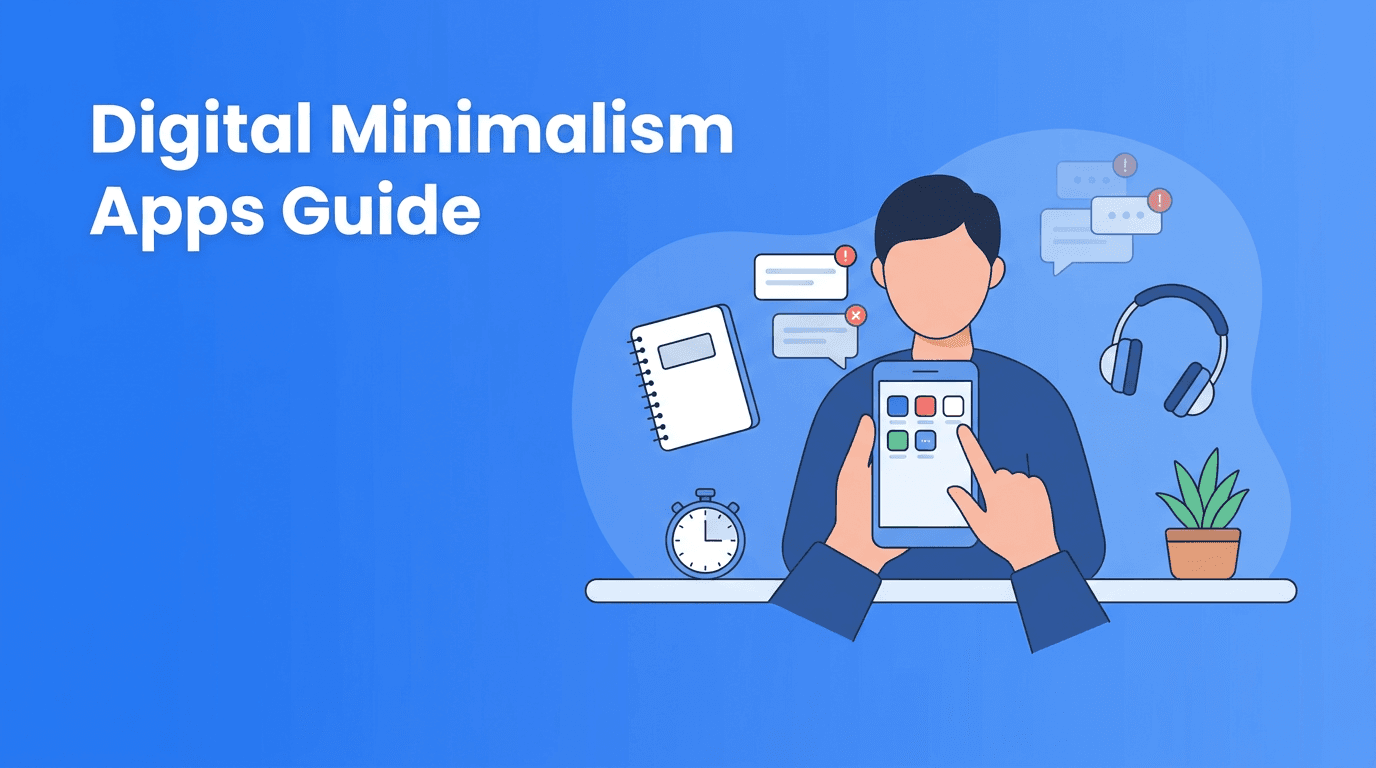
Digital minimalism does not mean rejecting your phone or pretending the future of technology is not already woven into daily life. It means using AI tools and apps with more intention, so your screen time supports your goals instead of quietly draining your attention.
Why digital minimalism matters more in the age of AI tools
A few years ago, digital overwhelm mostly came from notifications, social feeds, and too many open tabs. Now there is a new layer: smart assistants, recommendation engines, productivity apps, and endless automation options. The upside is real convenience. The downside is subtle complexity. Digital minimalism offers a filter: if a tool does not help you think better, act faster, or feel calmer, it may not deserve a place in your routine.
- Use technology to reduce friction, not create more decisions
- Choose fewer, better apps instead of stacking overlapping tools
- Measure success by clarity and energy, not by how many features you use
- Treat screen time as a budget, not an infinite resource
The hidden problem: AI can simplify life or multiply noise
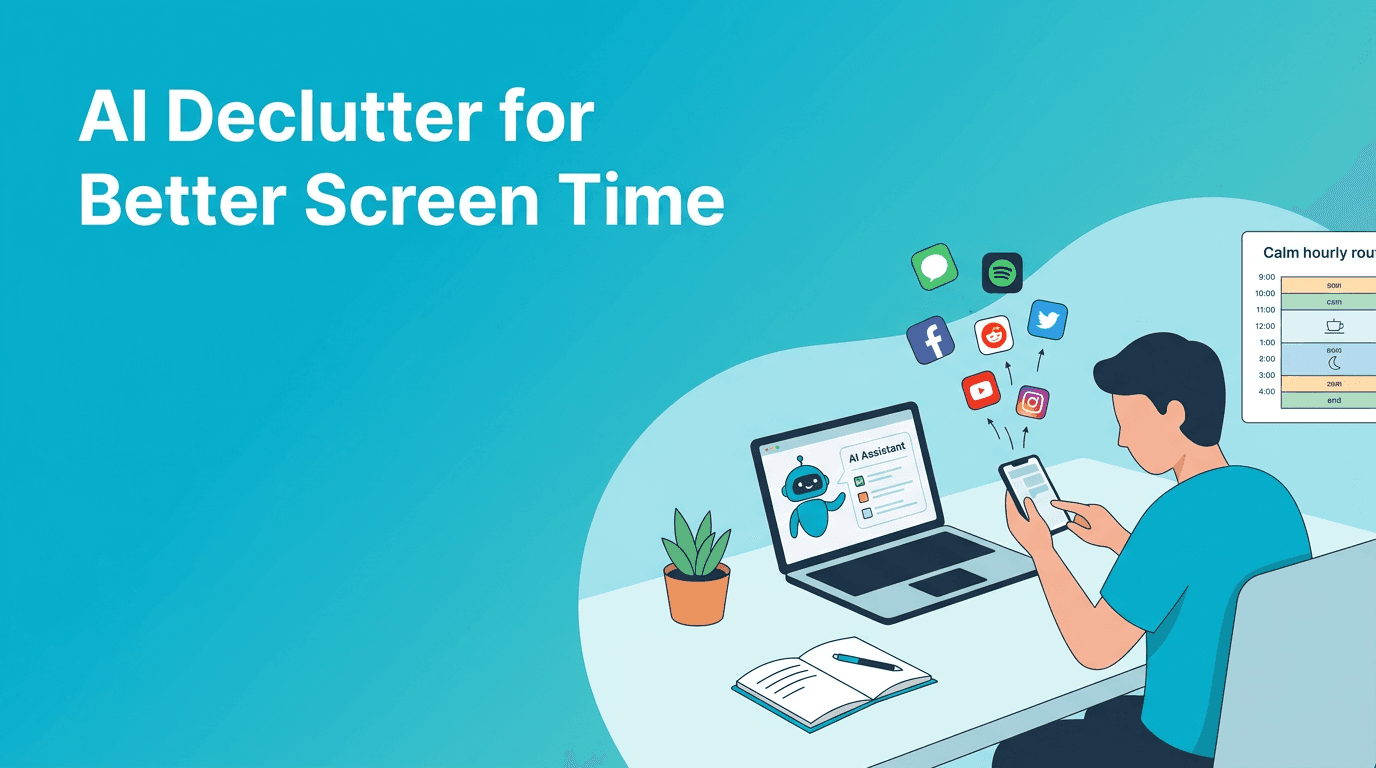
Many people adopt new apps hoping to become more organized, focused, or motivated. Then they end up managing the tools instead of the goals. One AI app writes notes, another tracks habits, another summarizes articles, and a fourth sends reminders you start ignoring. The issue is not technology itself. The issue is a fragmented system. The best AI tools remove tiny decisions and help you return to what matters.
"The goal is not less technology for its own sake. The goal is technology that leaves you with more attention for your actual life."
Signs your app stack is too crowded
- You use three or more apps for the same task, like planning or journaling
- You check productivity tools more often than your actual priorities
- Your reminders blend into background noise
- You feel busy setting up systems, but not meaningfully progressing
- Your screen time is rising even though your work quality is not
A practical digital minimalism audit
Try this 20-minute reset. Open your phone and group every app into one of three categories: essential, useful but optional, and attention clutter. Be honest. An app is essential only if it supports health, work, communication, money, or a deeply valued habit. Useful but optional apps are fine, but they should have a clear role. Attention clutter includes anything that regularly pulls you in without giving much back.
- Delete or hide attention clutter first
- Turn off non-human notifications on optional apps
- Keep only one primary app per need, such as one planner or one habit tracker
- Create a simple home screen with only your most intentional tools
- Review your app stack once a month to keep digital minimalism practical
App recommendations for a lighter, smarter setup
If you want better app recommendations, start by matching tools to outcomes, not trends. For example, if your goal is consistency, choose an app with reminders and streaks. If your goal is calm, choose one with breathing or meditation features. If your goal is learning, pick a tool that turns short sessions into visible progress. The right app feels like a quiet assistant, not another inbox.
What to look for in AI tools
- Personalization that adapts to your goals instead of forcing a generic routine
- A clean interface that reduces taps and decision fatigue
- Built-in features that combine tasks, reflection, and habit support in one place
- Gentle reminders that help without overwhelming
- Progress tracking that shows real behavior change, not vanity metrics
This is where all-in-one platforms can help. Haply is an AI life coaching app on iOS and Android that brings together chat-based coaching, habit tracking, and mini-tools like a Focus Timer, Task Planner, Meditation, Sleep Stories, Budget Tracker, and Idea Board. Instead of bouncing between disconnected apps, users can build a more intentional system around their goals in productivity, wellness, career, learning, finance, creativity, and relationships.
Want a simpler personal growth setup?
Try Haply if you want AI coaching, habit support, and practical mini-tools in one place, without adding more digital clutter.
Try Haply FreeHow to reduce screen time without going offline
You do not need a dramatic detox to lower screen time. Most people benefit more from targeted rules than extreme restrictions. Start by identifying your highest-value moments for tech use, then protect them. Everything else should become easier to ignore.
- Set a default stop time for low-value scrolling at night
- Move distracting apps off your first home screen
- Use AI summaries instead of reading every update in full
- Replace one reactive check-in with one intentional planning session
- Pair phone use with purpose, such as journaling, learning, or guided focus
A simple rule for the future of technology
As the future of technology becomes more personalized, predictive, and always available, the most valuable skill may be selective adoption. You do not need every new feature. You need a system for asking: Does this tool save time, improve thinking, or support wellbeing? If not, skip it. Digital minimalism is becoming less of a trend and more of a survival skill for staying clear-headed in an AI-heavy world.
Build a 3-app personal improvement system
If your digital life feels scattered, try a small-stack approach. Choose only three core tools: one for planning, one for reflection or coaching, and one for focus or wellness. This creates enough support to improve your habits without making technology the center of your self-improvement practice. The best systems are easy to repeat when life gets busy.
- Planning app: for tasks, calendar visibility, and daily priorities
- Coaching or reflection app: for guidance, journaling, or habit tracking
- Focus or wellness app: for meditation, timers, sleep, or breathing exercises
Final thought: less noise, better technology
The smartest digital life is not the most automated one. It is the one designed around your values. With digital minimalism, thoughtful AI tools, and better boundaries around screen time, you can enjoy the benefits of modern apps without feeling owned by them. Start small, remove one source of friction, and let technology earn its place in your day.
Frequently Asked Questions
What is digital minimalism in simple terms?
Digital minimalism is the practice of using technology more intentionally. You keep the tools that truly support your goals and reduce the ones that waste attention.
How can I reduce screen time without deleting all my apps?
Start by turning off non-essential notifications, moving distracting apps off your home screen, and limiting yourself to a few high-value tools. Small changes often work better than extreme detoxes.
What are the best AI tools for personal improvement?
The best AI tools help with planning, reflection, focus, and habit support without adding complexity. Look for apps that combine personalization, reminders, and practical daily guidance.
How does digital minimalism relate to the future of technology?
As technology becomes more intelligent and persistent, digital minimalism helps you stay selective. It gives you a framework for adopting useful tools without becoming overwhelmed.