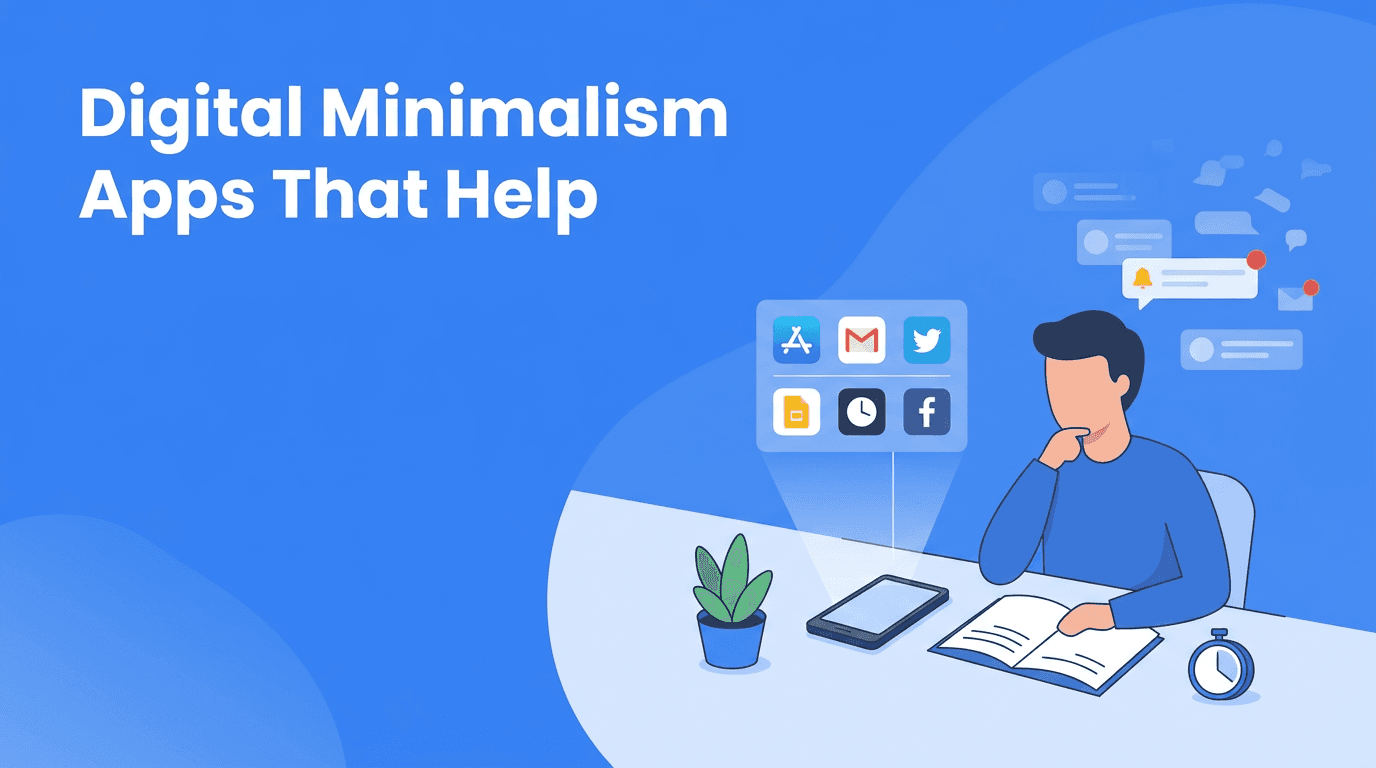
Digital Minimalism Apps: Which Tools Help You Improve Without More Screen Clutter?
Looking for digital minimalism apps that support growth without adding noise? This guide compares practical AI tools, productivity apps, and self-improvement apps that help you stay intentional.
By Haply Team
Haply Editorial Team
The market is crowded with digital minimalism apps, but not every tool supports real growth. Some promise focus while creating more notifications, more dashboards, and more cognitive load. If you are researching the best apps, AI tools, and digital tools for personal improvement, a better question is not "What can this app do?" but "What friction does this app remove?"
For people trying to improve work habits, mental clarity, or learning routines, the most useful productivity apps and self-improvement apps tend to share one trait: they simplify action. This article looks at how to choose apps that help you do less, but better, and where an app like Haply can fit into a more intentional tech stack.
What makes an app good for digital minimalism?
A minimalist app is not necessarily a simple app. It is a tool that reduces decision fatigue, shortens the path to action, and supports a clear purpose. In practice, strong digital minimalism apps usually do three things well: they help you start quickly, they avoid unnecessary features, and they make progress visible without overwhelming you.
- Low setup friction so you can begin in minutes, not after a long configuration process.
- Focused use cases such as planning, reflection, breathing, budgeting, or habit tracking instead of trying to do everything poorly.
- Useful prompts and reminders that guide action without constant interruption.
- Clear progress signals like streaks, completions, or dashboards that motivate without becoming a game you have to manage.
- Cross-purpose support so one app can replace several scattered tools when appropriate.
A practical rule for choosing digital tools
Before downloading anything, define the exact behavior you want to support. Do you want to start deep work faster, reflect more consistently, sleep better, or plan your day with less stress? The best apps are often not the ones with the longest feature list, but the ones that solve one recurring problem clearly.
"Technology is useful when it helps you return to what matters faster."
5 categories of apps that support intentional personal growth
1. Coaching and reflection apps
This category has grown quickly thanks to AI tools. The strongest options do more than chat. They help users turn insight into action through prompts, goals, and routines. If an app offers conversation but no follow-through, it may feel interesting without being especially effective.
Haply is a relevant example here because it combines chat-based AI life coaching with practical structure. On iOS and Android, it offers specialized coaches across productivity, wellness, career, learning, finance, creativity, and relationships. Instead of keeping coaching separate from action, it includes a habit tracker, daily reminders, a Today Dashboard, and mini-apps like a Focus Timer, Task Planner, Meditation/Breathe, Sleep Stories, Budget Tracker, and Idea Board.
2. Focus-first productivity apps
Many productivity apps are useful, but they can also become work about work. A good focus app should reduce task switching, not increase it. Look for timers, lightweight planning, and clear session boundaries. If you spend more time organizing your system than doing the task, the app may be too heavy for a minimalist setup.
- Choose a timer-based tool if your main issue is getting started.
- Choose a planner if your problem is unclear priorities.
- Choose a blocker only if distractions are the bottleneck, not as a default solution.
- Review whether one app can replace three overlapping tools.
3. Wellness apps with short entry points
For many users, personal growth fails because the barrier to entry is too high. Wellness features work better when they are fast to access. Breathing, short meditation, sleep support, and mood check-ins are more likely to become habits when they require very little effort. This is one reason integrated self-improvement apps can be attractive: fewer logins, fewer decisions, and fewer abandoned subscriptions.
4. Learning apps that fit real schedules
The best learning digital tools respect limited attention. Instead of endless content libraries, they should help you continue where you left off, keep sessions short, and show momentum. For busy professionals, a small daily learning habit often outperforms ambitious but inconsistent study plans.
5. Habit systems that support consistency
Habit trackers are useful when they clarify behavior, not when they create guilt. Look for streaks, reminders, and simple review loops. In a minimalist setup, habit tracking should answer one question: "What is the next small action?" If it turns into a data hobby, it may not support your original goal.
How to evaluate the best apps without downloading too many
If you are comparing best apps across coaching, wellness, and planning, test them with a short decision framework. This helps you avoid filling your phone with overlapping digital minimalism apps that all promise transformation.
- Start with one outcome: better focus, calmer evenings, improved planning, or more regular reflection.
- Limit your trial period to 7 days so you can judge real use, not first impressions.
- Track actual behavior change such as sessions completed, tasks started, or reduced screen switching.
- Notice emotional friction: does the app make you feel clearer or more behind?
- Prefer integrated value when one app can support multiple goals cleanly.
Want one app that combines coaching with action?
Haply brings together AI coaching, habit tracking, and practical mini-tools so you can work on personal growth without juggling multiple apps.
Try Haply FreeA minimalist app stack for different goals
For better work focus
- One productivity app for planning or focus sessions
- One blocker or notification control setting
- One reflection tool to review what worked
For overall self-improvement
- One coaching app with habit support
- One wellness feature for stress regulation
- One simple tracker for consistency
For people who want fewer subscriptions
This is where integrated platforms can stand out. Instead of paying separately for coaching, habit tracking, breathing exercises, planning, and motivation, some users may benefit more from a single system. Haply is notable because goal-based onboarding personalizes the experience, while achievements and progress levels add structure without forcing users into a highly complex setup.
Final takeaway: choose tools that remove friction
The most effective digital minimalism apps are not the ones with the most features. They are the ones that make a meaningful action easier today. When comparing AI tools, productivity apps, and self-improvement apps, focus on reduced friction, faster starts, and consistent use. That is usually where personal improvement actually happens.
Frequently Asked Questions
What are digital minimalism apps?
Digital minimalism apps are tools designed to help you use technology more intentionally. They typically reduce distractions, simplify routines, and support focused habits instead of adding more digital clutter.
Which digital minimalism apps are best for personal growth?
The best option depends on your goal. Coaching apps, lightweight productivity tools, wellness apps, and habit trackers can all help if they reduce friction and match a specific need.
Are AI tools good for digital wellness?
Yes, if they turn insight into action. The most helpful AI tools guide reflection, planning, and habit building without creating more notifications or unnecessary complexity.
How many self-improvement apps should I use at once?
For most people, one to three apps is enough. A smaller stack is easier to maintain and often leads to better long-term consistency.
Is Haply a good app for digital minimalism?
Haply can fit a digital minimalism approach because it combines AI coaching, habits, and multiple mini-tools in one app. That may reduce the need to juggle several separate apps.