Digital Overload and Anxiety: A Gentle Reset for Emotional Health
Digital overload can quietly fuel anxiety and strain emotional health. Learn a practical reset that supports wellbeing, depression awareness, and healthier therapy conversations.

By Haply Team
Haply Editorial Team
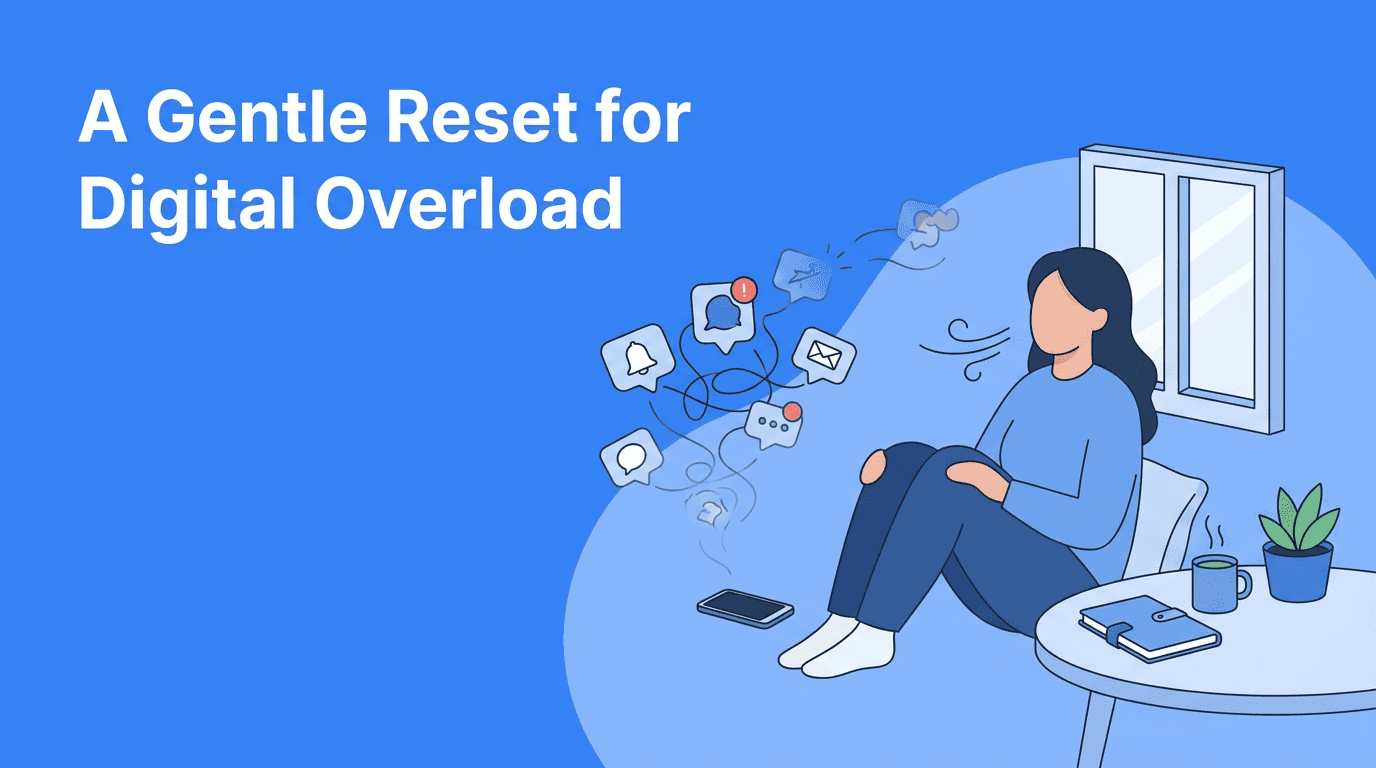
Digital overload is more than too much screen time. It is the mental and emotional strain that builds when notifications, messages, news, and endless scrolling keep your mind in a constant state of alert. For many people, this can intensify anxiety, disrupt wellbeing, and make it harder to care for emotional health in a steady way.
This article takes a gentle, practical angle: not quitting technology, but learning how to use it without letting it use you. If you are trying to support your mood, build depression awareness, or prepare for more honest conversations in therapy, a digital reset can be a surprisingly powerful place to start.
Why digital overload affects emotional health
Your brain is designed to notice change, novelty, and possible threats. Phones and apps are built around exactly those triggers. Each alert can create a small spike of tension, and over time that can leave you feeling scattered, irritable, and emotionally tired. That does not mean technology is bad. It means your nervous system may need more recovery than your current habits allow.
- Anxiety can rise when you are always reachable and always reacting.
- Sleep may suffer when screens fill the last quiet moments of the day.
- Comparison on social platforms can chip away at self-worth and wellbeing.
- Constant information can numb emotional signals, making emotional health harder to read clearly.
- Heavy scrolling during low moods may worsen isolation, which matters for depression awareness and support-seeking.
"Rest is not only about putting your phone down. It is also about giving your mind fewer things to carry."
Signs you may need a digital reset
Many people do not notice digital overload until they feel drained. The signs are often subtle at first. You may check your phone without meaning to, feel tense during quiet moments, or struggle to stay present with people you care about.
- You wake up and reach for your phone before checking in with yourself.
- You feel more agitated after scrolling, even when the content seems harmless.
- You keep consuming advice about healing but rarely pause to apply it.
- You find it harder to focus in therapy or journaling because your mind feels overstimulated.
- You use screens to avoid difficult feelings, but those feelings return stronger later.
A 5-step digital overload reset
1. Create one phone-free anchor point
Pick one part of your day to protect. It could be the first 20 minutes after waking up, meals, or the last 30 minutes before sleep. A single boundary is often more sustainable than a total detox.
2. Replace scrolling with regulation
When you feel the urge to scroll, try a calming substitute that helps your body settle. Take five slow breaths, stretch your shoulders, step outside, or write one sentence about what you are feeling. This supports emotional health by turning avoidance into awareness.
3. Curate what enters your mind
Unfollow accounts that leave you tense, ashamed, or chronically inadequate. Follow sources that support depression awareness, realistic self-care, and balanced mental health education. Less input can mean more clarity.
4. Bring patterns into therapy
If you are in therapy, notice how your online habits affect mood, sleep, self-talk, and relationships. This can help you and your therapist spot patterns faster. Digital habits often reveal where stress is leaking into daily life.
5. Use tools that coach, not overwhelm
Supportive technology can still have a place in healing. Haply is an AI life coaching app for iOS and Android that offers chat-based coaching, habit tracking, reminders, and mini-apps like Meditation/Breathe and Sleep Stories. For many people, structured support feels calmer than endless content. It can complement therapy, not replace it.
Want calmer digital habits?
Use Haply to build small routines for stress relief, mindfulness, and daily wellbeing with personalized coaching and supportive mini-tools.
Try Haply FreeHow this supports anxiety, wellbeing, and depression awareness
A digital reset will not solve every mental health challenge, and it is not a substitute for professional care. But it can lower background stress enough for you to notice what you truly need. That matters when managing anxiety, protecting wellbeing, and recognizing when low mood may need extra support.
- You may notice emotions earlier instead of only after burnout hits.
- You create more space for restorative habits like sleep, movement, and reflection.
- You become better able to tell the difference between stress, sadness, and emotional numbness.
- You may enter therapy sessions with clearer examples and more self-awareness.
- You practice depression awareness by paying attention to patterns instead of pushing through them blindly.
A simple daily check-in to prevent digital overload
At the end of the day, ask yourself three questions: What did I consume? How did it make me feel? What do I need now? This quick reflection can strengthen emotional health and help you choose recovery before exhaustion takes over.
Frequently Asked Questions
Can digital overload cause anxiety?
Digital overload can contribute to anxiety by keeping your brain in a constant state of stimulation and reactivity. It often increases stress, distractibility, and emotional fatigue.
How do I reduce screen time without doing a full detox?
Start with one phone-free routine, such as meals or the first 20 minutes of your morning. Small, consistent limits are often easier to maintain than extreme changes.
Should I talk about screen habits in therapy?
Yes. Screen habits can affect mood, sleep, self-esteem, and avoidance patterns, so they can be useful to explore in therapy.
What is the difference between digital wellbeing and emotional health?
Digital wellbeing focuses on your relationship with technology, while emotional health relates to how you understand, regulate, and express feelings. The two are closely connected.
Can an app help with healthier digital habits?
Yes, if it reduces noise rather than adding to it. Apps like Haply can support routines, mindfulness, and self-reflection, and work best as a complement to professional help when needed.