Emotion Tracking: A Mindful Daily Practice for Emotional Awareness
Emotion tracking is a simple mindfulness practice that builds emotional awareness, emotional intelligence, and self-awareness. Learn how to notice feelings with more clarity and calm.

By Haply Team
Haply Editorial Team
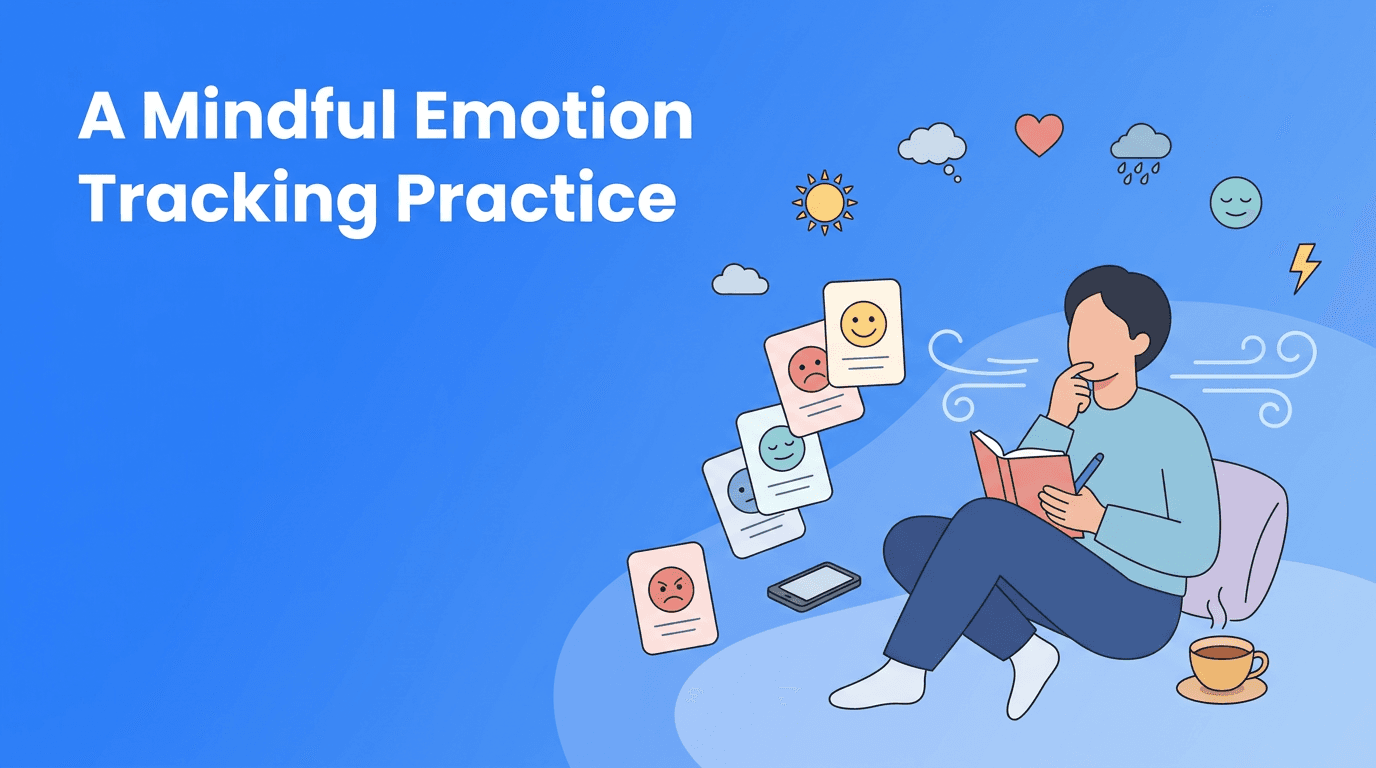
Emotion tracking is one of the most practical ways to build emotional awareness without turning your day into a long self-help project. Instead of trying to analyze every mood, you learn to pause, name your feelings, and notice what your emotions are asking for. Over time, this simple mindfulness habit strengthens self-awareness and supports better emotional intelligence in everyday life.
Why emotion tracking works
Many people do not struggle because they have too many emotions. They struggle because their inner experience feels blurry. When you cannot tell whether you are disappointed, overstimulated, lonely, tense, or ashamed, it is easy to react on autopilot. Emotion tracking creates a gentle structure for noticing what is happening before it spills into your choices, relationships, or energy.
- It helps you name feelings more accurately
- It reveals patterns between emotions, sleep, stress, people, and routines
- It improves communication because you can explain what you feel
- It supports regulation by helping you catch emotions earlier
- It builds emotional intelligence through repeated reflection
"You cannot calm what you do not notice. Awareness is the first act of care."
A mindful way to track feelings
The goal is not to monitor yourself all day or judge every reaction. A mindful emotion tracking practice is light, curious, and compassionate. You are not collecting data to prove something is wrong with you. You are learning your emotional language.
Use the 3-part check-in
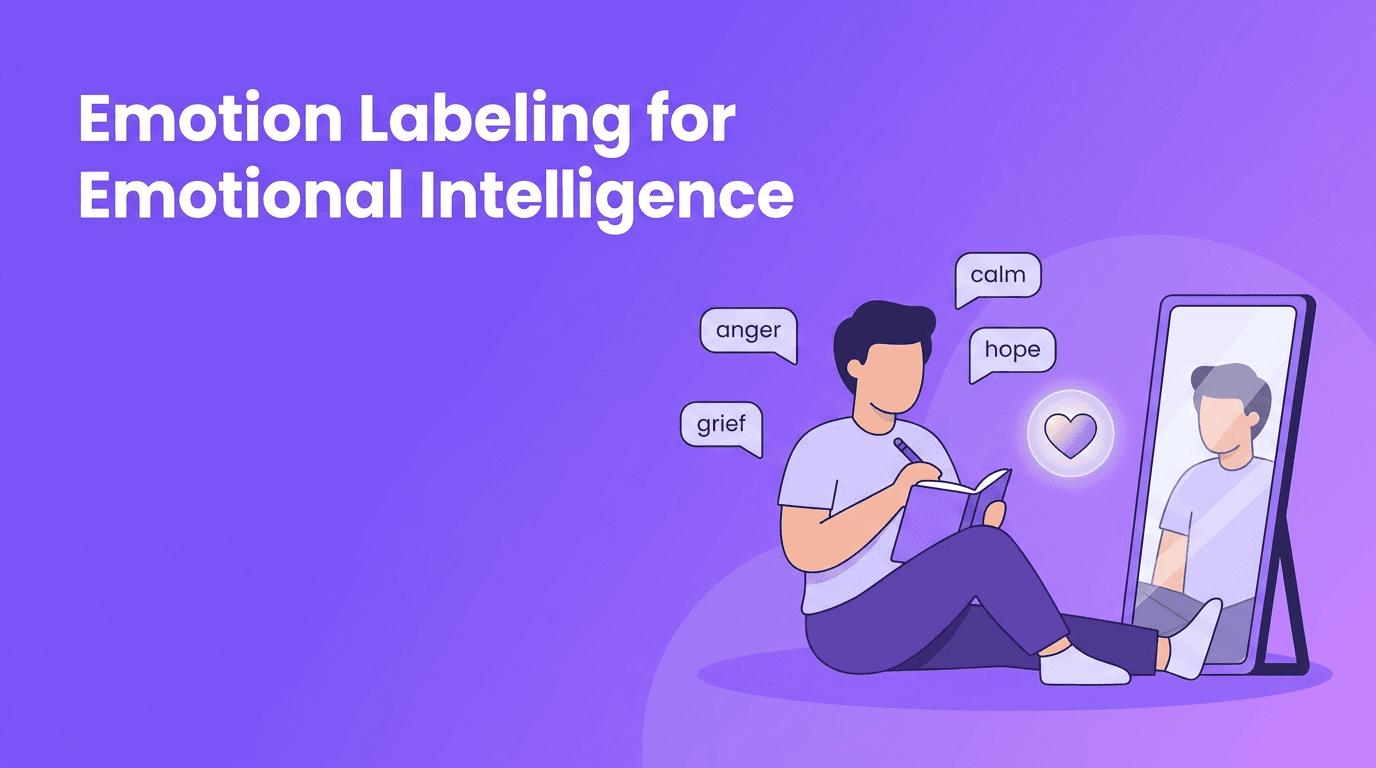
- What am I feeling? Pick one to three words, such as frustrated, hopeful, uneasy, calm, resentful, relieved, or proud.
- Where do I feel it in my body? Notice tight shoulders, a heavy chest, a buzzing mind, a clenched jaw, or warmth in your face.
- What might this feeling need? Maybe you need rest, space, reassurance, movement, food, a boundary, or a conversation.
This short pause takes less than two minutes, but it turns vague discomfort into useful information. That is how emotional awareness becomes practical rather than abstract.
Pick consistent moments
Try checking in at the same points each day: after waking up, before lunch, after work, and before bed. Consistency matters more than frequency. If four times feels like too much, start with one evening check-in and keep it sustainable.
What to write in an emotion tracking log
A good log should be simple enough that you will actually use it. Whether you prefer a notebook, notes app, or a guided tool, track only a few helpful details.
- Feeling words: choose one to three emotions
- Intensity: rate each feeling from 1 to 10
- Trigger: note what happened before the emotion appeared
- Body signals: record physical sensations
- Response: write what you did next
- Need: identify what might have helped
After a week, review your notes. You may notice that irritation appears when you skip meals, sadness spikes after social comparison, or anxiety rises when your day lacks transition time. These patterns are valuable because they turn random-seeming feelings into understandable signals.
Want guided support for emotional awareness?
Haply is an AI life coaching app for iOS and Android that helps you build mindful habits with personalized coaching, wellness support, daily reminders, and tools like Meditation/Breathe. If you want a structured way to grow self-awareness, it can make the practice easier to maintain.
Try Haply FreeCommon mistakes that make emotion tracking harder
- Tracking only negative emotions. Notice pleasant states too, like contentment, relief, curiosity, or gratitude.
- Using vague labels. Try specific words instead of just saying bad, stressed, or fine.
- Judging your emotions. The point is to notice, not to grade yourself.
- Writing too much. If tracking feels heavy, you will stop doing it.
- Forgetting the body. Physical cues often reveal emotions before your thoughts do.
One powerful shift is to stop asking, "Why am I like this?" and start asking, "What is this emotion trying to show me?" That question invites compassion and strengthens self-awareness without shame.
How emotion tracking builds emotional intelligence
Emotional intelligence is not just about staying calm. It includes recognizing your inner state, understanding what influences it, and responding in a way that aligns with your values. Emotion tracking supports all three. First, you identify your emotions more clearly. Second, you connect them to context. Third, you choose a response with more intention.
This matters in real life. You might notice that what looked like anger was actually embarrassment. Or what seemed like laziness was emotional exhaustion. The more accurately you interpret your inner world, the more skillfully you can care for it.
A 5-minute evening reflection
- What feeling showed up most often today?
- When did I feel most regulated?
- What drained me emotionally?
- What helped me feel safe, grounded, or connected?
- What do I want to try differently tomorrow?
If you want extra structure, apps can help. In Haply, the Wellness coaches and chat-based support can guide daily reflection, while the habit tracker, streaks, and Today Dashboard make it easier to stay consistent. You can also pair your check-in with the Meditation/Breathe mini-app when your emotions feel intense.
Start small and stay honest
You do not need perfect insight to understand yourself better. You only need a repeatable pause. Emotion tracking works because it helps you meet your feelings before they become overwhelm, avoidance, or conflict. A few honest check-ins each week can deepen emotional awareness, strengthen self-awareness, and help you respond to your emotions with more steadiness.
If your inner world has felt noisy, confusing, or hard to name lately, begin with one question tonight: What am I feeling right now? That small act of noticing is often where healing begins.
Frequently Asked Questions
How do I start emotion tracking if I am bad at naming my feelings?
Start with a short feelings list and choose the closest match. Over time, your emotional vocabulary and confidence will grow.
What is the difference between emotion tracking and journaling?
Emotion tracking is more structured and brief. It focuses on naming feelings, triggers, body sensations, and responses rather than free-writing everything on your mind.
Can emotion tracking improve emotional intelligence?
Yes. It helps you recognize patterns, understand triggers, and respond more intentionally, which are core parts of emotional intelligence.
How often should I track my emotions each day?
Once or twice a day is enough to start. Consistency matters more than frequent check-ins.