Mindful Transitions: A Simple Ritual for More Presence Between Tasks
Mindful transitions can bring more mindfulness, meditation, and present moment awareness into ordinary days. Learn a gentle ritual to create inner peace between tasks.


By Haply Team
Haply Editorial Team
Mindful transitions are one of the most overlooked ways to bring mindfulness into real life. Most stress does not come only from what we do, but from how quickly we move from one moment to the next. A meeting becomes an email, an email becomes dinner, dinner becomes scrolling. When there is no pause, the present moment disappears. A small transition ritual can restore awareness, support meditation in daily life, and create more inner peace without asking you to change your whole schedule.
Why the moments between tasks matter
Many people imagine calm as something that happens only during a perfect morning routine or a long meditation session. But daily life is built from in-between moments. The minute before you answer a message, the walk from one room to another, the breath before opening your laptop, these are places where your nervous system either tightens or softens.
When you practice mindful transitions, you stop carrying the energy of one activity straight into the next. Instead, you let each part of the day have a clear beginning and ending. That simple boundary can reduce mental clutter, improve focus, and make your day feel more intentional.
"Peace is not always found by doing less. Sometimes it is found by arriving fully in what comes next."
What a mindful transition looks like
A mindful transition is a 30-second to 2-minute reset between activities. It is not complicated, and it does not need special equipment. The goal is to gently return to the body, notice your state, and step into the next moment with choice instead of momentum.
- Stop for a brief moment before the next task begins.
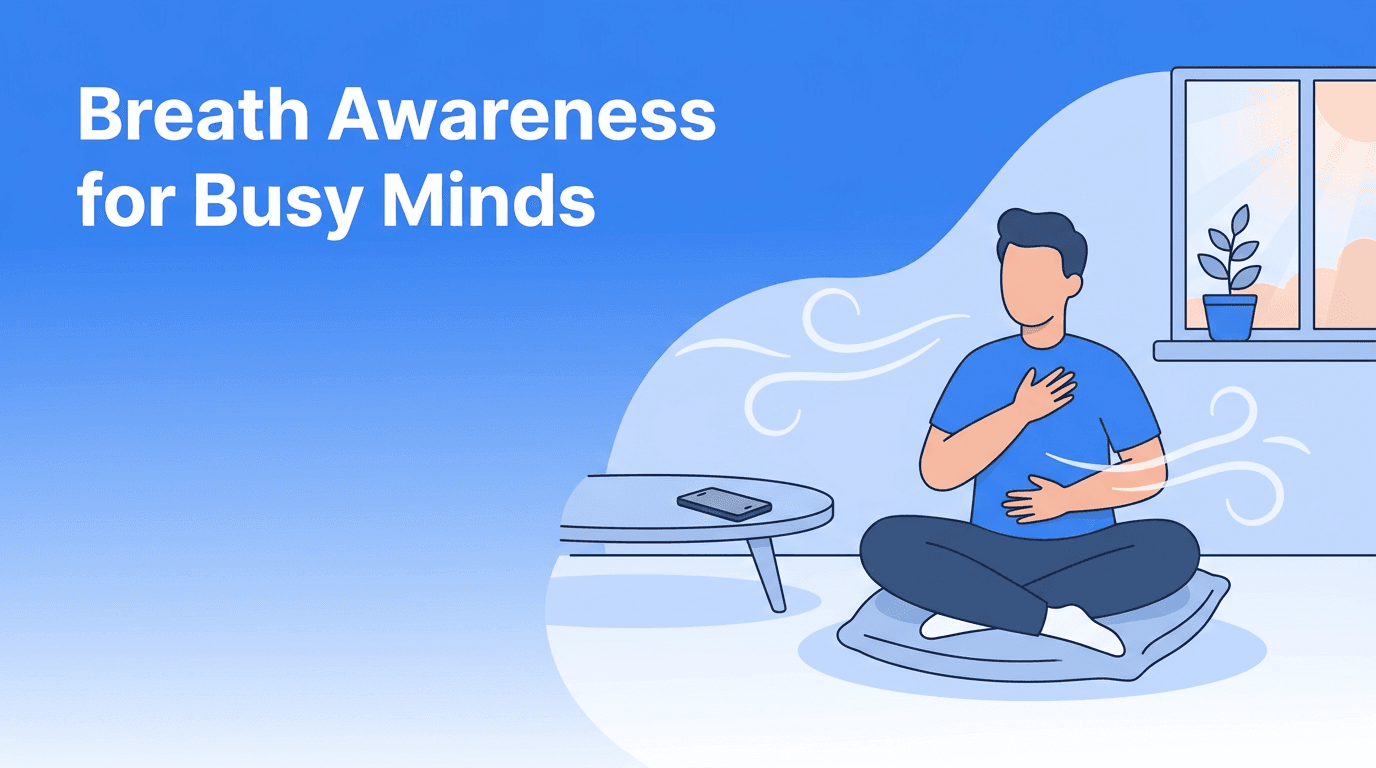
- Take one to three slow breaths and feel the exhale fully.
- Notice what you are carrying, such as tension, thoughts, or emotion.
- Name your next step with a simple phrase like, "Now I am making lunch" or "Now I am beginning focused work."
- Enter the next activity a little more slowly than usual.
The doorway method
One easy way to remember this practice is to attach it to doorways. Every time you walk into a new room, let the doorway become a cue for awareness. Feel your feet on the ground, relax your shoulders, and take one conscious breath. This turns your home or workplace into a map of gentle reminders.
How mindful transitions support meditation and awareness
Formal meditation trains attention, but mindful transitions help you use that attention when life is moving. They bridge the gap between practice and reality. Instead of seeing meditation as separate from the day, you begin to experience awareness while answering messages, starting your car, washing your hands, or sitting down to eat.
This is especially helpful for people who say, "I know mindfulness matters, but I forget it when I get busy." Transition rituals solve that problem by linking awareness to actions that already happen every day.
- They make mindfulness practical instead of abstract.
- They reduce emotional spillover from one task to another.
- They support better concentration and less autopilot behavior.
- They create tiny openings for inner peace even on demanding days.
- They help the present moment feel easier to access.
Want support building mindful habits?
Haply is an AI life coaching app for iOS and Android that helps you turn small practices into daily rhythms. Try the Wellness coach, use the Meditation/Breathe mini-app, and keep your routine steady with reminders and streaks.
Try Haply FreeA 5-part ritual for busy days
1. Close the last moment
Before moving on, consciously finish what just happened. You can whisper, "That part is done." This helps your mind stop dragging unfinished energy forward.
2. Feel the body
Bring attention to one physical anchor, such as your feet, jaw, hands, or breath. The body is the fastest path back to present moment awareness.
3. Soften one area
Release one small pocket of tension. Unclench your jaw. Drop your shoulders. Relax your forehead. Tiny physical shifts often create a surprising amount of mental space.
4. Choose an intention
Ask, "How do I want to enter the next moment?" Your answer might be calm, clear, patient, or steady. This is where intentional living becomes real.
5. Begin gently
Start the next task without rushing the first 10 seconds. Open the document slowly. Sit before speaking. Pick up the plate with care. A gentle beginning often changes the tone of the whole activity.
When to use mindful transitions most
You do not need to practice this all day. Start with the places where stress tends to build. The best transition points are usually the ones where you feel rushed, scattered, or emotionally loaded.
- Before checking email or messages
- After finishing a work call
- Before eating
- When arriving home
- Before bedtime
- Before switching from work mode to family time
- After a difficult conversation
A simple way to make the habit stick
Choose three anchor moments for one week. For example: before lunch, after work, and before sleep. Keep the practice very small so it feels inviting rather than demanding. If you want extra support, Haply can help you build the routine with personalized coaching, habit tracking, and calming mini-tools that fit into short breaks.
The deeper lesson of mindful transitions
At its heart, this practice teaches something beautiful: you do not have to wait for a retreat, a free weekend, or a perfect routine to feel more grounded. Mindful transitions remind you that peace can live in ordinary thresholds. Every pause is a chance to return to yourself. Every breath is a way back to awareness. Every small beginning is an invitation to live with more mindfulness, more choice, and more quiet trust.
Frequently Asked Questions
What are mindful transitions?
Mindful transitions are short pauses between tasks that help you reset attention, reconnect with the present moment, and move into the next activity with more intention.
How do mindful transitions help with mindfulness?
They bring mindfulness into ordinary parts of the day, especially between activities when stress and autopilot often take over.
Can mindful transitions replace meditation?
They do not fully replace meditation, but they complement it well. Meditation builds attention, and mindful transitions help you apply that attention in daily life.
How long should a mindful transition be?
A mindful transition can be as short as 30 seconds. Even one conscious breath and a clear intention can make a difference.
What is the best time to practice mindful transitions?
The best times are before or after moments that usually feel rushed, such as starting work, eating, coming home, or getting ready for bed.