Slow Living Habits: A Practical Guide to More Presence in Busy Days
Slow living habits can help you feel more present without overhauling your routine. Learn simple ways to practice gratitude, savoring, and intentional living in everyday moments.

By Haply Team
Haply Editorial Team
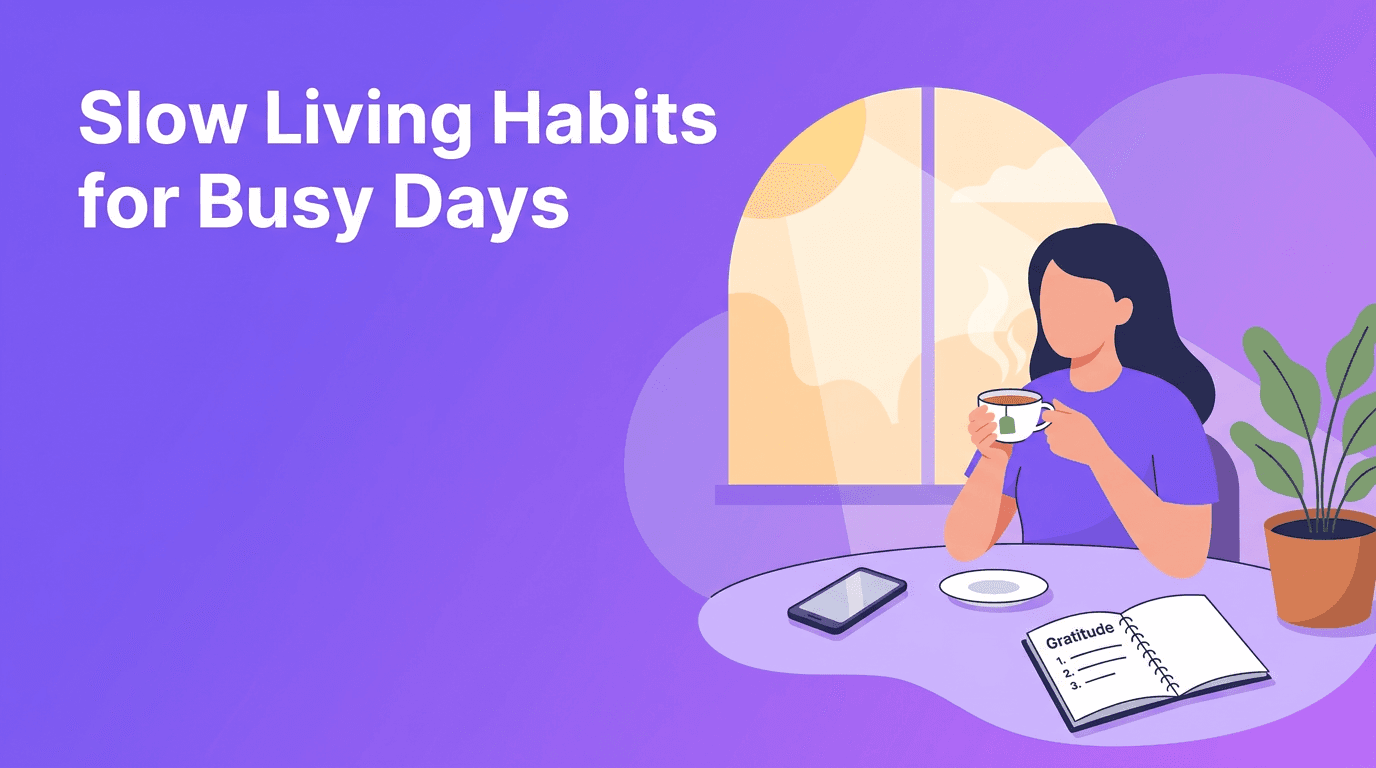
Slow living habits are not about escaping your life or doing less for the sake of appearances. They are small choices that help you notice your life while you are actually living it. If your days feel packed, slow living habits can create more space for gratitude, mindful living, and intentional living without turning presence into one more task on your list.
Why slow living matters when life is already full
Many people assume slow living belongs to people with open schedules, quiet homes, and long mornings. In reality, the heart of the practice is much simpler. It means bringing a little more attention to what is already here. That is why mindful living works so well for busy people. You do not need a perfect routine. You need a few reliable ways to stop rushing past your own experience.
- Choose one activity a day to do without multitasking
- Use short cues, like waiting for coffee or opening a door, to return to the present moment
- Practice gratitude by naming one thing that is helping you right now
- Try savoring pleasant moments for 10 extra seconds instead of rushing ahead
"The days are long, but the years are short." A mindful life is built by noticing the day you are in.
The myth of doing everything slower
A practical approach to intentional living is not about moving at half speed. It is about deciding what deserves your full attention. You can answer emails quickly and still live intentionally. You can commute, parent, work, and care for others while practicing presence. The real shift is this: instead of letting every moment blur together, you create tiny anchors that bring you back.
Try the one-breath reset
Before starting the next task, take one deliberate breath and ask, "What matters in this next moment?" That question is small, but powerful. It turns autopilot into choice. Over time, this becomes one of the most useful slow living habits because it fits inside real life.
5 slow living habits you can start today
- Begin with a softer morning. Do not reach for your phone in the first minute. Sit up, breathe, and notice light, temperature, or the feeling of your feet on the floor.
- Create a transition ritual. After meetings, errands, or school pickup, pause for 15 seconds. Let one part of the day end before the next begins.
- Eat one mindful bite. You do not need a perfect mindful meal. Just take one bite slowly and notice taste, texture, and smell.
- Name one good thing out loud. This is a quick form of gratitude that trains your attention toward what is supporting you.
- Close the day with savoring. Before sleep, replay one ordinary moment that felt quietly good, like warm water on your hands or a kind text from a friend.
Gratitude and savoring are not the same thing
These two practices work beautifully together, but they do different jobs. Gratitude helps you recognize what is valuable. Savoring helps you stay with it long enough to feel it. If gratitude says, "This matters," savoring says, "Stay here a moment longer." Used together, they strengthen both mindful living and emotional steadiness.
A simple way to combine them
When something pleasant happens, pause for 10 seconds. Notice the details. Then mentally finish this sentence: "I am grateful for this because..." This short practice can make ordinary moments feel fuller, not by forcing happiness, but by helping you actually receive what is already present.
Want guided support for mindful living?
Haply is an AI life coaching app for iOS and Android that helps you build intentional routines with personalized coaching, a habit tracker, and calming tools like the Meditation/Breathe mini-app. If you want support that fits into a busy day, Haply makes it easier to practice presence consistently.
Try Haply FreeHow to practice intentional living without adding pressure
The biggest mistake people make with intentional living is turning it into a performance. A slower, more present life does not need a beautiful notebook, a two-hour morning routine, or constant calm. It needs honesty. Ask yourself, "What helps me feel here?" and "What keeps pulling me away from my own life?" Start there.
- If you feel scattered, reduce input before trying to improve focus
- If you feel numb, use savoring to reconnect with small pleasures
- If you feel rushed, shrink the next step until it feels doable
- If you forget your intentions, link them to things you already do, like brushing your teeth or sitting in the car
A realistic mindful living routine for busy people
Here is what mindful living can look like in real life: one breath before opening your laptop, one grateful thought while washing dishes, one mindful sip of coffee, one minute with the Haply Wellness coach when your mind feels noisy. That is enough to begin. Consistency matters more than intensity.
If you like structure, Haply can help you turn these moments into repeatable practices. Its chat-based coaching, daily dashboard, reminders, and mini-apps make it easier to build slow living habits that feel supportive instead of strict.
The quiet goal of slow living
The point of slowing down is not to become a different person. It is to become more available to your actual life. More able to notice beauty, regulate stress, and choose with care. More willing to let simple things count. That is the quiet promise of intentional living. Not perfection, just presence.
Frequently Asked Questions
What are slow living habits?
Slow living habits are small daily practices that help you be more present and intentional, such as mindful breathing, gratitude, savoring, and doing one task at a time.
How can I practice slow living if I am busy?
Start with tiny moments you already have, like one breath before a meeting, one mindful bite during lunch, or one gratitude reflection before bed.
What is the difference between gratitude and savoring?
Gratitude is recognizing what is meaningful or supportive in your life. Savoring is staying with a positive moment long enough to fully feel and remember it.
Is slow living the same as mindful living?
They overlap, but they are not identical. Mindful living focuses on awareness, while slow living often emphasizes pacing, simplicity, and giving attention to what matters most.