The Mood Check-In Method: A Mindful Practice for Emotional Awareness
Build emotional awareness with a simple daily mood check-in method. Learn how to notice feelings, strengthen self-awareness, and respond with more calm.

By Haply Team
Haply Editorial Team
Most people do not need more advice about what they
Why emotional awareness matters in everyday life
Emotional awareness is the skill of noticing what you feel, naming it clearly, and understanding what may be shaping it. It sits at the heart of emotional intelligence because you cannot regulate what you do not recognize. When your inner world feels blurry, small frustrations can turn into sharp reactions, and important needs can go ignored.
The good news is that this skill does not require a perfect meditation routine or hours of journaling. A brief, mindful pause can help you become more familiar with your feelings, your body signals, and the stories attached to your emotions.
"Awareness is the first step in transformation."
The Mood Check-In Method
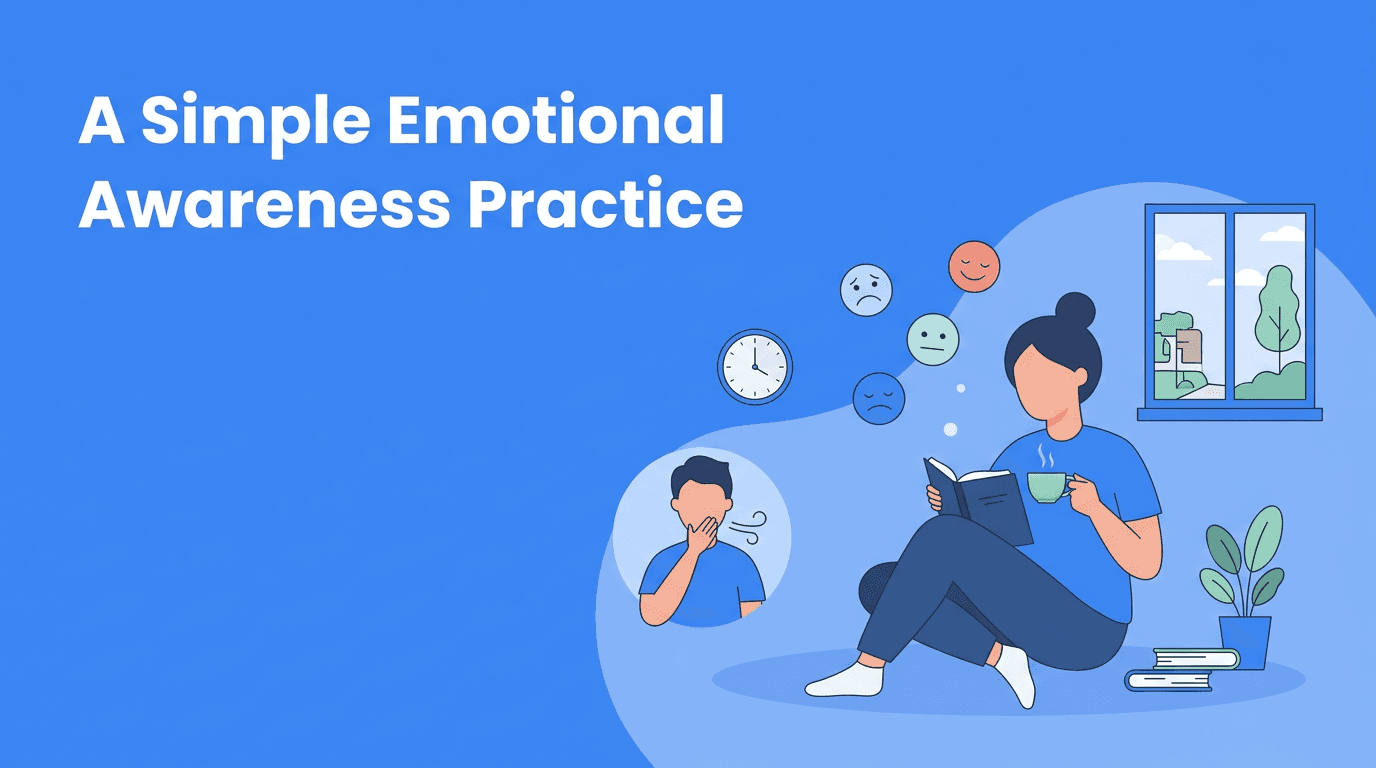
Think of this as a tiny daily reset. The Mood Check-In Method helps you build self-awareness in under five minutes by asking a few honest questions at regular moments in the day. Instead of waiting until emotions overflow, you learn to notice them while they are still manageable.
Step 1: Pause before you analyze
Stop for one slow breath. Before explaining, fixing, or judging anything, ask yourself: "What am I feeling right now?" Keep it simple. You might notice feelings like tension, relief, disappointment, hope, irritation, or calm.
Step 2: Name the feeling precisely
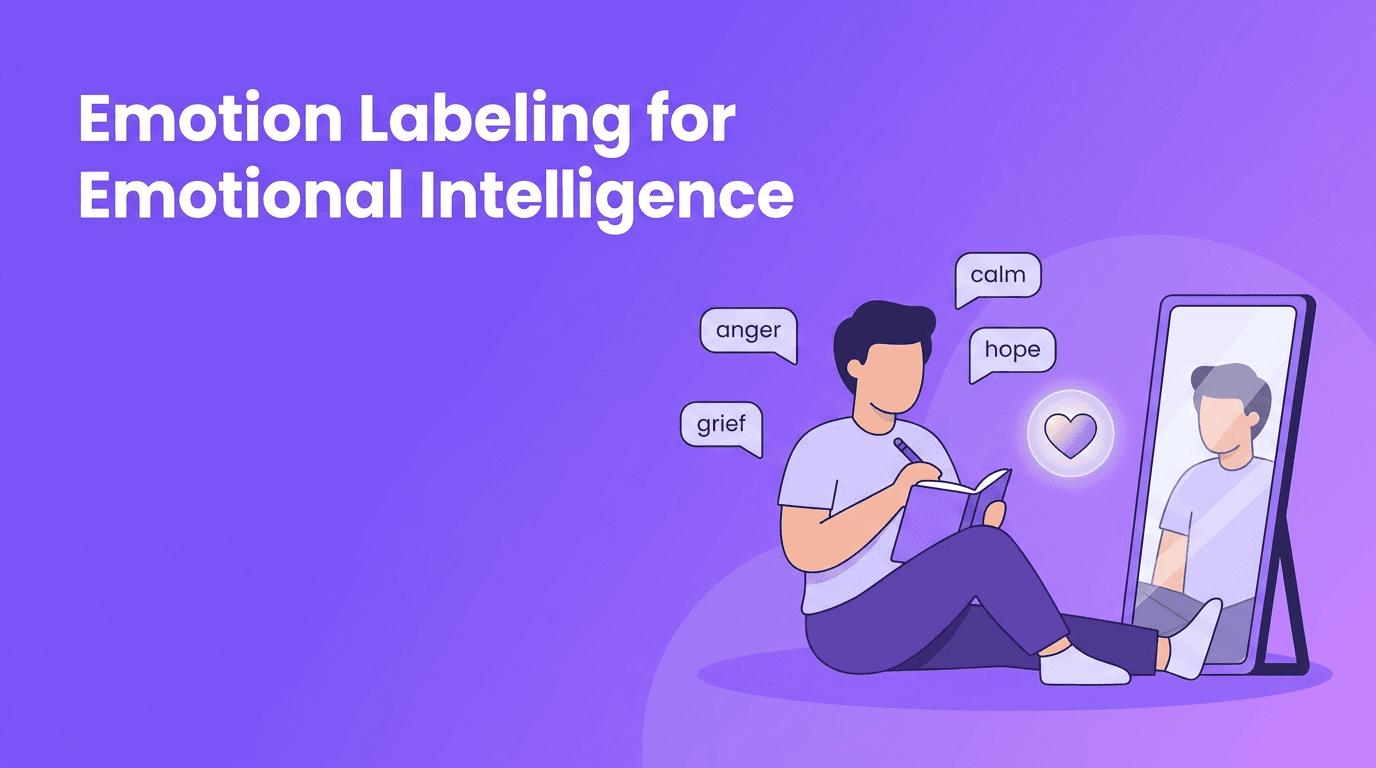
Try to go one layer deeper than "good" or "bad." Maybe you are not just stressed, but overwhelmed. Not just angry, but unheard. Naming emotions with a bit more precision strengthens emotional awareness and helps your brain shift from reactivity to clarity.
- Ask: "What is the strongest emotion here?"
- Ask: "Where do I feel it in my body?"
- Ask: "What might this feeling need from me?"
- Ask: "What happened just before this emotion showed up?"
Step 3: Notice the body signal
Your body often registers emotions before your mind explains them. A tight jaw, heavy chest, restless legs, or a sinking stomach can all be useful clues. Mindfulness becomes practical when you treat these signals as information, not as problems.
Step 4: Choose a kind response
Once you notice what is happening, ask what would help for the next 10 minutes. You may need water, movement, a boundary, a slower tone, a break from your phone, or a compassionate conversation with yourself. This is where emotional intelligence becomes action.
A realistic routine for busy days
You do not need to check in constantly. Pick three anchor moments: morning, midday, and evening. A short emotional awareness practice at these times can create a steady habit without feeling like another task on your list.
- Morning: "What feeling am I waking up with?"
- Midday: "What emotion is shaping my behavior right now?"
- Evening: "What did I feel today that I almost ignored?"
If you want support, Haply can make this easier. The app offers chat-based coaching, Wellness support, daily reminders, and a Meditation/Breathe mini-app that helps you slow down enough to hear what your inner world is saying. Its habit tracker and Today Dashboard can also help you keep your check-ins consistent.
Want help building a mindful check-in habit?
Use Haply's AI coaching, Wellness tools, and daily reminders to strengthen emotional awareness one small pause at a time.
Try Haply FreeCommon mistakes that blur self-awareness
- Judging the feeling too fast - saying "I should not feel this" shuts down useful information.
- Explaining instead of noticing - analysis has value, but it can become a way to avoid direct contact with emotions.
- Using only one emotion word - if everything is called stress, you miss important differences.
- Waiting until you are overwhelmed - emotional awareness is easier when practiced early, not only in crisis.
When mindfulness meets emotional intelligence
Mindfulness does not erase difficult emotions. It helps you relate to them with less fear and more curiosity. Over time, this strengthens self-awareness, improves communication, and helps you respond with intention instead of impulse. That is the quiet power of practicing with your feelings instead of running from them.
Frequently Asked Questions
How can I improve emotional awareness every day?
Use a brief daily check-in to pause, name your feeling, notice body signals, and ask what the emotion needs. Repeating this at set times helps the skill grow.
What is the difference between emotional awareness and emotional intelligence?
Emotional awareness is the ability to notice and identify feelings. Emotional intelligence is broader and includes understanding, regulating, and responding to emotions effectively.
Why is it hard to identify my feelings?
Many people were never taught emotional language, and busy routines can disconnect you from body signals. Practice and a wider feelings vocabulary can make identification easier.
Can mindfulness help with difficult emotions?
Yes. Mindfulness helps you observe emotions without immediately reacting, which can create space for calmer and more thoughtful choices.