What Is Emotional Granularity? A Practical Skill for Anxiety and Emotional Health
Emotional granularity can improve anxiety, emotional health, and wellbeing by helping you name feelings more accurately. Learn a simple practice you can start today.

By Haply Team
Haply Editorial Team
If you often say "I feel bad" but cannot tell whether it is anxiety, frustration, sadness, guilt, or overwhelm, emotional granularity may be the missing skill. It is the ability to describe your emotions with more precision, and that small shift can support emotional health, stronger self-awareness, and everyday wellbeing.
Why emotional granularity matters for wellbeing
Many people move through the day with a vague sense of discomfort. When feelings stay blurry, it becomes harder to choose the right response. You might need rest, a boundary, a conversation, movement, or extra support, but without clarity, everything can feel equally heavy. Emotional granularity helps you match the feeling to the next helpful step.
This is not about overanalyzing every mood. It is about building a more accurate inner vocabulary. Research suggests that people who can label emotions more specifically may regulate them more effectively. That can be useful for stress, anxiety, and even depression awareness, because you begin noticing patterns earlier instead of waiting until you feel completely drained.
"You cannot care for a feeling you cannot name."
The difference between vague feelings and precise feelings
Compare these two statements: "I am stressed" versus "I am disappointed, mentally tired, and a little socially anxious about tomorrow." The second version gives you direction. Maybe disappointment calls for self-compassion, tiredness calls for sleep, and social anxiety calls for preparation. Emotional granularity turns one large fog into smaller, workable signals.
- Instead of "bad", try: discouraged, restless, numb, tense, lonely, ashamed, irritated
- Instead of "stressed", try: pressured, rushed, overstimulated, worried, mentally fatigued
- Instead of "sad", try: disappointed, grieving, unmotivated, disconnected, hopeless
- Instead of "angry", try: resentful, hurt, frustrated, defensive, betrayed
Why this can help with anxiety
People often describe anxiety as one single feeling, but it can include fear, dread, uncertainty, embarrassment, hypervigilance, and physical activation. When you identify which part is strongest, your coping strategy can become more specific. For example, uncertainty may call for planning, while physical activation may respond better to breathing, walking, or grounding.
A 3-step emotional granularity practice
You do not need a long routine. A few minutes is enough to strengthen emotional granularity over time.
- Pause and locate it: Ask, "What am I feeling in my body right now?" Notice tightness, heaviness, heat, buzzing, or fatigue.
- Name at least two emotions: Try combining feelings, such as "anxious and disappointed" or "relieved but guilty." Mixed emotions are normal.
- Choose one supportive action: Pick one small response that fits the emotion, like texting a friend, journaling, stretching, setting a boundary, or booking therapy.
Use prompts when words do not come easily
Try these questions: What happened just before this feeling? What does this emotion want me to notice? What kind of care would help for the next 10 minutes? These prompts can make emotional labeling feel less intimidating and more practical.
Want help building emotional awareness?
Haply offers AI-guided check-ins, wellness coaching, habit tracking, and mini-apps like Meditation/Breathe to support your daily wellbeing. It can complement therapy and self-care routines.
Try Haply FreeHow emotional granularity supports therapy and self-reflection
If you are in therapy, better emotion labeling can make sessions more productive. Instead of saying, "My week was awful," you might say, "I felt rejected after a conversation, then ashamed for needing reassurance." That level of detail gives you and your therapist more to work with. It can also improve communication in relationships, because specific emotions are easier to share than defensive reactions.
This skill is also useful if you are focusing on depression awareness. Low mood is not always just sadness. It may show up as emptiness, numbness, hopelessness, irritability, or loss of interest. Noticing these distinctions can help you seek support earlier. If emotions feel persistently heavy or hard to manage, reaching out to a licensed mental health professional is an important next step.
Make it a daily wellbeing habit
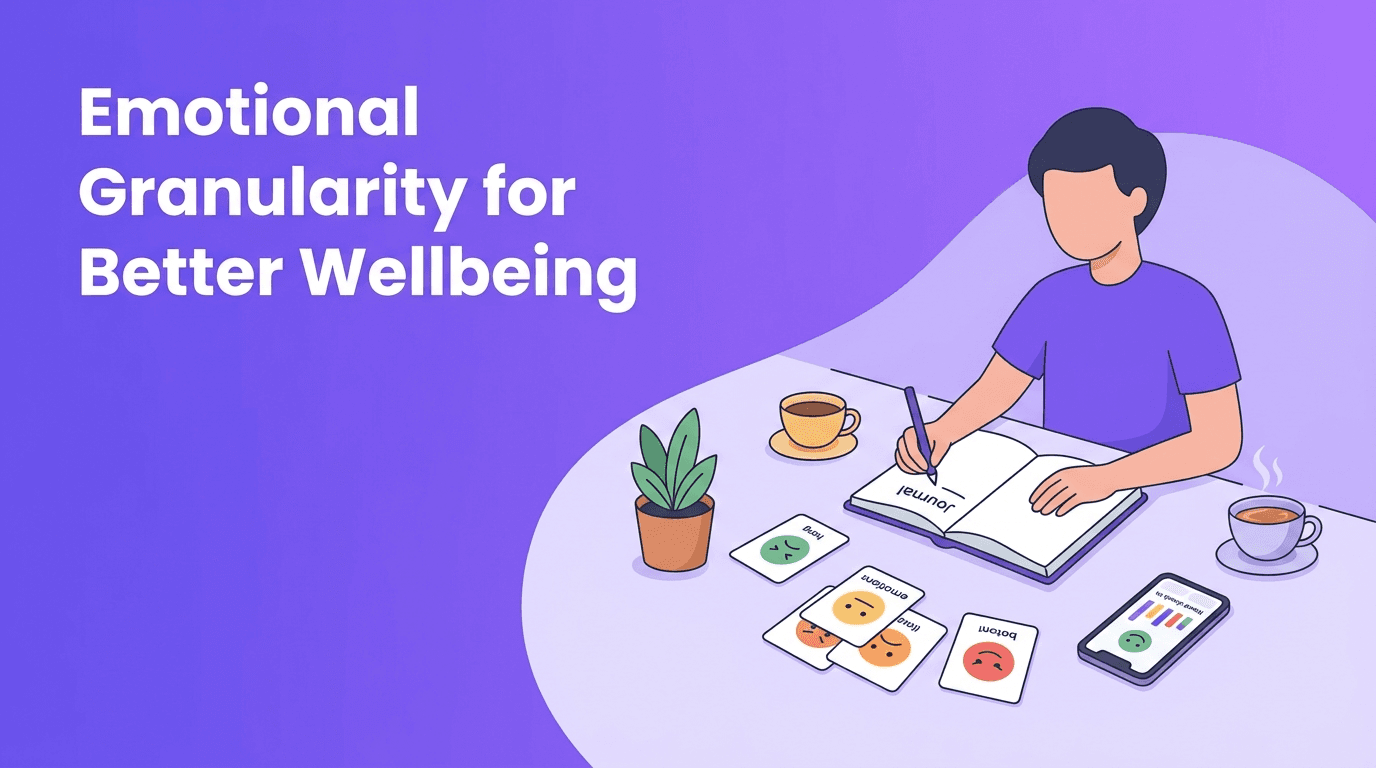
A simple way to practice is to do one short check-in at the same time each day. You can use a notebook or a guided app. In Haply, users can pair chat-based coaching with reminders, streaks, and a Today Dashboard to make wellbeing habits easier to maintain. The goal is not perfection. The goal is to become a little more honest and a little more precise with yourself.
A gentle reminder
Building emotional vocabulary does not mean every feeling will become easy. But when you can identify what is real, you are more likely to respond with care instead of confusion. Emotional granularity is a small skill with a meaningful impact on emotional health.
Frequently Asked Questions
What is emotional granularity?
Emotional granularity is the ability to identify and describe feelings with precision instead of using broad labels like "bad" or "stressed." It can improve self-awareness and emotion regulation.
Can emotional granularity help with anxiety?
Yes, it can help you separate different parts of anxiety, such as fear, uncertainty, or physical tension, so you can choose a more effective coping response.
How do I practice emotional granularity every day?
Pause once a day, notice body sensations, name at least two emotions, and choose one small supportive action. Journaling or guided check-ins can help.
Is emotional granularity a replacement for therapy?
No. It is a helpful self-awareness skill, but it does not replace therapy or professional mental health care when you need support.