Emotional Health Check-Ins: A Gentle Weekly Practice for Anxiety and Everyday Wellbeing
Emotional health check-ins can help you notice anxiety early, support wellbeing, and make therapy more effective. Learn a simple weekly practice you can actually keep.

By Haply Team
Haply Editorial Team
Your emotional health does not usually shift all at once. More often, it changes quietly through sleep loss, mounting stress, irritability, numbness, or a low-grade sense that something feels off. A simple weekly check-in can help you notice anxiety sooner, build depression awareness, and support your overall wellbeing before overwhelm takes over.
Why emotional health check-ins matter
Many people only pause when they are already exhausted. But emotional health works better with regular attention, not crisis-only attention. A short weekly review can help you spot patterns in mood, energy, relationships, focus, and self-talk. It can also give you useful language for therapy, especially if you often struggle to explain how your week actually felt.
- You catch patterns earlier, like rising anxiety before it becomes a shutdown or panic spiral.
- You improve depression awareness by noticing changes in motivation, pleasure, sleep, appetite, and isolation.
- You make therapy more practical because you bring concrete examples instead of vague memories.
- You strengthen wellbeing habits by seeing which routines genuinely help and which ones drain you.
What a weekly check-in looks like
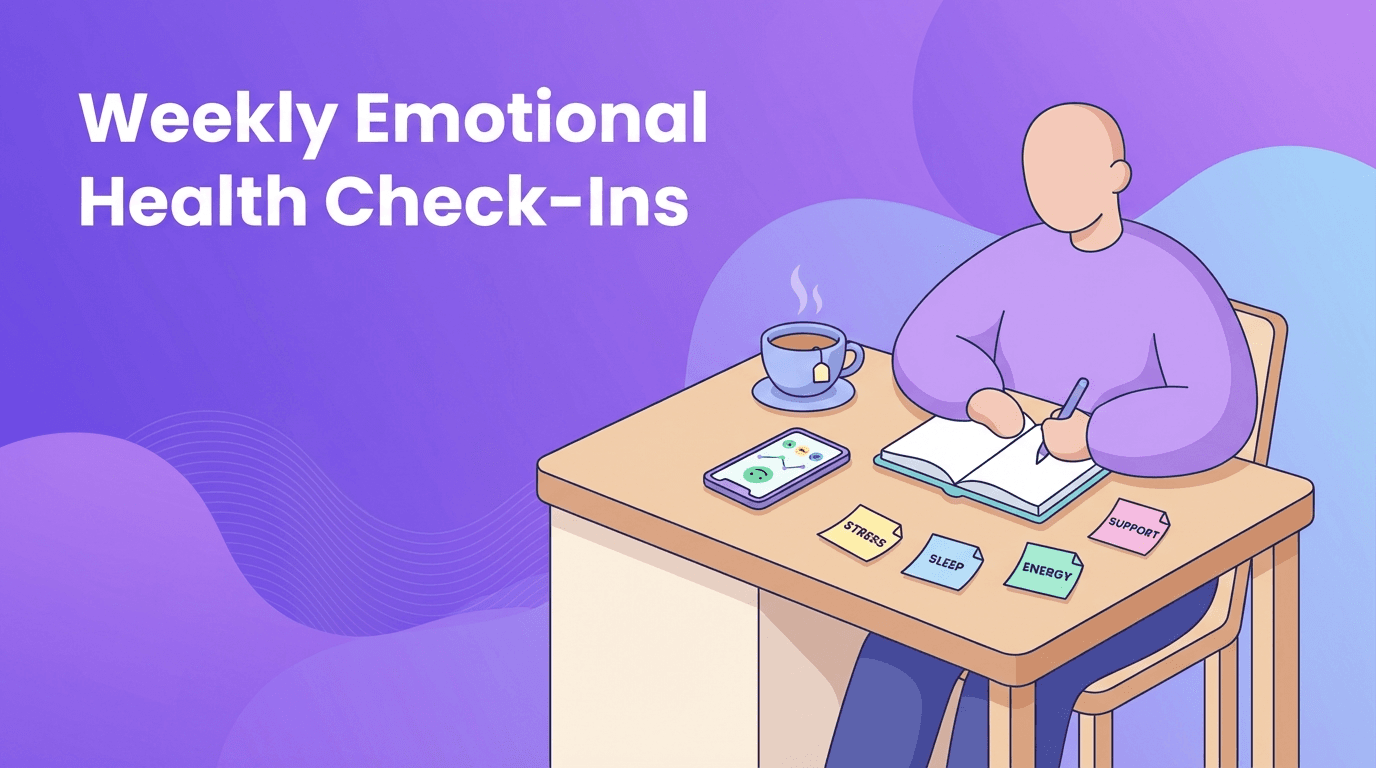
This is not a test, and it is not about being perfectly self-aware. Think of it as a compassionate review of the last seven days. Set aside 10 to 15 minutes, ideally at the same time each week. Use a notebook, notes app, or a guided tool inside a wellness app.
The 5 areas to review
- Mood - What emotions showed up most often this week?
- Body - How were your sleep, tension, appetite, and energy?
- Mind - Were your thoughts mostly calm, self-critical, distracted, or hopeful?
- Connection - Did you feel supported, isolated, irritable, or emotionally close to others?
- Coping - What helped when things felt hard, and what made things worse?
Awareness is not the same as judgment. It is simply the moment you begin to tell the truth about your inner life.
If you live with anxiety, this structure can stop your reflection from turning into overthinking. If depression awareness is part of your goal, it also helps you notice subtle changes that are easy to dismiss, like losing interest in things you usually enjoy or feeling emotionally flat for days at a time.
7 questions to ask during your emotional health check-in
- What felt heavy this week, and what felt light?
- When did my anxiety rise most, and what happened right before it?
- Did I feel emotionally connected to myself, or mostly numb and on autopilot?
- What gave me energy, even a little?
- What drained me more than I expected?
- Did I avoid support, rest, or therapy because I felt too overwhelmed?
- What is one kind thing I can do for myself this week?
You do not need long answers. A few honest bullet points are enough. The goal is to build a clearer picture of your emotional health, not to write a perfect journal entry.
Want guided support for your weekly check-ins?
Haply is an AI life coaching app for iOS and Android with Wellness coaches, habit tracking, daily reminders, and mini-apps like Meditation/Breathe and Sleep Stories. It can help you reflect consistently and turn insights into small, supportive actions. Haply complements therapy, but it is not a replacement for professional care.
Try Haply FreeHow this practice supports therapy and self-understanding
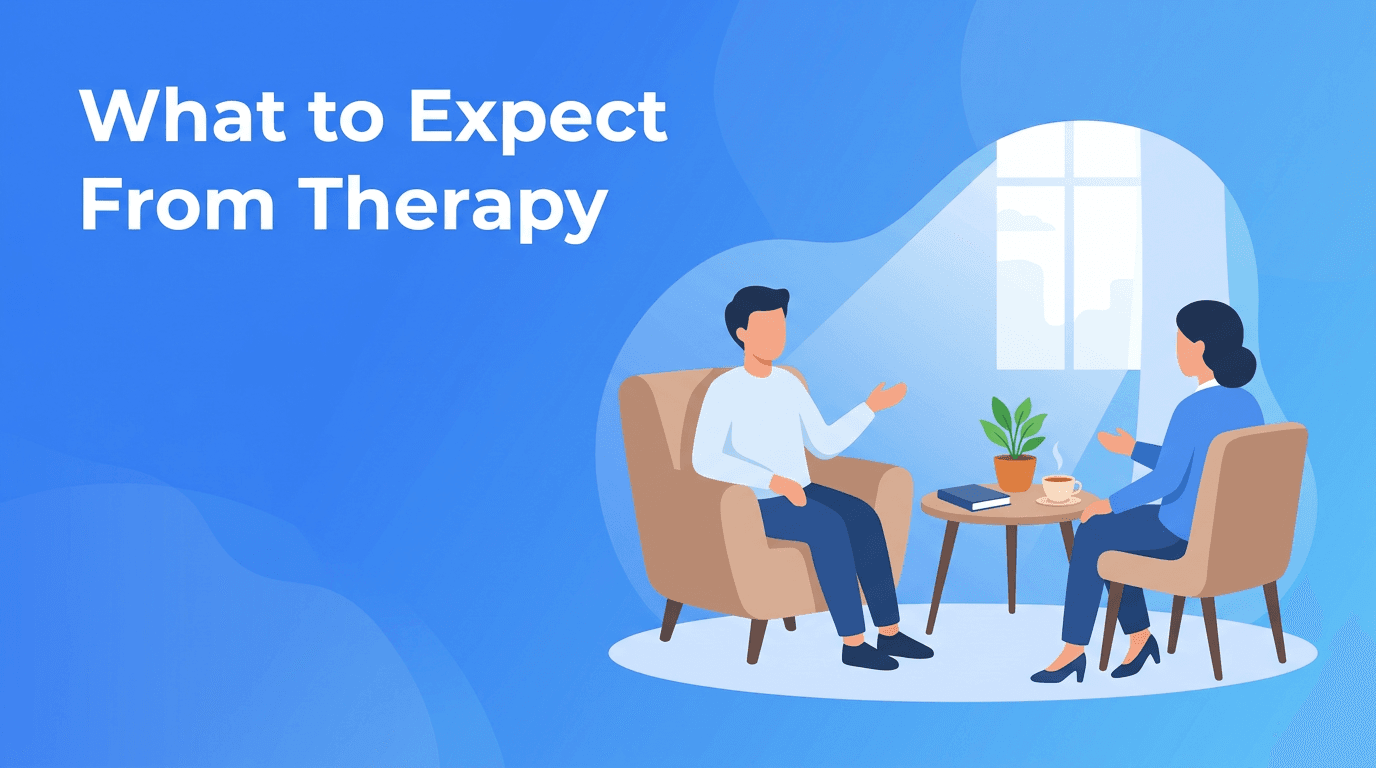
If you are in therapy, weekly notes can be incredibly helpful. Instead of saying, "I had a hard week," you can say, "My anxiety spiked after two nights of poor sleep, I canceled plans, and I felt disconnected from everyone by Thursday." That level of detail gives therapy somewhere real to begin.
Even if you are not in therapy, check-ins can still improve self-understanding. You may realize that your wellbeing drops when your calendar gets too crowded, or that your mood improves when you eat regularly, step outside, and talk to one safe person. These patterns are powerful because they are personal.
When to seek extra support
A weekly reflection is helpful, but it is not enough for every situation. Please consider reaching out to a licensed mental health professional if anxiety feels relentless, low mood lasts for weeks, daily functioning is getting harder, or you are worried about your safety. Support matters, and you do not have to wait until things become severe to ask for help.
How to make the habit stick without pressure
- Attach it to an existing routine, like Sunday evening tea or your Friday reset.
- Keep it short so it feels doable, even during busy weeks.
- Use the same prompts each time to reduce decision fatigue.
- Track it visibly with a habit tracker or calendar streak.
- End with one small action, like texting a friend, going to bed earlier, or booking therapy.
Inside Haply, you can use the Today Dashboard for a gentle daily overview, set reminders for your weekly reflection, and build momentum with streaks and goal-based coaching. For many people, that structure makes emotional check-ins feel less abstract and more actionable.
Frequently Asked Questions
How do I check in with my emotional health each week?
Set aside 10 to 15 minutes once a week and review your mood, body, thoughts, relationships, and coping habits. Write a few honest notes and choose one small supportive action for the next week.
Can emotional health check-ins help with anxiety?
Yes, they can help you notice triggers, patterns, and early warning signs of anxiety. That awareness can make it easier to respond sooner with support and coping tools.
Do emotional health check-ins replace therapy?
No. Check-ins can support self-awareness and help you prepare for therapy, but they are not a substitute for professional mental health care.
How can I improve depression awareness in daily life?
Pay attention to changes in sleep, motivation, pleasure, appetite, isolation, and energy over time. A weekly check-in makes these shifts easier to recognize before they become easier to ignore.