Emotional Health Check-Ins: A Gentle Routine for Anxiety and Everyday Wellbeing
Emotional health check-ins can help you notice anxiety early, support everyday wellbeing, and make therapy conversations more useful. Learn a simple routine you can actually keep.

By Haply Team
Haply Editorial Team
When emotional health gets pushed to the side, everyday stress can quietly build into anxiety, shutdown, or disconnection. A short check-in routine can help you notice patterns earlier, support your wellbeing, and bring clearer insights into therapy if you are already getting support.
This is not about judging your mood or fixing everything in one sitting. It is about building a small, compassionate habit that helps you stay connected to what you feel, what you need, and what might need more attention.
Why emotional health check-ins matter
Many people wait until they feel overwhelmed before they pay attention. But emotional health works more like physical health - small signals often show up first. A check-in helps you catch changes in sleep, motivation, tension, irritability, or focus before they become harder to manage.
- Anxiety may show up as racing thoughts, restlessness, stomach discomfort, or constant overplanning.
- Low mood may look like numbness, withdrawal, or losing interest in things that usually help.
- Better depression awareness starts with noticing changes in your normal patterns, not only extreme symptoms.
- If you are in therapy, regular check-ins can help you remember what happened between sessions.
"You do not need to understand every feeling immediately. You only need to notice that it is there."
A 5-minute emotional health routine
1. Name the feeling
Start with one simple question: What am I feeling right now? Try a few words instead of one. For example: anxious, tired, hopeful, flat, irritated, relieved. Expanding your emotional vocabulary can improve emotional health because it reduces the pressure to label everything as just good or bad.
2. Scan your body
Feelings often appear in the body before the mind catches up. Notice your jaw, shoulders, chest, stomach, and breathing. Ask yourself where stress is sitting today. This can be especially useful when anxiety feels vague or hard to explain.
3. Check the basics
- Did I sleep enough?
- Have I eaten regularly and had water today?
- Have I moved my body at all?
- Have I had too much screen time or stimulation?
- Have I been isolated for too long?
4. Ask what support would help
The goal is not a perfect answer. It is a helpful next step. Maybe you need rest, a walk, a meal, a text to a friend, a few minutes offline, or time to write things down before your next therapy session.
How to spot patterns without obsessing
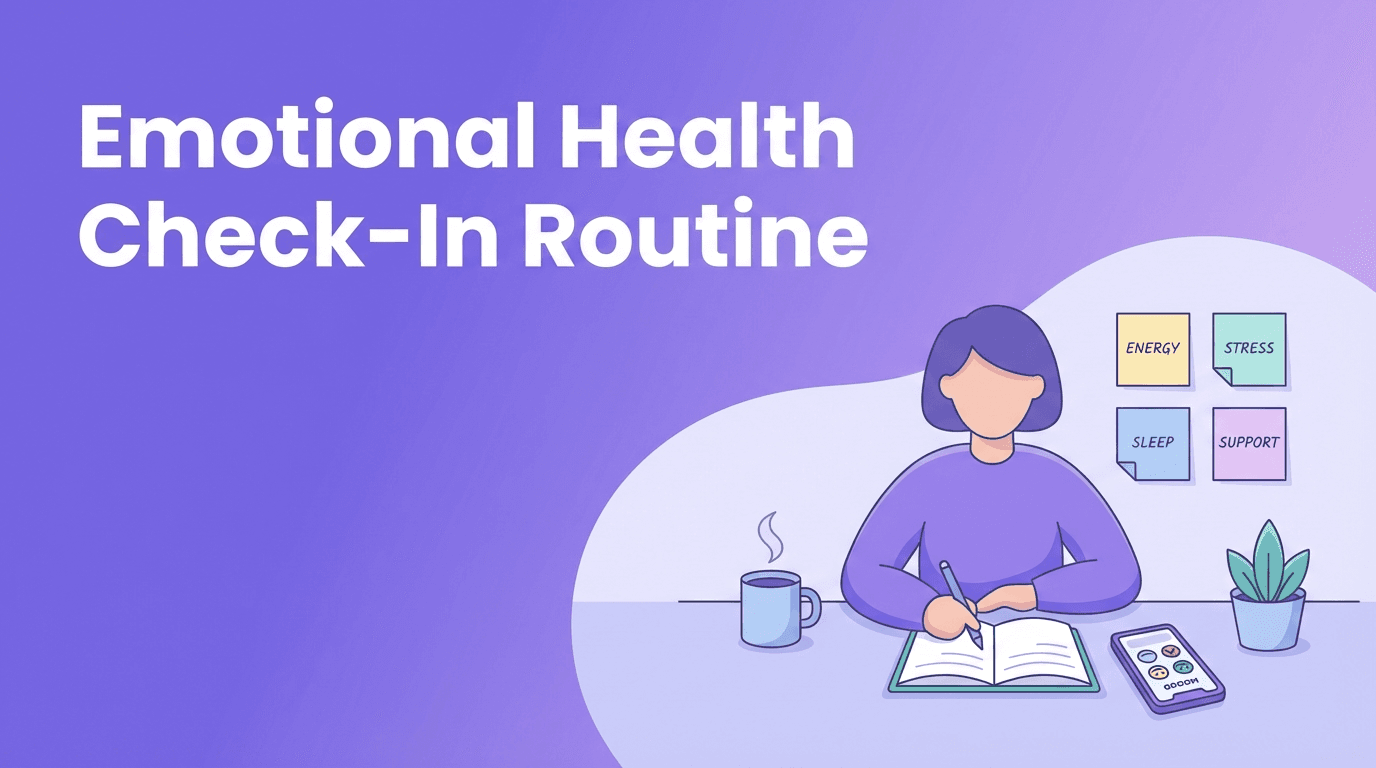
Tracking can support wellbeing, but it should feel grounding, not controlling. Instead of logging every detail, focus on a few repeat signals: mood, energy, sleep, stress level, and social connection. Over time, you may notice that certain meetings raise anxiety, skipped meals affect patience, or poor sleep changes your outlook the next day.
If you use an app, keep it simple. Haply, an AI life coaching app for iOS and Android, can complement your routine with chat-based coaching, a habit tracker, daily reminders, and wellness tools like Meditation/Breathe and Sleep Stories. It can be a helpful place to reflect on patterns and build consistency, but it is not a replacement for professional care.
Want support staying consistent?
Use Haply's wellness tools, habit tracker, and personalized coaching to build a gentle emotional check-in routine that fits real life.
Try Haply FreeWhen a check-in suggests you need more support
Sometimes a routine helps you notice that what you are carrying is bigger than self-care alone. If distress is lasting, getting worse, or affecting work, relationships, sleep, or daily functioning, reaching out for therapy or other professional support can be a strong and caring next step.
- Persistent hopelessness or loss of interest can be important depression awareness signs.
- Frequent panic, dread, or physical stress symptoms may point to anxiety that deserves more support.
- Feeling emotionally numb for long periods is still a meaningful signal, even if nothing looks wrong from the outside.
- If you ever feel unsafe or in crisis, seek immediate help from local emergency or crisis resources.
Make the habit easier to keep
- Pair your check-in with something you already do, like morning coffee or brushing your teeth.
- Use one note template with the same 3 to 5 questions each day.
- Set a daily reminder so you do not rely on memory alone.
- Keep it short. A two-minute check-in still counts.
- Look for patterns weekly, not constantly.
A kinder way to think about wellbeing
Wellbeing is not the absence of hard feelings. It is the ability to notice yourself with honesty, respond with care, and ask for help when needed. A small emotional health check-in will not solve every problem, but it can help you build awareness, steadiness, and self-trust over time.
Frequently Asked Questions
What is emotional health and why is it important?
Emotional health is your ability to notice, understand, and respond to feelings in a balanced way. It matters because it affects stress, relationships, decision-making, and everyday wellbeing.
Can emotional health check-ins help with anxiety?
They can help you notice anxiety earlier, identify triggers, and choose supportive actions before stress builds. They work best as a regular habit, not only during hard moments.
How can I prepare for therapy between sessions?
A brief daily check-in can help you track mood changes, triggers, and coping patterns. This gives you clearer examples to bring into therapy.
What are early signs that I may need more mental health support?
Common signs include persistent low mood, ongoing anxiety, sleep disruption, hopelessness, withdrawal, or trouble functioning in daily life. If symptoms continue or worsen, professional support is worth considering.