Emotional Granularity: A Simple Skill That Strengthens Emotional Health
Improving emotional health starts with naming what you feel more clearly. Learn how emotional granularity can support anxiety relief, depression awareness, therapy progress, and everyday wellbeing.

By Haply Team
Haply Editorial Team
Emotional health is not about feeling good all the time. It is about understanding what you feel, responding with care, and building enough self-awareness to move through hard moments without getting lost in them. One powerful but often overlooked skill is emotional granularity - the ability to describe your feelings with more precision. This can support anxiety management, deepen therapy work, strengthen depression awareness, and improve everyday wellbeing.
What emotional granularity really means
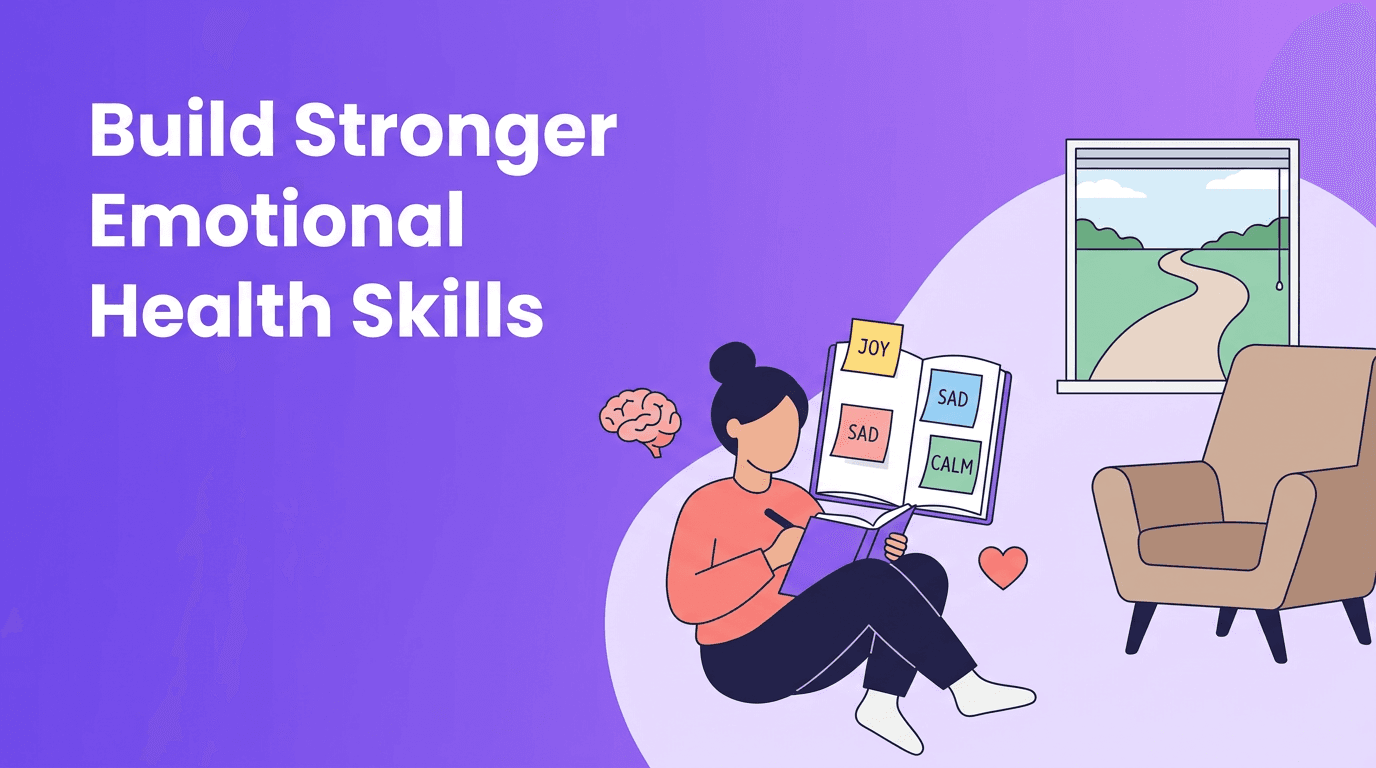
Many people default to broad labels like "stressed," "bad," or "fine." But your inner experience is usually more specific. You might be disappointed, overstimulated, lonely, embarrassed, restless, or mentally drained. The more accurately you name a feeling, the easier it becomes to choose the right response. That is why emotional granularity can be such a practical path to better emotional health.
- Instead of "I feel anxious," try "I feel uncertain and physically tense before this meeting."
- Instead of "I feel down," try "I feel disconnected, low-energy, and disappointed."
- Instead of "I am overwhelmed," try "I am overstimulated, under-rested, and worried about letting people down."
"When we can name what we feel, we often gain a little more space to choose what happens next."
Why this skill matters for anxiety, therapy, and wellbeing
When feelings stay vague, they can seem bigger and harder to manage. Precision creates options. If your distress is mostly anxiety, you may need grounding, movement, or reassurance. If it is grief, you may need rest and connection. If it is shame, you may need self-compassion and a safe conversation. Better labeling does not erase pain, but it can reduce confusion and support stronger wellbeing habits.
For anxiety
People often use the word anxiety to describe many different states, including fear, anticipation, social discomfort, overstimulation, or even too much caffeine. Identifying which one you are dealing with helps you respond more effectively. A racing mind before a deadline may call for structure. Social fear may call for gentle exposure. Physical agitation may call for slow breathing or a short walk.
For depression awareness
Depression awareness is not only about spotting obvious sadness. It can also involve noticing numbness, irritability, hopelessness, loss of interest, or feeling emotionally flat. Being more specific about these shifts can help you recognize patterns earlier and decide when extra support may be needed. This kind of self-observation can be useful alongside professional care, not as a replacement for it.
For therapy progress
In therapy, clearer emotional language can make sessions more productive. Rather than saying "Everything feels wrong," you might say, "I feel resentful after overcommitting," or "I shut down when I sense criticism." These details give you and your therapist something concrete to explore. Small differences in language can reveal big differences in needs, boundaries, and coping patterns.
A 5-minute emotional health check-in
You do not need a long journaling practice to use this skill. Try this short reset once a day, especially after a stressful interaction or energy dip. Over time, it can strengthen emotional health and make your responses more intentional.
- Pause and scan your body. Notice jaw tension, chest tightness, heaviness, restlessness, or fatigue.
- Name three emotions. Pick words that are more specific than "good" or "bad."
- Ask what the feeling is pointing to. Is there a need for rest, clarity, safety, connection, or space?
- Choose one next step. Drink water, step outside, text a friend, postpone a task, or write down your worry.
- Track the pattern. Notice what situations trigger the same emotional mix repeatedly.
Want support turning insight into action?
Haply is an AI life coaching app for iOS and Android that helps you build supportive routines around wellbeing. You can check in with Wellness coaches, track habits, use mini-apps like Meditation/Breathe and Sleep Stories, and create small daily actions that complement therapy and self-care.
Try Haply FreeCommon mistakes that block emotional health
- Judging the feeling too fast. Emotions carry information, even when they are uncomfortable.
- Using one label for everything. Not every hard day is burnout, anxiety, or depression.
- Skipping the body. Physical sensations often reveal what your mind has not named yet.
- Waiting until you are overwhelmed. Emotional awareness works best as a regular habit, not only in crisis.
- Trying to fix everything immediately. Sometimes the first step is simply accurate noticing.
How to practice this in real life
Start small. During the week, pause after emotionally charged moments and finish this sentence: "Right now, I feel..." Then add one possible reason and one helpful response. If you are already in therapy, bring your notes to a session. If you are working on anxiety or low mood, use the pattern you notice to create gentler routines around sleep, boundaries, movement, and support.
If you like structure, tools can help. Some people use a journal. Others prefer guided prompts. Haply's Today Dashboard, habit tracker, and chat-based coaching can make it easier to notice patterns and stay consistent with simple practices that support emotional health. It is best used as a companion for growth and reflection, not as a substitute for licensed mental health care.
Frequently Asked Questions
How can I improve emotional health every day?
Start with brief daily check-ins. Naming your emotions, noticing body signals, and choosing one supportive action can improve emotional health over time.
Can naming emotions really help with anxiety?
Yes. More specific emotional labeling can make anxiety feel less vague and help you choose coping tools that fit the situation.
What is the connection between therapy and emotional awareness?
Therapy often becomes more effective when you can describe emotions, triggers, and patterns clearly. Specific language gives you more to explore and work with.
Why is depression awareness important for wellbeing?
Depression awareness helps you notice early emotional and behavioral changes, so you can seek support sooner and care for your wellbeing more intentionally.