Emotional Validation in Relationships: The Communication Skill That Builds Real Connection
Emotional validation in relationships can transform communication, deepen connection, and improve social skills. Learn practical ways to respond with empathy and build trust.

By Haply Team
Haply Editorial Team
Emotional validation is one of the most overlooked relationship skills, yet it can change the tone of your communication almost instantly. When someone feels seen instead of judged, connection grows, conflict softens, and trust becomes easier to build. Whether you want healthier romantic relationships, closer friendships, or stronger family bonds, learning this skill can improve both empathy and everyday social skills.
Why emotional validation matters in relationships
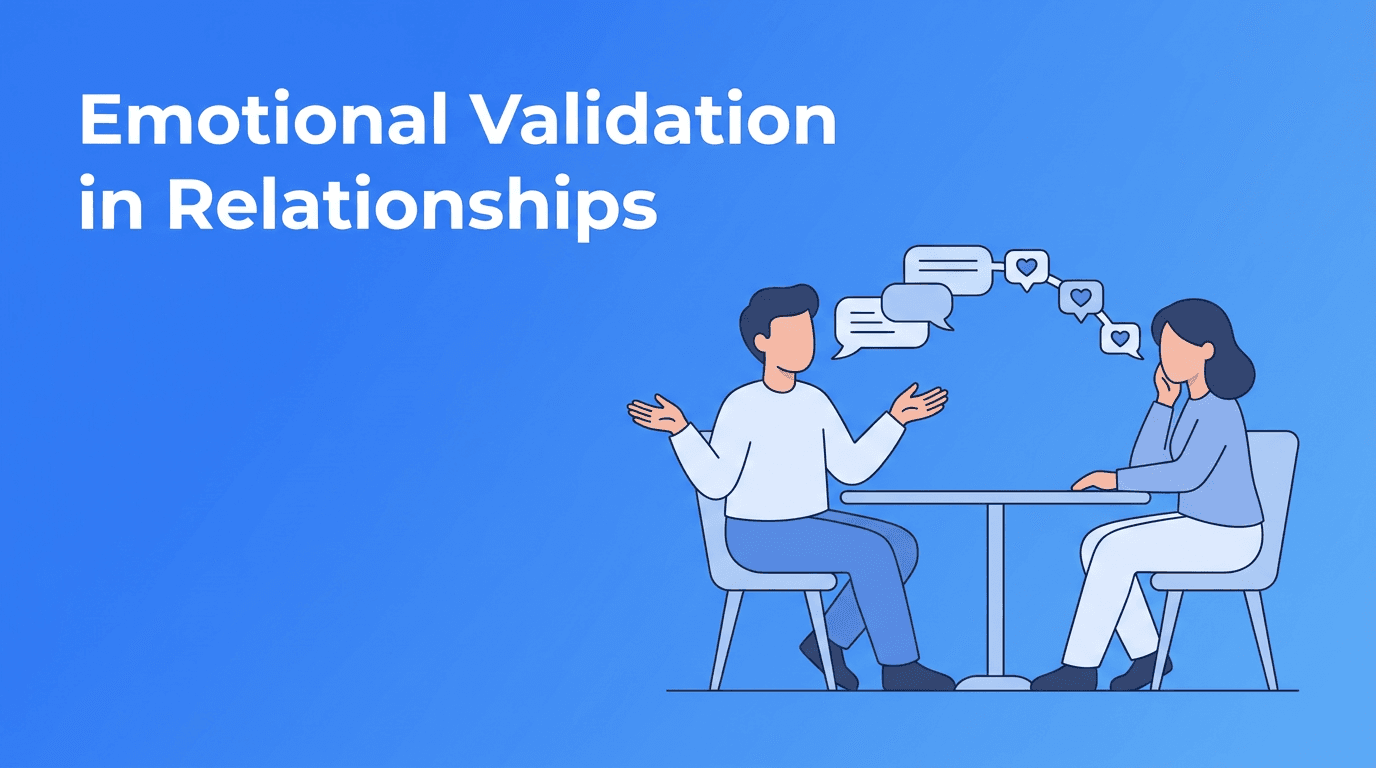
Many people think good communication means giving advice, fixing problems, or explaining their side clearly. Sometimes it does. But in emotionally charged moments, people often need something simpler first: to feel understood. Emotional validation tells the other person, "Your feelings make sense to me." That does not mean you agree with every detail. It means you recognize their emotional reality.
- Validation lowers defensiveness and makes hard conversations safer.
- It strengthens relationships by creating a sense of emotional security.
- It improves communication because people are more open when they do not feel dismissed.
- It supports better social skills, especially listening, empathy, and emotional awareness.
- It helps repair disconnection after misunderstandings or conflict.
"People may forget your exact words, but they rarely forget whether they felt understood."
What emotional validation is, and what it is not
A lot of confusion comes from thinking validation means approval. It does not. You can validate someone's feelings and still hold a boundary, disagree, or ask for change. For example, you can say, "I understand why you felt hurt when I canceled," while also saying, "I still need us to speak respectfully." This is where empathy and self-respect work together.
Validation is not the same as fixing
When someone opens up, jumping into solutions can accidentally shut down connection. Advice can be helpful later, but first try reflecting what you hear. Statements like "That sounds exhausting" or "I can see why that upset you" often land better than immediate problem-solving.
Validation is not agreeing with harmful behavior
You can acknowledge the feeling without excusing the action. For example: "I get that you were angry, and it makes sense that you felt ignored. It is still not okay to yell at me." Healthy relationships need both validation and boundaries.
How to practice emotional validation in real conversations
If emotional validation feels awkward at first, that is normal. Many adults were never taught how to respond to feelings directly. The good news is that it is a learnable skill, and small changes in communication can create a big shift in closeness.
- Pause before responding. Give yourself a moment to listen instead of react.
- Name the feeling. Try words like disappointed, overwhelmed, embarrassed, lonely, or frustrated.
- Reflect the experience. Say, "It makes sense that you feel that way after what happened."
- Ask a clarifying question. For example, "What part felt hardest for you?"
- Check what they need. Ask, "Do you want support, solutions, or just someone to listen?"
- Stay curious, not corrective. Focus on understanding before defending yourself.
Common phrases that build connection
- "I can see why that felt painful."
- "That makes sense to me."
- "You are not overreacting to something that matters to you."
- "I hear that you felt alone in that moment."
- "Thank you for telling me, I know that was not easy."
- "I may not fully understand yet, but I want to."
Want guided help with relationship communication?
Haply is an AI life coaching app for iOS and Android with specialized Relationships coaches that help you practice better communication, emotional awareness, and daily habits for stronger connection. You can also use tools like the habit tracker, Today Dashboard, and guided check-ins to turn insight into action.
Try Haply FreeMistakes that make people feel dismissed
Even caring people sometimes respond in ways that weaken connection. These habits often come from discomfort, not bad intentions. Still, noticing them can improve your social skills quickly.
- Minimizing: "It is not a big deal."
- Comparing: "Other people have it worse."
- Hijacking: turning the conversation back to your own story too soon.
- Correcting facts immediately instead of addressing feelings first.
- Toxic positivity: "Just stay positive."
- Interrogating instead of listening with empathy.
Using emotional validation during conflict
Conflict is where emotional validation becomes especially powerful. In disagreements, people often listen for threats, not meaning. A validating response can slow that cycle. Try this order: acknowledge the feeling, summarize the concern, then share your perspective. This creates room for honest communication without erasing either person.
For example: "I understand why you felt unimportant when I was on my phone during dinner. I would have felt disconnected too. I was distracted by work, but I do not want that to become a pattern between us." This approach supports accountability and empathy at the same time.
A 5-minute practice to strengthen this skill
Try this simple routine once a day with a partner, friend, or even in your own journaling. It can build stronger relationships over time.
- Set a timer for 5 minutes.
- Let one person share something emotionally meaningful from their day.
- The listener may only ask clarifying questions and offer validation, not advice.
- Switch roles after 5 minutes.
- End by asking, "What helped you feel most understood?"
If you want more structure, Haply can support this process with chat-based coaching, daily reminders, and goal-based onboarding that personalizes your growth. Its Relationships coaches can help you practice responses, reflect after conflict, and turn better communication into a daily habit.
Frequently Asked Questions
What is emotional validation in a relationship?
Emotional validation is acknowledging that another person's feelings make sense from their perspective. It helps them feel understood, even if you do not fully agree with their view.
How do I validate someone's feelings without agreeing with them?
Focus on recognizing the emotion rather than approving the behavior or conclusion. You can say their feelings make sense while still setting boundaries or sharing a different opinion.
Can emotional validation improve communication skills?
Yes. Emotional validation reduces defensiveness and makes people more open, which leads to calmer, clearer communication and better conflict resolution.
What are examples of validating statements?
Examples include "That sounds really hard," "I can see why you feel that way," and "Thank you for telling me." These phrases show empathy and support connection.