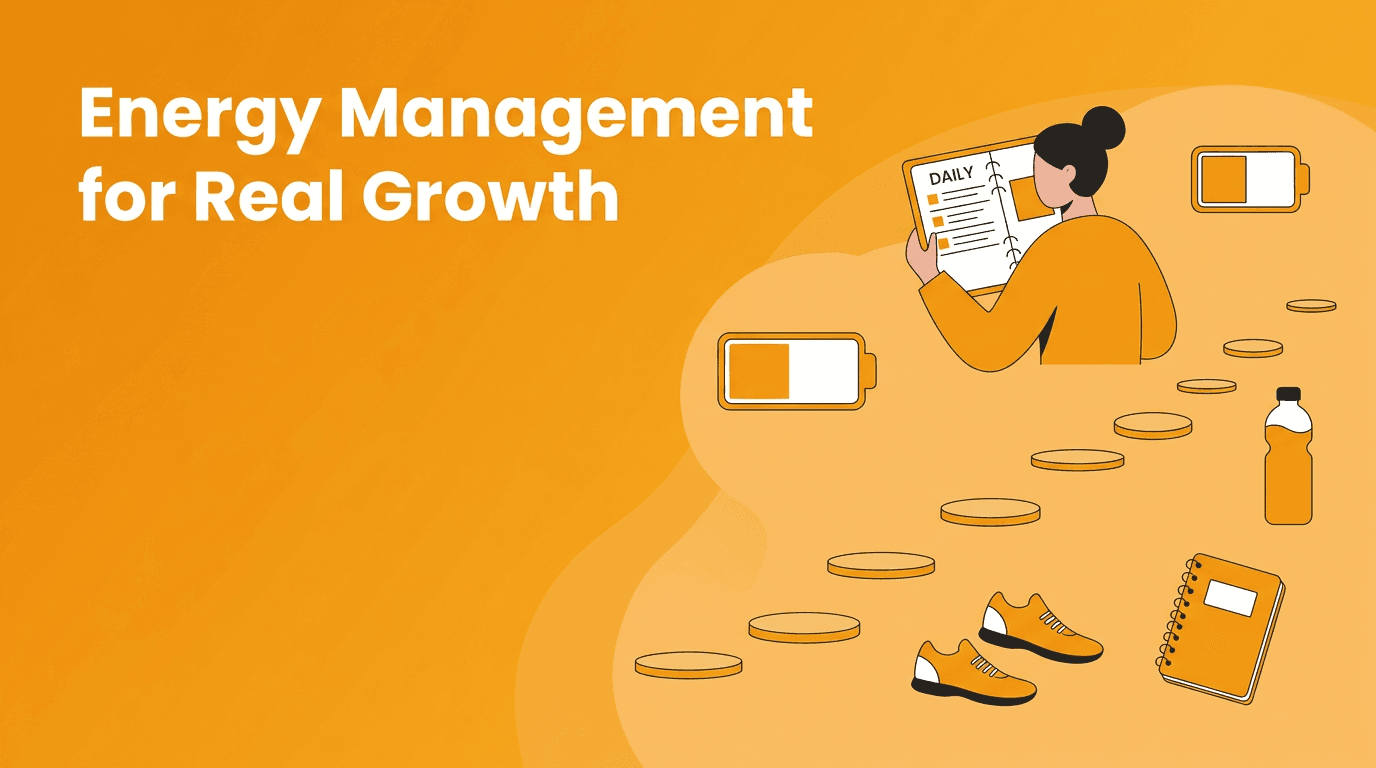
Energy Management for Personal Development: A Better Way to Build Positive Habits
Energy management can improve self-awareness, confidence, and life improvement by helping you build positive habits that fit real life, not perfect routines.

By Haply Team
Haply Editorial Team
If your goals keep falling apart by Wednesday, the problem may not be motivation. It may be energy management. For busy people, personal development works better when you stop asking, "How can I do more?" and start asking, "When do I have the energy to do what matters most?" That one shift can improve self-awareness, protect confidence, and make life improvement feel realistic.
Why energy management matters more than time management
Most people try to fix their lives by reorganizing their calendar. That helps, but it misses a bigger issue. You can have a perfectly planned day and still avoid the task that matters because your mental, emotional, or physical energy is low. Energy management is the skill of matching the right action to the right state.
- Mental energy affects focus, decision-making, and learning
- Emotional energy affects patience, confidence, and resilience
- Physical energy affects consistency, movement, and follow-through
- Social energy affects communication, boundaries, and relationships
"You do not need a perfect routine. You need a routine that respects your real energy."
Start with self-awareness, not self-criticism
A lot of personal development advice quietly assumes you should perform at the same level every day. Real life does not work that way. If you want better self-awareness, spend one week noticing your patterns instead of trying to fix everything at once. Track when you feel sharp, drained, distracted, calm, or motivated.
A simple 3-part energy check
- Ask, "What time of day do I think most clearly?"
- Ask, "What drains me fastest?"
- Ask, "What habits restore me quickly?"
This is where many people rebuild confidence. When you understand your patterns, you stop labeling yourself lazy or inconsistent. You begin making smarter choices. That creates progress you can repeat.
Build positive habits around your high-energy windows
Once you know your energy patterns, put your most important growth actions into your strongest windows. This is one of the easiest ways to make positive habits stick. Do not use your best energy on low-value tasks if you can help it.
- Schedule deep work, studying, or journaling during your peak focus hours
- Put easier admin tasks in low-energy periods
- Use short walks, water, music, or breathing breaks as reset tools
- Create a backup version of each habit for tired days, like 5 minutes instead of 30
Use a minimum version to protect momentum
The all-or-nothing mindset damages confidence because it turns one hard day into a story about failure. A minimum version keeps your identity intact. Read one page. Stretch for two minutes. Write three lines. Small actions still count as life improvement when they are repeated.
Want help building habits that fit your real life?
Haply is an AI life coaching app for iOS and Android that helps you turn goals into daily action. Use personalized coaching, habit tracking, reminders, and tools like the Focus Timer and Task Planner to stay consistent even on busy days.
Try Haply FreeProtect your energy before you try to optimize it
You cannot build a better life on constant depletion. Before adding more routines, remove a few leaks. This is where practical energy management becomes powerful.
- Reduce unnecessary decisions by planning tomorrow the night before
- Silence nonessential notifications during focus blocks
- Set boundaries around people or tasks that repeatedly drain you
- Sleep, hydration, and movement are not basic because they are small, they are basic because they support everything else
A realistic weekly reset for life improvement
Try this 15-minute reset once a week to support personal development without overwhelm. It helps you notice what is working and adjust before the next week gets noisy.
- Review the last 7 days and circle the times you felt best
- Note which habits gave you energy and which ones cost too much
- Choose one priority for your next high-energy block
- Pick one recovery habit to repeat daily
- Delete or delay one task that is not worth your best attention
If you like guided support, Haply's Today Dashboard, motivational prompts, and chat-based coaching can make this review process faster. Instead of figuring everything out alone, you can get structure tailored to your goals in productivity, wellness, learning, or career.
The confidence boost most people miss
People often think confidence comes after major success. In real life, confidence often grows from keeping small promises to yourself. Energy management supports that by making your promises more realistic. You stop overcommitting, start following through, and slowly trust yourself more.
Final takeaway
If you want lasting life improvement, do not just manage your time. Manage your energy. Build self-awareness around your patterns, create positive habits that fit your real capacity, and let consistency rebuild your confidence. Personal development gets easier when your plan works with you instead of against you.
Frequently Asked Questions
What is energy management in personal development?
Energy management means organizing your tasks and habits around your mental, emotional, and physical capacity, not just your schedule. It helps you stay consistent without burning out.
How can energy management improve confidence?
It improves confidence by helping you set realistic goals and follow through more often. When you keep small promises to yourself, self-trust grows.
What are the best positive habits for low-energy days?
Good low-energy habits include a short walk, two minutes of stretching, one page of reading, brief journaling, or a five-minute planning session. The goal is to protect momentum with minimal effort.
How do I become more self-aware about my energy?
Track your energy for a week and notice when you feel focused, tired, calm, or distracted. Look for patterns in time of day, sleep, food, work type, and social interactions.